According to an official announcement issued on 9 November 2026, the exhibition recorded sales of approximately ₹55.46 lakh between 1 and 8 November. The figures were reported by four participating government corporations supporting artisans and entrepreneurs from disadvantaged communities.
The 15-day exhibition, inaugurated on 2 November by Union Minister for Social Justice and Empowerment Dr Virendra Kumar, features more than 130 stalls displaying handicrafts, handloom products, traditional textiles, festive decorations and indigenous creations from different regions of India.
The event will continue until 15 November 2026, offering visitors an opportunity to discover India’s diverse artistic traditions while directly supporting the livelihoods of participating artisans.
Traditional Crafts Generate Strong Consumer Response
The sales recorded during the first eight days of the exhibition highlight the commercial potential of India’s traditional handicraft and handloom industries.
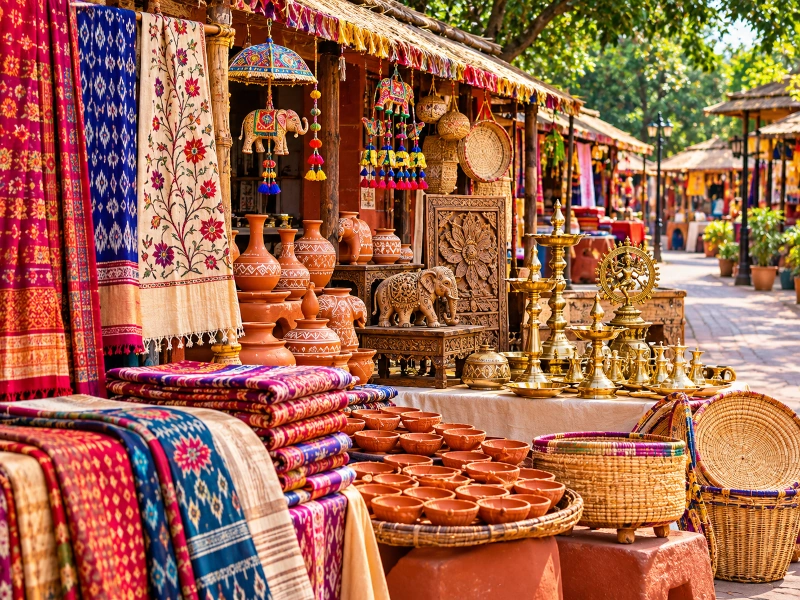
Artisans participating in the fair are displaying a wide variety of products, including handcrafted decorative items, textiles, traditional garments, lamps, household accessories and other creations reflecting regional artistic traditions.
The exhibition provides a direct connection between producers and consumers, allowing artisans to present their products, explain their craftsmanship and develop relationships with potential customers.
This direct marketing arrangement is particularly valuable for smaller producers who may otherwise depend on intermediaries or face difficulties accessing larger urban markets.
The Ministry stated that the encouraging sales reflect growing public appreciation for products created by participating artisans and the expanding opportunities available to traditional craft enterprises.
The exhibition also demonstrates how organised marketing platforms can transform traditional artistic skills into sustainable livelihood opportunities.
More Than 130 Stalls Celebrate India’s Cultural Diversity
Shilp Samagam Mela 2026 has been organised around the theme Prakash aur Parampara – Jyoti se Jyoti Jalayen, celebrating the relationship between India’s traditional craftsmanship, cultural heritage and festive traditions.
The exhibition features seven thematic zones designed to introduce visitors to different aspects of Indian artistic and cultural life.
Kala Angan provides space for live craft demonstrations, allowing visitors to observe traditional craftsmanship and understand the skills involved in creating handmade products. Prakash Chowk showcases decorative lighting and lamps, while Pooja Path presents products associated with traditional rituals and worship.
Sajawat Bazaar focuses on decorative and household products, while Gharana highlights traditional textiles, garments and related creations.
Swad Chowk introduces visitors to regional culinary traditions, while Manch serves as a venue for cultural performances featuring folk music, dance and other traditional art forms.
Together, these zones create a platform where India’s handicrafts, cultural traditions and regional identities can be experienced within a single exhibition.
Government Support Reduces Financial Barriers for Artisans
An important feature of Shilp Samagam is the support provided to participating artisans through government institutions.
The Ministry of Social Justice and Empowerment facilitates participation by providing exhibition stalls free of charge, along with assistance for travel expenses, daily allowances and transportation of products.
These arrangements help reduce the financial burden associated with participating in large exhibitions, particularly for artisans operating small enterprises or working with limited resources.
The programme is supported by four public sector corporations: the National Scheduled Castes Finance and Development Corporation, the National Backward Classes Finance and Development Corporation, the National Safai Karamcharis Finance and Development Corporation, and the National Divyangjan Finance and Development Corporation.
These organisations work to improve access to livelihood opportunities, entrepreneurship support and economic participation among their respective beneficiary groups.
The cumulative sales of ₹55.46 lakh reported during the exhibition were recorded through these four participating corporations.
By combining market access with logistical and financial assistance, the initiative enables artisans to focus on presenting their products and developing commercial opportunities.
More Than 1,000 Artisans Benefited Since 2022
The Ministry has been organising Shilp Samagam exhibitions since 2022 as part of its efforts to promote entrepreneurship and economic empowerment among traditionally underserved communities.
According to the Ministry, more than 1,000 artisans belonging to Scheduled Castes, Other Backward Classes and Safai Karamchari communities have benefited from opportunities to exhibit and market their products through these fairs.
The initiative provides an organised platform for artisans whose livelihoods depend on traditional skills, family enterprises and small-scale production activities.
Access to exhibition spaces in major cities allows these producers to engage with customers beyond their immediate geographical markets.
Such exposure can support the development of independent businesses while increasing awareness of lesser-known regional crafts.
The programme also encourages the continuation of traditional occupations by improving their commercial prospects and creating opportunities for younger generations to participate in craft-based enterprises.
Bharat TULIP and Purple Fest Expand Opportunities
Shilp Samagam Mela 2026 also incorporates initiatives aimed at expanding market access and encouraging inclusive participation.
Bharat TULIP supports the promotion of traditional products and seeks to connect artisans with wider commercial opportunities, including e-commerce platforms.
Digital marketplaces can help small craft producers reach customers outside their local markets, creating opportunities for continued sales beyond the duration of physical exhibitions.
The involvement of Purple Fest adds another dimension to the programme by highlighting the creativity, skills and entrepreneurial capabilities of persons with disabilities.
The initiative promotes greater visibility for their work while encouraging equal opportunities for participation in commercial and cultural activities.
By bringing different beneficiary groups together, the exhibition demonstrates how traditional crafts and entrepreneurship can contribute to wider economic inclusion.
Cultural Performances Bring Regional Traditions Together
Alongside the commercial exhibition, Shilp Samagam features cultural programmes celebrating India’s regional music, dance and artistic traditions.
Performers from different states participate in evening programmes at the Manch, presenting folk dances, traditional music and other cultural expressions.
These performances complement the handicraft exhibition by introducing visitors to the cultural backgrounds associated with India’s diverse artistic communities.
Traditional crafts are often closely connected with regional customs, religious practices, festivals and community histories. Exhibitions that combine crafts with cultural performances help communicate these relationships to wider audiences.
The event therefore serves not only as a marketplace but also as a platform for cultural exchange and the preservation of traditional knowledge.
Strengthening India’s Indigenous Craft Economy
India’s handicraft and handloom sectors represent important components of the country’s cultural and economic heritage.
Traditional craft production supports livelihoods across rural and urban communities, particularly among small entrepreneurs, family enterprises and skilled artisans.
Many craft traditions depend on specialised techniques developed and refined over generations, including weaving, embroidery, pottery, woodwork, metalwork and decorative arts.
Providing artisans with access to consumers is essential for sustaining these traditions as commercially viable activities.
Events such as Shilp Samagam create opportunities for artisans to demonstrate the quality and distinctiveness of handmade products while building recognition for regional craftsmanship.
The ₹55.46 lakh in cumulative sales recorded during the first eight days provides a measurable indication of consumer interest in the products displayed at the exhibition.
The initiative also contributes to the broader objective of strengthening indigenous production and encouraging entrepreneurship among communities that have traditionally faced barriers to accessing formal markets.
Traditional Craftsmanship Finds New Markets
The commercial response to Shilp Samagam Mela 2026 demonstrates the continuing relevance of India’s traditional crafts within a changing consumer economy.
With more than 130 stalls, seven thematic zones and participation from artisans representing different communities, the exhibition brings together cultural preservation and practical entrepreneurship.
The support provided through government corporations reduces participation costs, while initiatives such as Bharat TULIP introduce opportunities for artisans to extend their reach through digital commerce.
The inclusion of persons with disabilities and other beneficiary communities further strengthens the exhibition’s role as a platform for inclusive economic participation.
As the event continues until 15 November, participating artisans have additional opportunities to engage with customers and expand their market presence.
The success of Shilp Samagam highlights how India’s traditional craftsmanship can generate meaningful economic opportunities when skilled artisans receive access to organised markets, institutional support and direct consumer engagement.
You may also like
-
Tārā’s Diplomacy: How Wise Counsel Prevented a Political Crisis Between Allies
-
Hanumān in Rāvaṇa’s Court: Courage, Strategic Messaging and the Responsibilities of an Envoy
-
Lakṣmaṇa’s Mission to Kiṣkindhā: Enforcing Alliance Commitments Without Breaking the Partnership
-
Devī’s Final Duel with Śumbha: The Celestial Battle That Ended the Asura Campaign
-
The Coronation of Sugrīva: Political Legitimacy and the Responsibilities of an Alliance
