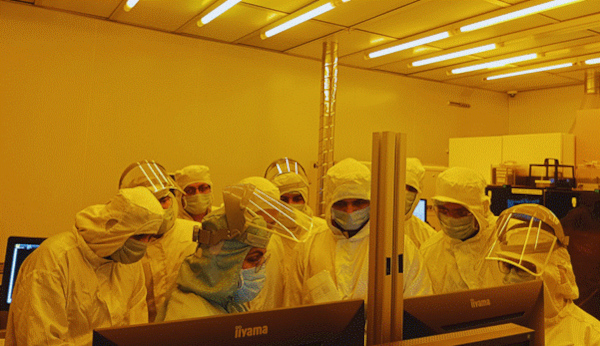
India is reshaping its vocational education and skill-development system to prepare young people for an economy increasingly influenced by artificial intelligence, automation, robotics, cloud computing and data-driven technologies.
Under the Skill India Mission, traditional vocational training is being combined with courses in artificial intelligence, machine learning, cybersecurity, the Internet of Things, industrial robotics, drone technology, 5G networks and green technologies. The objective is to create a workforce capable of adapting to new occupations as digital systems transform manufacturing, services, logistics, agriculture and public infrastructure.
The initiative is being implemented through the Pradhan Mantri Kaushal Vikas Yojana, Jan Shikshan Sansthan, the National Apprenticeship Promotion Scheme and the Craftsmen Training Scheme delivered through Industrial Training Institutes. Together, these programmes provide entry-level training, reskilling, upskilling and workplace exposure to learners from different educational and social backgrounds.
PMKVY 4.0 Places Future Skills at the Centre
Implemented since FY 2022–23, PMKVY 4.0 gives special emphasis to technologies associated with Industry 4.0. Its courses cover artificial intelligence, machine learning, robotics, cloud computing, data analytics, cybersecurity, the Internet of Things and green technologies.
This represents an important shift in India’s skilling architecture. Vocational education is no longer confined to preparing candidates for established trades; it is increasingly designed to help workers operate, maintain and support digitally connected machines, automated production systems and intelligent software platforms.
The annexure accompanying the government’s reply records training in artificial intelligence and other emerging technologies across states and Union Territories. A calculation based on the state-wise PMKVY 4.0 entries indicates that more than 5.44 lakh candidates were trained between 2023–24 and June 30, 2026.
Training activity expanded particularly strongly during 2024–25, when the listed state-wise total exceeded 4.48 lakh candidates. Uttar Pradesh, Rajasthan and Madhya Pradesh reported some of the highest numbers during that year, while Punjab recorded 12,296 candidates during the first three months of FY 2026–27.
These figures cover AI as well as related emerging technologies and should therefore be understood as a broader future-skills category rather than training exclusively in artificial intelligence.
ITIs Introduce New Technology-Based Trades
The Directorate General of Training has developed 170 courses compliant with the National Skills Qualifications Framework, including 32 courses focused on new-age and future skills.
These courses are delivered through Industrial Training Institutes and National Skill Training Institutes across the country. They include job roles such as Artificial Intelligence Programming Assistant, Cyber Security Assistant, Drone Technician and 5G Network Technician, along with programmes involving industrial robotics and green skills.
The inclusion of such courses within the ITI system can widen access to technology careers. AI-related employment does not consist solely of advanced research or the development of large software models. The wider ecosystem also requires technicians who can prepare data, operate intelligent machines, maintain networks, secure connected systems, support cloud infrastructure and troubleshoot automated equipment.
By bringing these capabilities into vocational institutions, the government is seeking to create technical pathways for learners who may not enter conventional engineering or computer-science degree programmes.
AI Skills Connected with Manufacturing and Services
The emerging curriculum has been aligned with Industry 4.0 requirements in fields such as artificial intelligence, robotics, mechatronics and drone technology.
This integrated approach reflects the way modern industries use technology. Artificial intelligence may analyse production data, computer vision may inspect manufactured components, connected sensors may monitor machinery, and robotic systems may automate repetitive or hazardous operations. Cybersecurity protects these networks, while cloud platforms allow information to be processed and accessed across locations.
The need is therefore for a combination of skills rather than expertise in a single isolated technology. Workers must understand how software, machines, communication networks and industrial processes interact.
Sector Skill Councils have conducted skill-gap studies in areas including electronics, logistics and advanced manufacturing to estimate workforce demand and identify shortages. These assessments are intended to help training providers develop qualifications that correspond with actual occupations and industry requirements.
National Standards Seek to Improve Training Quality
The National Council for Vocational Education and Training functions as the overarching regulator for India’s technical and vocational education system.
Awarding bodies recognised by the council are expected to develop qualifications according to industry demand, connect them with occupations listed under the National Classification of Occupations and obtain validation from employers and sector experts.
India has also established 36 industry-led Sector Skill Councils. These bodies identify workforce requirements, develop occupational standards and help determine the competencies that candidates need for specific job roles.
Such standardisation is especially important for AI and digital technologies because course titles alone may reveal little about a candidate’s actual abilities. Clear competency standards can define whether a learner can write basic AI programmes, manage datasets, deploy models, operate industrial robots, secure a network or maintain connected devices.
Apprenticeships Bring Learners into the Workplace
Classroom instruction forms only one part of the skilling process. The Directorate General of Training is also implementing the Dual System of Training and the Flexi MoU Scheme to expose ITI students to industrial environments.
These arrangements allow institutions and companies to combine theoretical education with practical experience using real machinery, software and production systems.
The National Apprenticeship Promotion Scheme provides another route for learners to gain workplace-based training. The official annexure shows that apprenticeships related to AI and emerging technologies have expanded in industrial states such as Maharashtra, Karnataka, Gujarat, Haryana, Telangana and Tamil Nadu.
Practical exposure is particularly valuable in technology-based occupations because employers frequently require candidates to demonstrate familiarity with working systems, safety procedures, collaborative projects and industrial workflows.
Kaushal Melas and Pradhan Mantri National Apprenticeship Melas are also organised to connect trained candidates with employers offering apprenticeship and placement opportunities.
Partnerships Bring Global Technology Expertise into Training
The Directorate General of Training has signed agreements with companies including IBM, Cisco, Microsoft and Amazon Web Services to strengthen technology training at state and regional levels.
These partnerships are intended to provide institutions with access to updated technical content, professional-skills programmes and industry expertise.
Such collaboration can help public training institutions keep pace with technologies that evolve much faster than conventional curricula. AI tools, cloud platforms, cybersecurity practices and network technologies are regularly updated, making continuous curriculum revision essential.
The Indian Institutes of Skills established in Ahmedabad and Mumbai under the public-private partnership model are also intended to provide hands-on, industry-oriented training using advanced equipment and contemporary production methods.
PM-SETU to Upgrade 1,000 Government ITIs
A major institutional component of the strategy is the Pradhan Mantri Skilling and Employability Transformation through Upgraded ITIs, or PM-SETU.
The centrally sponsored scheme carries an investment of ₹60,000 crore and envisages the modernisation of 1,000 government ITIs through a hub-and-spoke structure. Under the proposed model, 200 hub ITIs will be connected with 800 spoke institutions.
PM-SETU places emphasis on industry-led governance, upgraded infrastructure, workplace exposure and stronger employment linkages. It is also designed to support entrepreneurship by giving learners access to career guidance, self-employment assistance and industry-relevant training.
The hub-and-spoke model could allow advanced laboratories, specialised instructors and industry partnerships to be shared across groups of institutions rather than being developed separately at every location.
Its success, however, will depend on the quality of implementation, regular maintenance of equipment, availability of capable instructors and continued participation by employers.
District-Level Planning Aligns Training with Local Jobs
Skill requirements differ significantly across India. A district with an electronics-manufacturing cluster may require technicians in robotics and industrial automation, while another with a logistics hub may need workers trained in warehouse technology, data management and connected transport systems.
State Skill Development Missions and District Skill Committees are therefore involved in identifying sectors with employment potential, estimating local demand and mapping available training facilities.
The SANKALP programme also supported a National Skill Gap Study conducted by the National Council of Applied Economic Research. The study created a standardised framework for assessing workforce shortages across seven high-growth sectors, including computer-programming activities within the information-technology sector.
This district- and sector-based approach can help prevent a mismatch in which large numbers of candidates receive qualifications for occupations with limited local demand.
Placement Measurement Enters a New Phase
Under PMKVY 1.0 to PMKVY 3.0, implemented from FY 2015–16 to FY 2021–23, around 1.11 crore candidates were certified. Of these, 24.38 lakh were reported as placed under the Short-Term Training component.
Under PMKVY 4.0, placements are no longer monitored in the same manner. The government stated that candidates are instead oriented towards different possible career paths.
This distinction is important while evaluating the programme. Training and certification figures demonstrate the scale of delivery, but they do not by themselves establish whether participants obtained relevant employment, increased their income, started businesses or continued to use the skills they acquired.
Future assessment of AI-skilling programmes could therefore examine employment quality, wage improvements, apprenticeship conversion, self-employment, retention in technology-related occupations and employer satisfaction.
Preparing Workers for an AI-Driven Economy
Artificial intelligence is expected to change existing occupations as much as it creates entirely new ones. Workers in manufacturing, banking, healthcare, agriculture, retail, transport and public administration may increasingly use AI-enabled systems within their current roles.
India’s strategy consequently extends beyond producing specialist AI engineers. It seeks to create a broad workforce capable of using intelligent tools, maintaining automated systems, interpreting data and adapting to changes in production and service delivery.
The combination of PMKVY 4.0, technology-oriented ITI courses, apprenticeships, industry partnerships, district skill planning and the PM-SETU modernisation programme represents an effort to build this workforce at scale.
The next challenge will be to ensure that training remains current, practical and connected to real opportunities. As AI evolves, India’s skill-development system will need to operate as a continuous learning network in which workers can repeatedly upgrade their capabilities throughout their careers.
Reference
Press Information Bureau, Government of India. “Artificial Intelligence and Skill India Initiatives.” Ministry of Skill Development and Entrepreneurship, 27 July 2026. Information provided by Minister of State (Independent Charge) for Skill Development and Entrepreneurship Jayant Chaudhary in a written reply in the Lok Sabha. Release ID: 2289887.
You may also like
-
Gnani AI Launches Nationwide Challenge Offering Up to 100 Paid AI Internships
-
NMMSS Scholarship Application Deadline Extended to October 31, 2026
-
DGCA Introduces Training Framework for Gyroplane Pilots in India
-
DRDO CASDIC Opens 30 Paid Internships for Engineering and Science Students
-
Duryodhana Wins Shalya Through Hospitality: Gifts, Obligation and Political Leverage Before the Kurukshetra War
