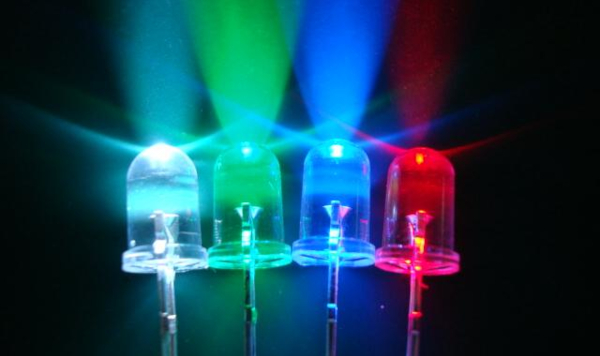
Indian researchers have developed a method that can help large scale synthesis of a special class of semiconductor nanocrystals. These nanocrystals called two-dimensional layered perovskite and perovskite nanocrystals, which have bright emission colours and are not affected by or corroded by the environment, are useful for both high colour purity and low-cost solution processability.
Nanomaterials have unique properties compared to their bulk counterpart as they exhibit bright emission and are useful for light-emitting diodes (LED) apart from several other applications in our day-to-day life. However, large-scale syntheses of such materials are challenging as the reaction mechanism, and kinetics of large-scale syntheses are often different from small-scale syntheses. Such large scale synthesis methods are necessary for industrial applications.
To this end, a group of researchers at the Centre for Nano and Soft Matter Sciences (CeNS), an autonomous research institute under the Department of Science and Technology (DST), have synthesized two-dimensional layered perovskite and perovskite nanocrystals by a method called sonochemical process that is often used for large scale synthesis. This process utilizes the principles of sonochemistry to make molecules undergo a chemical reaction with the application of powerful ultrasound radiation. This work has been published in the ‘Journal of Physical Chemistry C’.
The team tracked how these nanomaterials grow during the reaction. They controlled reaction parameters, such as time and temperature, to tune the dimensionality of these nanomaterials and their emission colours. The researchers showed that at an early stage of reaction, two-dimensional layered perovskites form, and they get converted to perovskite nanocrystals controllably. They also demonstrated a white-light-emitting diode with the mixture of these perovskites. Further works are in progress by the CeNS team to increase the stability of these nanomaterials.
You may also like
-
India Commissions 51st Doppler Weather Radar at Sambalpur, Plans Around 40 More Under Mission Mausam
-
IIT Bhilai Develops 4D-Printable Hydrogel That Lifts 250 Times Its Weight and Cleans Wastewater
-
IIT Bombay Deploys Matsya 7 and Mini Matsya in Tandem at RoboSub 2026, Secures Two First-Place Honours
-
IIT Guwahati Bacterium Degrades 98.5% of Toxic Textile Dye, Opening Route to Cleaner Industrial Wastewater
-
Bihar’s 700-Year-Old Banyan Becomes World’s Oldest Scientifically Dated Ficus benghalensis
