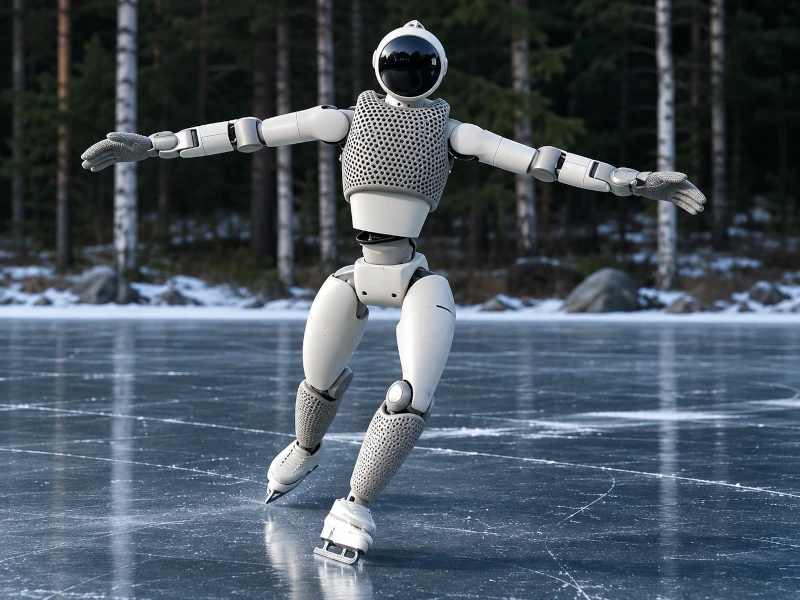
Russian technology and financial services group SBER has brought its humanoid figure-skating robot Yuni to international audiences through digital showcases in New York, United States, and Shenzhen, China. Following its appearance at the international AI Journey conference, the robot’s ice-dancing performance has been featured on prominent urban media façades, highlighting advances in humanoid robotics, artificial intelligence and the integration of technology with performing arts.
Yuni Reaches International Audiences
According to an official press release issued by SBER, Yuni’s figure-skating performance was showcased on digital media façades along Broadway in New York and in central Shenzhen, the host city of the 2026 Asia-Pacific Economic Cooperation (APEC) summit. The international showcase introduces audiences to a robotic platform capable of performing movements associated with one of the most physically demanding forms of artistic expression.
The performance is part of a production by Ilya Averbukh and Pyotr Dranga, inspired by the traditional Russian fairy tale The Frog Princess. By combining robotics with music, choreography and cultural storytelling, the production demonstrates how emerging technologies can participate in artistic experiences traditionally associated with human performers.
Engineering Behind Robotic Figure Skating
Figure skating presents considerable engineering challenges for humanoid robots because of the need to maintain dynamic balance, coordinate body movements and adapt to a low-friction surface. Unlike conventional robotic demonstrations conducted on stable surfaces, movement on ice requires precise physical coordination and stability during complex manoeuvres.
SBER’s engineers have developed Yuni’s ability to maintain balance on slippery ice while performing choreographed dance combinations. Described by SBER as the world’s first figure-skating robot, Yuni represents an example of how humanoid robotic platforms are progressing beyond conventional movement demonstrations towards increasingly sophisticated physical capabilities.
Advancing the Capabilities of Physical AI
Yuni’s performance illustrates the emerging field of Physical AI, in which artificial intelligence is integrated with robotic systems capable of interacting with the physical world. While conventional AI applications primarily process information within digital environments, Physical AI involves translating computational intelligence into coordinated physical actions.
The ability to perform complex movements on ice highlights the importance of integrating mechanical engineering, motion control, environmental awareness and intelligent control systems. Research into these capabilities could contribute to the development of future robotic platforms designed to operate in unpredictable environments, interact with people and undertake tasks requiring adaptability and precision.
Bringing Robotics and Cultural Creativity Together
The use of a traditional Russian fairy tale as the foundation for Yuni’s performance provides an interesting example of the convergence of cultural heritage and technological innovation. Rather than presenting the robot solely as an engineering achievement, the production places its capabilities within a creative framework involving storytelling, music and choreography.
Such collaborations between engineers, artists and technology developers can create new opportunities for experimentation in entertainment, education and public engagement with science. They also provide an accessible means of demonstrating complex technological developments to audiences beyond conventional research institutions and industrial settings.
Expanding the Frontiers of Humanoid Robotics
Yuni’s international digital showcase follows SBER’s presentation of its emerging robotic technologies at the AI Journey conference, where the company demonstrated the potential of Physical AI across artistic and practical applications. The figure-skating robot adds another dimension to these efforts by demonstrating robotic movement in a particularly challenging physical environment.
As humanoid robotics continues to evolve, demonstrations such as Yuni’s ice-dancing performance offer valuable insights into the possibilities of integrating intelligent machines with human creativity. The collaboration between engineering and the performing arts represents a constructive exploration of how artificial intelligence can extend technological capabilities while complementing human imagination and cultural expression.
You may also like
-
Russia’s SBER Unveils Next-Generation Robots and Showcases Physical AI
-
India Reaffirms Its Position on Indus Waters Treaty Amid Pakistani Minister’s Visit
-
India Condemns False Narratives as Chinese Influencers Allegedly Portray Dhaka Neighbourhoods as New Delhi
-
Japan’s Emerging Indo-Pacific Security Network: Why India Is Becoming a Strategic Partner in Asia’s Balance of Power
-
Philippine Marine Wargames Reportedly Show BrahMos Can Penetrate Chinese Destroyer Air Defences
