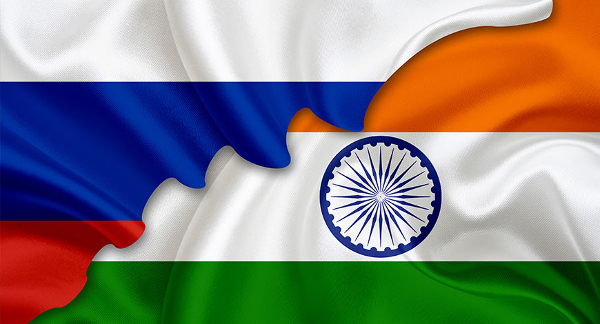
India and Russia have built the financial infrastructure needed to conduct bilateral settlements in national currencies, marking a significant advance in efforts to make trade between the two countries faster and less dependent on conventional international payment routes.
Ivan Nosov, CEO of Sberbank’s branch in India, said on September 9 that the necessary infrastructure for national-currency settlements between Russia an38d India was now in place and ready for active use.
Nosov made the remarks during INNOPROM India 2026, the international industrial exhibition being held at Bharat Mandapam in New Delhi from September 9 to 11.
The development builds on several years of work by India and Russia to address payment, banking, insurance and logistics difficulties that emerged as bilateral trade expanded rapidly.
Cross-Border Payments Reduced From Days to Minutes
One of the most striking developments has been the reduction in the time required to process transactions.
Sberbank had officially reported in February 2026 that Russia–India payments, which typically required one to two days in 2022, could now be processed in less than 10 minutes.
The bank also said turnover conducted in national currencies between the two countries had increased around twelvefold, while the number of Russian and Indian companies conducting business through Sber had risen sixfold.
Nosov’s latest remarks indicate that the infrastructure has continued to mature, with more than 90% of Russia-to-India payments now reportedly being processed within ten minutes.
The development is particularly important for exporters and importers because faster settlements can reduce working-capital delays and make routine trade transactions more predictable.
Rupee and Rouble Settlements Gain Ground
India and Russia have been steadily encouraging greater use of their respective national currencies for bilateral commerce.
The objective is not simply to replace one international currency with another. Instead, the two countries have been attempting to build settlement channels capable of supporting uninterrupted trade even when international financial conditions become volatile.
The policy has received formal support at the highest political level.
Following the 23rd India–Russia Annual Summit, the two governments agreed to continue developing bilateral settlement systems using national currencies. They also agreed to continue discussions on greater interoperability between their national payment systems, financial messaging networks and central-bank digital currency platforms.
This provides an official government framework behind the banking infrastructure now being developed by institutions serving India–Russia trade.
Earlier Payment Difficulties Largely Addressed
The rapid expansion of bilateral trade had previously produced several complications.
Among the most widely discussed was the accumulation of Indian rupees by Russian companies because Russia exported considerably more goods to India than it imported.
Banks and businesses also had to navigate insurance, logistics, currency-conversion and cross-border settlement issues.
Nosov said many of the problems that had constrained financial cooperation two or three years ago had now been addressed.
Sberbank’s Indian operations currently provide cross-border facilities covering inward remittances as well as outward payments for trade and other permitted transactions under India’s regulatory framework.
India Could Increase Exports to Russia
The improvement in payment infrastructure could also help tackle one of the largest structural imbalances in the economic relationship — India’s comparatively modest exports to Russia.
Nosov said Sberbank had identified more than 100 categories of Indian products that already compete successfully in international markets and could potentially find buyers in Russia.
Russia continues to have substantial demand for goods in several areas where Indian companies possess established manufacturing and export capabilities.
Expanding Indian exports would not only increase bilateral trade but could also help create a more balanced flow of rupees and roubles between the two economies.
Payments Becoming a Pillar of the Economic Partnership
The establishment of faster settlement channels represents an important but less visible component of the expanding India–Russia economic relationship.
Energy and fertilisers remain major elements of bilateral commerce, while the two governments are seeking greater cooperation in manufacturing, pharmaceuticals, machinery, technology, agriculture and other sectors.
Both countries have also set a goal of taking bilateral trade to $100 billion by 2030, making efficient banking, insurance, logistics and payment systems increasingly important.
The latest developments suggest that one of the major obstacles to expanding commercial ties — reliable cross-border settlements — is gradually being transformed into a functioning financial bridge.
For Indian exporters in particular, the combination of faster payments and growing Russian demand could create new opportunities to diversify a relationship that has so far been heavily weighted towards India’s imports from Russia.
Rather than being merely a technical banking development, the emergence of a mature national-currency settlement network could therefore become one of the foundations for the next phase of the India–Russia economic partnership.
You may also like
-
ICAR Scientists Develop Indigenous Protective Gloves for Cotton Farmers, Sign Commercial Manufacturing Agreement
-
BHEL–Coal India Joint Venture Begins Construction of ₹25,016 Crore Indigenous Coal Gasification Project in Odisha
-
PM Modi to Inaugurate RBI’s Tier IV Data Centre and Cybersecurity Training Institute in Bhubaneswar
-
India Creates 11 Crore Digital Farmer IDs Five Months Ahead of Target, Strengthening AgriStack Infrastructure
-
Chak-Hao Black Rice of Manipur and Nagaland: The Aromatic Purple Heritage Grain with GI Recognition
