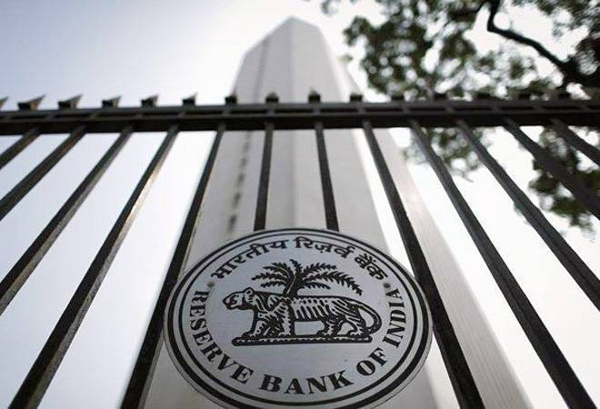
India’s economy is expected to remain resilient in FY27, with the Reserve Bank of India projecting real GDP growth at 6.9% despite an uncertain global environment shaped by geopolitical tensions, energy-market volatility and risks emerging from the West Asia conflict. The projection underlines a key message: India may face external headwinds, but domestic demand, financial stability and policy buffers continue to support the country’s growth momentum.
The West Asia situation matters deeply for India because the region is central to global crude oil flows, energy security and shipping routes. Any prolonged disruption in the region can raise crude prices, widen import costs, pressure the rupee, increase inflation risks and affect business sentiment. For a large energy-importing economy like India, oil-market volatility is one of the most important external variables. Yet the RBI’s assessment suggests that India’s macroeconomic base remains strong enough to absorb shocks while continuing on a stable growth path.
The growth estimate also places India among the fastest-growing major economies. A 6.9% expansion in FY27 would be strong by global standards, especially at a time when many large economies are dealing with weak consumption, high borrowing costs, geopolitical uncertainty and slower trade. India’s advantage comes from its large domestic market, public infrastructure investment, services strength, digital expansion, manufacturing push and healthier bank balance sheets.
Domestic demand is the main stabilising force. India’s growth is powered heavily by household consumption, public capital expenditure, services activity, credit growth and rising formalisation. This makes the economy less dependent on external demand than export-led economies. Even when global trade weakens, India’s internal market gives it a cushion. Rural recovery, urban consumption, vehicle sales, digital payments, housing activity and service-sector demand all contribute to this resilience.
The RBI’s outlook also reflects confidence in India’s financial system. Banks are better capitalised, non-performing assets have reduced from earlier stress periods, and credit growth has remained supportive of investment and consumption. A healthier banking system allows businesses and households to access loans more smoothly, which helps keep economic activity moving even during uncertain global conditions.
Inflation remains the key risk. A flare-up in West Asia can affect crude oil, natural gas, fertilisers, shipping costs and imported inflation. If energy prices stay high for long, transport, food, logistics and manufacturing costs can rise. The RBI will therefore have to balance growth support with inflation control, keeping policy flexible while watching oil prices, currency movement and global financial flows.
The external sector is another area to watch. India’s current account position can come under pressure if oil imports become costlier. At the same time, strong services exports, remittances, foreign exchange reserves and stable capital inflows provide important buffers. India’s software services, global capability centres, tourism recovery and remittance flows help reduce the strain that merchandise trade deficits can create.
The larger picture remains positive because India’s growth is increasingly broad-based. Infrastructure development, logistics improvement, digital public infrastructure, manufacturing-linked incentives, MSME formalisation, start-up activity, fintech adoption and rising investment in data centres, electronics and renewable energy are creating new growth layers. These structural drivers make the economy stronger than a cycle driven only by short-term consumption.
For businesses, the RBI’s projection sends a reassuring signal. It suggests that investment planning can continue, though firms will need to watch input costs, currency volatility and supply-chain risks. For policymakers, the priority will be to maintain macroeconomic stability, manage inflation expectations, protect growth momentum and keep public investment productive.
The West Asia conflict remains a real uncertainty, but India enters FY27 with stronger buffers than in many earlier global shock periods. The economy has deeper digital rails, stronger banks, rising tax collections, more formal enterprises, improved foreign exchange reserves and a larger domestic demand engine. These factors explain why the RBI continues to see resilience despite warning about external risks.
India’s FY27 growth story is therefore best understood as cautious optimism. The risks are visible, especially around oil, inflation and global uncertainty. But the foundation is stronger: domestic demand remains healthy, financial markets are more mature, infrastructure investment is active and India’s role as a global growth engine continues to expand. A 6.9% growth projection in such an environment shows that India’s economy is not merely growing; it is becoming better equipped to withstand shocks.
You may also like
-
India to Track Challenges Faced by Women Entrepreneurs in New National Business Survey
-
India Updates Vehicle Rules to Strengthen E85 and E100 Flex-Fuel Technology
-
Adani Green Energy Expands Battery Storage to 6.63 GWh at Khavda, Strengthening India’s Renewable Power Infrastructure
-
Manastu Space Secures ₹116 Crore Government Support to Develop Indigenous Green Propulsion Systems
-
GeM’s AABHAR Collection Showcases 294 Indigenous Products, Strengthens Market Access for Indian Artisans
