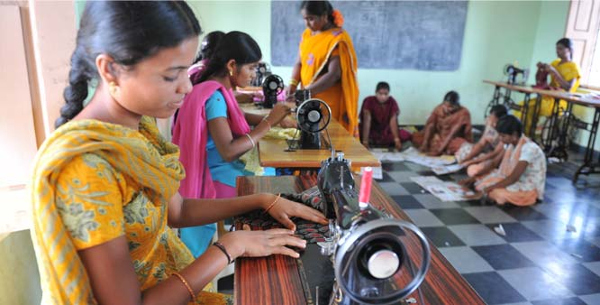
The Prime Minister’s Employment Generation Programme has emerged as one of India’s major grassroots entrepreneurship schemes, generating employment for around 36.33 lakh people and helping set up more than four lakh micro-enterprises during the 15th Finance Commission cycle from FY 2021–22 to FY 2025–26. The achievement highlights the growing importance of micro-enterprises in India’s employment strategy, especially in rural and semi-urban regions where formal job creation often depends on small-scale local businesses.
According to the Ministry of Micro, Small and Medium Enterprises, PMEGP facilitated the establishment of 4,03,706 micro-enterprises against a target of 4,02,000 units. The scheme also fully utilised its approved budgetary outlay of ₹13,554.42 crore during the five-year period, underlining both strong demand and effective implementation.
PMEGP is implemented through the Khadi and Village Industries Commission and is designed to support first-generation entrepreneurs by providing margin money subsidy on bank loans. The scheme focuses on helping people establish new non-farm micro-enterprises in the manufacturing and services sectors, making it a crucial policy tool for self-employment, local production and livelihood generation.
A major feature of the scheme’s success has been its rural reach. Nearly 80% of the enterprises established under PMEGP during the period were located in rural areas. This shows that the programme is not merely supporting urban start-ups or small businesses, but is directly contributing to rural industrialisation and decentralised economic development.
The scheme has also recorded strong participation from women and socially disadvantaged communities. Women beneficiaries accounted for nearly 40% of the total micro-enterprises assisted, while around 45% of the total margin money subsidy was disbursed to women entrepreneurs. Around 54% of beneficiaries belonged to SC, ST and OBC communities, reflecting the scheme’s role in widening access to enterprise creation among groups that often face barriers to institutional finance.
The impact of PMEGP is especially important because micro-enterprises form the base of India’s MSME ecosystem. Small manufacturing units, food processing ventures, handicrafts, textiles, village industries and service-sector businesses often create employment at relatively low capital cost. By linking aspiring entrepreneurs with bank credit and subsidy support, PMEGP helps convert local skills and small business ideas into income-generating enterprises.
The latest performance numbers also show how entrepreneurship is becoming an employment multiplier. Instead of depending only on large industries or government jobs, schemes like PMEGP create a framework where individuals can become job creators within their own communities. This is particularly relevant for rural youth, women entrepreneurs, artisans and first-generation business owners.
The government has indicated that PMEGP will be further strengthened in the next cycle with greater focus on innovation, scalability and wider outreach. If implemented effectively, the scheme can play an even larger role in strengthening India’s village industries, expanding micro-manufacturing, improving rural incomes and supporting the broader vision of an Atmanirbhar Bharat.
You may also like
-
India’s Expanding Free Trade Network Could Cover 75% of Global Trade
-
LC3: The Indian-Backed Cement Technology That Could Change How India Builds
-
India’s Quantum-Secure Network Reaches 1,000 km as National Quantum Mission Advances Towards 2,000-km Goal
-
EON Space Labs and Dhruva Space Advance Indian Space Hardware on Transporter-18 Mission
-
SatLeo Labs’ TAPAS-1 Reaches Orbit, Advancing India’s Private Thermal-Imaging Capability
