India’s Khadi and Village Industries sector has reached a new landmark, with total product sales crossing ₹1.87 lakh crore, or about US$ 20.80 billion, in FY26. The figure marks the highest-ever sales performance for the sector and reflects the growing strength of rural manufacturing, artisan-led production and local enterprise networks across the country. Production also touched ₹1.25 lakh crore, or around US$ 13.96 billion, during the same financial year.
The growth is particularly striking when measured over the past 12 years. Compared with 2013-14, sales have risen by 501%, while production has grown by 380%. This expansion shows how Khadi and village industries have moved beyond symbolic value and become a large economic engine linked to livelihoods, entrepreneurship, domestic consumption and rural industrialisation.
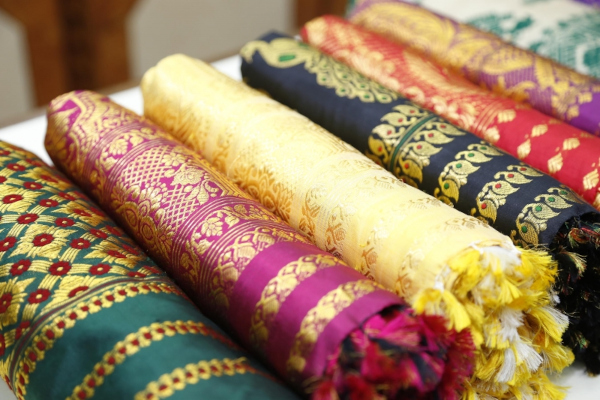
Khadi textiles, once seen mainly as a heritage product, have also witnessed strong commercial revival. Sales of Khadi textiles increased from ₹1,081 crore in 2013-14 to ₹7,869 crore in 2025-26. This growth reflects a wider shift in consumer behaviour, where handmade, natural and locally produced goods are finding stronger acceptance in both traditional and modern markets.
The larger village industries segment continues to be the backbone of this rise. Sales of village industry products reached ₹1,79,236 crore in FY26, strengthening the role of rural production clusters in India’s broader economic landscape. These industries cover a wide range of goods and activities, helping bring income opportunities closer to villages instead of concentrating production only in urban industrial centres.
The employment impact has been equally important. Total employment in the Khadi and Village Industries sector increased from 1.30 crore in 2013-14 to 2.04 crore in 2025-26. For millions of artisans, self-employed workers, women entrepreneurs and small producers, the sector has become a source of income security and decentralised economic participation.
The Prime Minister’s Employment Generation Programme also played a major role in expanding entrepreneurship. In FY26, 66,494 new units were established under the scheme, supported by ₹2,457 crore in margin money subsidy against loans worth ₹7,375 crore. These units generated employment for more than 7.31 lakh people, giving the sector a strong grassroots enterprise base.
The momentum has also been supported by skill development and artisan support programmes. Under the Gramodyog Vikas Yojana, toolkits and machines were distributed to strengthen productivity and livelihoods. Women formed nearly 59% of trainees under various KVIC skill development programmes during the year, highlighting the sector’s role in women-led rural economic participation.
The latest numbers show that Khadi and village industries are becoming a serious pillar of India’s local-to-global economic push. What began as a symbol of self-reliance now stands as a growing production ecosystem combining tradition, rural enterprise, employment creation and modern market access. With rising demand, improved institutional support and stronger branding, the sector is positioned to play an even larger role in India’s rural economy in the coming years.
Reference:
IBEF — Khadi-Village Industries product sales cross US$ 20.80 billion in FY26
https://www.ibef.org/news/khadi-village-industries-product-sales-cross-us-20-80-billion-in-fy26
You may also like
-
India’s Economic Warfare Challenge: Strategic Autonomy, Energy Security and the Rise of a Global Power
-
India-US Trade Deal Stalemate: Why Washington’s Tariff Pressure Has Failed to Secure an Agreement
-
US Double Standards in Foreign Policy: 16 Recent Cases Involving India, Russia, China and Global Trade
-
India’s Arctic Energy Ambitions: Russian Oil, LNG and a New Sea Route to Indian Ports
-
India and Russia Explore Joint Icebreaker Construction as Maritime Industrial Cooperation Expands
