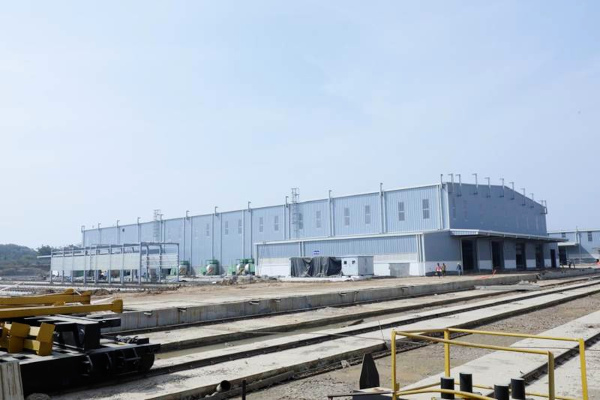
India’s railway manufacturing ecosystem is preparing for a major expansion as the Kazipet Rail Manufacturing Unit moves close to completion. Railway Minister Shri Ashwini Vaishnaw said the facility will soon begin manufacturing intercity trains, with an initial plan to produce 200 trains over the next five years. The operationalisation plan was reviewed by Shri Vaishnaw and Minister of State for Railways Shri Ravneet Singh Bittu along with senior railway officials.
The Kazipet unit is being developed as a versatile rolling stock manufacturing facility for Indian Railways. Its first major production responsibility will be a new generation of intercity trains designed for short-distance regional movement. These trains are expected to serve routes of around 300 kilometres, with frequent stops between towns and cities.
The idea behind these trains is simple and powerful. India has millions of passengers who travel between nearby towns for education, healthcare, employment, business and daily family needs. A reliable intercity rail service can give them a faster, safer and more affordable option compared to road-based travel. For students travelling to colleges, workers commuting to industrial clusters and patients visiting medical centres in nearby cities, these trains can become a practical daily mobility backbone.
The planned intercity trains will function like large regional shuttle services. Instead of serving only long-haul passengers, they will strengthen the middle layer of Indian public transport — the space between suburban trains and long-distance express services. This is where a large part of India’s daily movement takes place, especially in fast-growing corridors where towns are becoming economically connected to nearby cities.
The new trains will also bring modern passenger features. PIB said the trains will have automatic door closing, improved ventilation, safer coach design and a 20-coach configuration. Every coach will have two toilets, one at each end, improving passenger convenience during frequent-stop regional travel.
The technical design also points to a more comfortable ride. The trains will be fitted with modern jerk-free couplers and bogies, helping reduce sudden shocks during acceleration, braking and coach movement. They are being designed for speeds of 130 kmph, which can significantly improve regional connectivity when combined with efficient scheduling and station-level planning.
A major green feature will be regenerative braking. When these trains brake, the system can convert part of the kinetic energy back into electricity and feed it into the grid. This makes the trains more energy efficient and supports Indian Railways’ larger shift toward cleaner transport.
The larger impact of this project can be seen in two directions. First, Kazipet’s manufacturing role will strengthen domestic rail production capacity and support skilled industrial activity. Second, the deployment of 200 intercity trains can move a sizeable share of short-distance passenger traffic from roads to railways. That shift can reduce congestion, lower emissions and make regional travel more dependable.
Kazipet’s rise as a rail manufacturing centre also carries regional importance. Telangana will gain a major railway industrial asset, while Indian Railways will gain another production base for future-ready rolling stock. As India expands Vande Bharat services, freight corridors, station redevelopment and regional mobility networks, facilities like Kazipet will help convert transport planning into actual trainsets on the ground.
The project reflects a clear direction in Indian Railways’ modernisation strategy: build more trains domestically, improve passenger comfort, connect towns more efficiently and make public transport cleaner. Once operational, Kazipet’s intercity train programme can become a major step in reshaping short-distance rail travel across India.
Source: PIB
You may also like
-
India’s E-Commerce Platforms Record ₹24,000 Crore Festive Sales in Two Days as Meesho Reports 75% Surge in Orders
-
India’s Economic Warfare Challenge: Strategic Autonomy, Energy Security and the Rise of a Global Power
-
India-US Trade Deal Stalemate: Why Washington’s Tariff Pressure Has Failed to Secure an Agreement
-
US Double Standards in Foreign Policy: 16 Recent Cases Involving India, Russia, China and Global Trade
-
India’s Arctic Energy Ambitions: Russian Oil, LNG and a New Sea Route to Indian Ports
