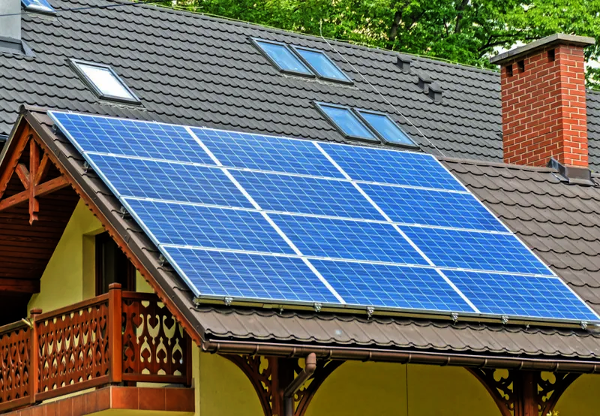
India’s transition towards clean energy has received a major boost under the PM Surya Ghar Muft Bijli Yojana, with 9,566.89 MW of rooftop solar capacity added across the country as of March 20, 2026. The scheme, launched in February 2024, is aimed at promoting rooftop solar adoption among residential consumers and is central to the government’s plan to install such systems in one crore households nationwide.
According to the government, the long-term impact of the scheme could be substantial. It is estimated that rooftop solar installations under the programme in one crore households will generate 1,000 billion units of renewable electricity over the lifetime of the projects. This, in turn, is expected to reduce around 720 million tonnes of carbon dioxide equivalent emissions over 25 years, giving the scheme a significant role in India’s energy transition and climate goals.
The programme is also expected to create large-scale employment opportunities. The government has estimated that nearly 17 lakh jobs could be generated through the scheme across sectors such as manufacturing, logistics, supply chains, sales, installation, operations and maintenance, and financial services. This makes the initiative not only a clean energy intervention but also an economic and employment driver.
The PM Surya Ghar Muft Bijli Yojana is a demand-driven scheme open to residential electricity consumers with grid-connected connections from local DISCOMs. Eligible households can apply for rooftop solar installations through the scheme’s National Portal, which has been designed to streamline the entire process from application to subsidy disbursal. One of the key features of the scheme is that subsidies are transferred directly into the bank accounts of residential consumers, reducing delays and improving transparency.
To accelerate rooftop solar adoption, the Ministry of New and Renewable Energy has introduced several measures. These include collateral-free loans from nationalised banks at a concessional interest rate of repo rate plus 50 basis points, which currently works out to 5.75 per cent per annum, with a repayment tenure of 10 years. The government has also simplified the regulatory approval process by waiving the technical feasibility requirement and allowing automatic load enhancement up to 10 kW.
Further easing the process for consumers, the net metering agreement has been integrated into the application system on the National Portal. The scheme has also expanded implementation options by including RESCO and Utility-Led Aggregation models. In addition, the process for vendor registration has been simplified to ensure the availability of sufficient and qualified installers across the country.
The government is also focusing on ecosystem support and consumer outreach. Capacity-building and training programmes are being conducted to create skilled manpower for the sector, while awareness campaigns are being run through newspapers, television, FM radio and regional channels to improve public understanding of the scheme. Progress is being regularly monitored at multiple levels, including with states and DISCOMs, and regional review meetings are being held from time to time to address implementation challenges.
A grievance redressal mechanism has also been put in place to improve user experience and ensure timely issue resolution. A dedicated call centre operating in 12 languages is currently functional under the helpline number 15555.
The Ministry of New and Renewable Energy and REC Ltd., acting as the National Programme Implementing Agency, are working in close coordination with DISCOMs to ensure effective execution of the scheme. With rooftop solar installations gathering pace, the PM Surya Ghar Muft Bijli Yojana is emerging as one of the government’s flagship efforts to expand clean energy access, reduce household electricity costs, and deepen India’s shift toward a low-carbon future.
Source: PIB
You may also like
-
India’s Economic Warfare Challenge: Strategic Autonomy, Energy Security and the Rise of a Global Power
-
India-US Trade Deal Stalemate: Why Washington’s Tariff Pressure Has Failed to Secure an Agreement
-
US Double Standards in Foreign Policy: 16 Recent Cases Involving India, Russia, China and Global Trade
-
India’s Arctic Energy Ambitions: Russian Oil, LNG and a New Sea Route to Indian Ports
-
India and Russia Explore Joint Icebreaker Construction as Maritime Industrial Cooperation Expands
