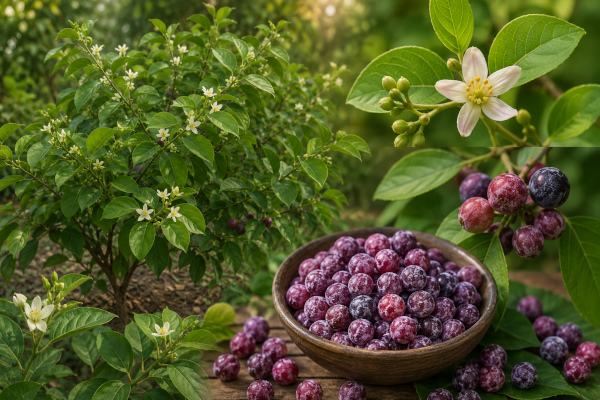
Parushaka, commonly known as Phalsa, is a small purple summer fruit valued in Ayurveda for its cooling, refreshing and Pitta-pacifying nature. Botanically known as Grewia asiatica, Phalsa is especially remembered in Indian traditional food culture as a heat-relieving fruit used in summer drinks, sherbets and cooling preparations.
In Ayurveda, Parushaka is appreciated as a fruit that helps calm excessive heat, thirst, fatigue and burning sensation. Its taste is pleasantly sweet-sour, making it naturally suitable for hot weather. It is light, refreshing and useful when the body needs hydration without heaviness.
Sanskrit Name and Identity
Phalsa is known in Sanskrit as Parushaka. The botanical identity is Grewia asiatica. It is a small berry-like fruit that turns reddish-purple to deep purple when ripe. The fruit is juicy, mildly acidic, sweet-sour and cooling in effect.
In traditional Indian households, Phalsa is often used to prepare a refreshing drink during summer. This drink is especially valued in regions where heat, dehydration and fatigue are common during the hot season.
Ayurvedic Nature of Parushaka
Parushaka is generally understood as cooling, refreshing and Pitta-pacifying. Its sweet-sour taste makes it pleasant, while its lightness makes it suitable as a summer fruit. It helps reduce thirst and supports fluid balance.
Because of its cooling nature, Parushaka is traditionally used when the body shows signs of heat. These may include excessive thirst, tiredness due to sun exposure, burning sensation, dryness of the mouth and general summer exhaustion.
Its mild sourness can stimulate taste and refresh the palate. Its sweetness gives gentle nourishment. This balance makes Phalsa one of the ideal fruits for hot climates.
Parushaka and Pitta Balance
Pitta is associated with heat, sharpness, digestion, intensity and transformation. When Pitta becomes aggravated, the body may experience burning sensation, excessive thirst, sourness, irritability, heat intolerance and fatigue.
Parushaka helps calm such heat. It cools and refreshes without being overly heavy. This makes it suitable in summer regimens and in Pitta-dominant conditions where a gentle fruit-based support is appropriate.
Ayurveda often uses fruits and drinks to calm Pitta because liquid preparations act quickly on thirst, heat and dehydration. Parushaka naturally fits this role.
Traditional Uses of Phalsa
Phalsa is traditionally used to relieve thirst and heat exhaustion. Its juice is refreshing and can be prepared as a panaka, or cooling drink. It is also used as a pleasant seasonal fruit to support hydration.
In folk practice, Phalsa sherbet is considered helpful during hot afternoons. It cools the body, refreshes the senses and supports recovery after exposure to sun.
The fruit is also appreciated for its gentle digestive support. Its sweet-sour taste can awaken appetite without creating strong heat when used correctly.
Parushaka Kola Panaka: Classical Phalsa-Melon Drink
A classical preparation known as Parushaka Kola Panaka is mentioned in the Ayurvedic tradition. It combines Parushaka, or Phalsa, with Kola, a term used in this context for melon. This makes the drink deeply cooling, hydrating and suitable for summer heat.
Parushaka brings the sweet-sour, cooling and refreshing quality. Melon adds water content, mild sweetness and softness. Together, they create a panaka that supports hydration and helps calm heat-related discomfort.
Traditional Parushaka Kola Panaka Recipe
Ingredients:
Fresh ripe Parushaka, or Phalsa fruits — one handful
Fresh melon pulp — one small bowl
Clean water — as required
Rock sugar or natural sweetener — as required
A small pinch of cardamom may be added for fragrance, if suitable
Method:
Wash the Phalsa fruits well and gently crush them to extract their juice. Strain to remove seeds and rough fibre. Take fresh melon pulp and blend it smoothly. Mix the Phalsa juice and melon pulp together. Add clean water to adjust the consistency into a refreshing drink. Add rock sugar or a suitable natural sweetener as required. Mix well and serve fresh.
This drink should be consumed fresh, preferably during hot weather or when the body needs cooling hydration. When used for a health condition, it should be taken under the guidance of a qualified Ayurvedic physician.
Why This Drink Is Important in Ayurveda
The logic of Parushaka Kola Panaka is based on cooling, hydration and Pitta balance. Phalsa helps reduce heat and thirst. Melon provides fluid, sweetness and gentle nourishment. The panaka form makes the preparation easy to digest and quick to absorb.
In Ayurveda, panaka preparations are not ordinary drinks. They are carefully designed beverages that combine taste, season, dosha and therapeutic purpose. A good panaka can refresh the body, restore fluids and support digestion when prepared properly.
This preparation is especially meaningful in summer because both Phalsa and melon are naturally suited to heat management.
Manuscript and Classical Reference
Parushaka Kola Panaka is referenced in Sushruta Sutrasthana, chapter 46, verse 395. Sushruta Samhita is one of the foundational texts of Ayurveda and is especially famous for its detailed treatment of surgery, anatomy, medicine, dietetics and daily regimen.
The Sutrasthana section of Sushruta Samhita includes important discussions on food, drinks, seasonal habits and the qualities of various substances. The mention of Parushaka Kola Panaka in this tradition shows that Ayurveda gave great importance to fruit-based cooling drinks. Such preparations were not merely for taste; they were part of a systematic understanding of how food and drink influence dosha, strength, thirst, digestion and seasonal balance.
The reference also shows the sophistication of ancient Indian dietetics. Ayurveda recognised that fruits like Phalsa and melon could be combined into therapeutic beverages suitable for heat, thirst and Pitta-related discomfort.
Parushaka in Summer Wellness
Parushaka is best understood as a summer fruit. During hot weather, the body loses water and strength through sweat and heat exposure. Ayurveda recommends cooling drinks, light foods, sweet fruits and protection from excessive sun during this season.
Phalsa juice or Phalsa-based panaka fits perfectly into this lifestyle. It refreshes the body and helps reduce the intensity of heat. When combined with melon, it becomes even more hydrating and soothing.
This makes Parushaka Kola Panaka a beautiful example of food as medicine. It uses seasonal fruits to support seasonal health.
Phalsa and Digestion
The sweet-sour taste of Phalsa helps awaken taste and may support appetite in hot weather. During summer, digestion can become irregular because heat and dehydration disturb the body’s balance. A light fruit drink can refresh the mouth, support fluid balance and gently encourage appetite.
However, excess sourness should be avoided in people with severe acidity-like symptoms or very high Pitta. The drink should be made mildly sweet and balanced, not sharply sour.
Phalsa and Hydration
Phalsa is traditionally used for thirst. Melon is naturally rich in water. Together, they create a hydrating drink that is useful when the body feels dry, tired or overheated.
In Ayurvedic thinking, hydration is not only about water. The quality of the drink also matters. A proper summer drink should be cooling, pleasant, light and supportive of digestion. Parushaka Kola Panaka meets these qualities when prepared correctly.
Modern Nutritional View
From a modern perspective, Phalsa contains natural plant compounds, fruit acids, minerals and antioxidants. Its deep purple colour indicates the presence of pigment compounds that may contribute to its value as a seasonal fruit. Melon contributes water, mild sweetness and electrolytic support.
Together, these fruits make a refreshing drink suitable for hot weather when used in moderation. However, added sugar should be limited, especially for people with diabetes or metabolic concerns.
Who Can Benefit
Parushaka may be useful for people who experience heat, thirst, summer fatigue, dryness of the mouth and mild Pitta aggravation. It is suitable as a seasonal cooling fruit when digestion is stable.
Parushaka Kola Panaka may be especially enjoyable during hot afternoons, after mild sun exposure or as a refreshing summer drink.
Who Should Be Careful
People with diabetes should avoid adding sugar and should use Phalsa in controlled quantity after medical advice. Those with very weak digestion, frequent coldness, loose stools or Kapha dominance should take it carefully.
People with severe vomiting, dehydration, fever, persistent acidity, chronic illness or ongoing medication should seek medical guidance before using classical preparations for therapeutic purposes.
The drink should always be prepared fresh and consumed the same day.
Best Ways to Use Phalsa
The best way to use Phalsa is as fresh fruit or fresh juice. It may be made into a simple panaka with water and a mild sweetener. It can also be combined with melon as described in the classical Parushaka Kola Panaka.
Avoid bottled versions with artificial colours, synthetic flavours and excess sugar. Fresh seasonal preparation is always better from an Ayurvedic point of view.
Conclusion
Parushaka, or Phalsa, is one of Ayurveda’s graceful summer fruits. It cools, refreshes, relieves thirst and supports Pitta balance. Its sweet-sour taste makes it enjoyable, while its cooling effect makes it valuable during hot weather.
The classical Parushaka Kola Panaka shows how Ayurveda converted seasonal fruits into thoughtful therapeutic drinks. By combining Phalsa with melon, Ayurveda created a drink that is hydrating, cooling and pleasant.
In a world where summer drinks are often overloaded with artificial flavour and sugar, Parushaka reminds us of a simpler wisdom: the best cooling medicine may already be growing in season.
You may also like
-
Ayurveda and Mental Fatigue in the Digital Age: Ancient Wisdom for a Calm and Focused Mind
-
Bharat Biotech’s Nucelion and VeGen Bio Partner to Manufacture Advanced Dual-Target CAR-T Cancer Therapy in India
-
Ayurveda and Anger: How Emotional Excess Affects Physical and Mental Health
-
Ayurveda and Stress: Daily Practices for Mental Balance and Emotional Well-Being
-
Ayurveda and Bowel Routine: Why Regularity Matters for Digestive Health
