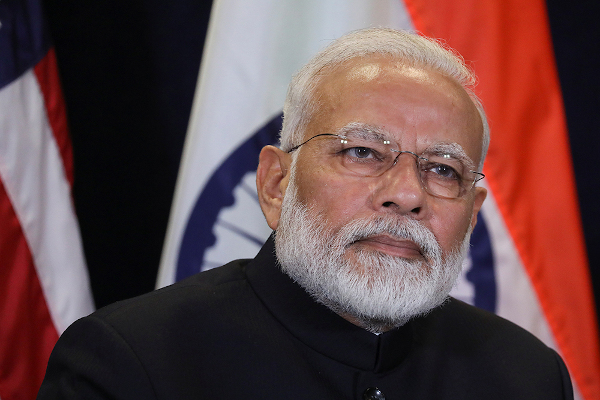
Prime Minister Narendra Modi on Friday inaugurated Phase I of the Noida International Airport at Jewar in Uttar Pradesh, a project developed with an investment of around ₹11,200 crore, describing it as a major milestone for both the state’s growth trajectory and India’s expanding aviation landscape. Speaking at the event, the Prime Minister said the launch of the airport marked a new chapter in the “Viksit UP, Viksit Bharat” mission and underlined Uttar Pradesh’s emergence as one of the states with the highest number of international airports in the country.
Modi said the airport would have a wide regional impact, benefiting cities and districts such as Agra, Mathura, Aligarh, Ghaziabad, Meerut, Etawah, Bulandshahr and Faridabad. He said the project would generate fresh opportunities for farmers, small and medium enterprises, and young people across western Uttar Pradesh, while also strengthening the state’s role in India’s broader development story. The Prime Minister noted that the airport would not only connect the region to the world through passenger movement but also stand as a symbol of a more modern and economically confident Uttar Pradesh.
Referring to the wider global climate, Modi said the world was facing deep uncertainty because of the ongoing conflict in West Asia, which he said had disrupted supplies of essentials such as food, petrol, diesel, gas and fertilizers in many countries. He pointed out that India imports a substantial volume of crude oil and gas from the affected region and said the government was taking all possible steps to ensure that the impact of the crisis does not fall heavily on ordinary households and farmers.
The Prime Minister said the airport’s inauguration came amid a period of rapid infrastructure growth in western Uttar Pradesh. He highlighted that in recent weeks the region had seen the foundation stone laid for a major semiconductor plant in Noida, the continued rollout of the Delhi-Meerut Namo Bharat train, the expansion of the Meerut Metro, and now the commencement of operations at Noida International Airport. According to him, these projects together are reshaping Noida and the surrounding region into a major engine of economic growth, technological advancement and connectivity.
Modi also recalled that the Jewar airport project had originally received approval in 2003 during the tenure of former Prime Minister Atal Bihari Vajpayee. He said the present government moved the project from approval to execution by laying the foundation stone, completing construction and starting operations. The Prime Minister added that the area around Jewar and Dadri is increasingly emerging as a logistics and connectivity hub because of the convergence of two major freight corridors, helping agricultural and industrial output from the region move more efficiently across India and to global markets. He said such multi-modal connectivity was making Uttar Pradesh increasingly attractive to investors.
Thanking farmers who gave up land for the project, Modi said the airport would also strengthen food processing and agricultural exports from western Uttar Pradesh. He linked this to the broader contribution of farmers, especially sugarcane growers, to India’s energy security through ethanol production. He said increased ethanol blending had reduced the need for additional crude oil imports, estimating that without this effort India would have had to import around four-and-a-half crore barrels, or nearly 700 crore litres, of crude oil annually. He added that this had also brought economic gains to the country and improved the financial condition of sugarcane farmers.
Emphasising the role of aviation in national development, the Prime Minister said airports were not merely transport facilities but engines of progress. He noted that India now has more than 160 airports and that air connectivity is steadily reaching smaller towns in addition to major cities. In Uttar Pradesh alone, he said, the number of airports has risen to 17. Modi also highlighted the UDAN scheme, saying it had made air travel affordable for ordinary Indians, with more than 1.6 crore people having flown under the initiative. He added that the Centre had recently approved nearly ₹29,000 crore for the further expansion of the scheme, under which 100 new airports and 200 helipads are to be developed in smaller cities in the years ahead.
The Prime Minister said the rapid expansion of aviation infrastructure was also increasing demand for aircraft and creating opportunities for young Indians in fields such as piloting, cabin services and aircraft maintenance. He pointed to India’s growing focus on building a stronger Maintenance, Repair and Overhaul ecosystem, noting that around 85 per cent of Indian aircraft still go abroad for MRO services. At Jewar, he said, the foundation stone for a new MRO facility had also been laid, which would eventually serve both domestic and international aircraft, create jobs and help retain aviation-related spending within India.
Modi also used the occasion to highlight the government’s wider infrastructure push, saying the investment in modern infrastructure over the last eleven years had risen more than six-fold. He said around ₹17 lakh crore had been spent on highways and expressways, with more than one lakh kilometres of highways constructed. He added that railway electrification had expanded sharply, with nearly the entire broad-gauge network now electrified, while port capacity had more than doubled and inland waterways were also growing. According to the Prime Minister, such investments were essential to building a developed India.
Concluding his remarks, the Prime Minister called for calm, patience and national unity in the face of international uncertainty. He said the government had discussed the crisis arising from the West Asia conflict in Parliament and with Chief Ministers, and stressed that India’s policies would remain guided solely by the interests of its people and the nation. He expressed confidence that all political parties would support the country’s collective response to global challenges.
Source: PIB
You may also like
-
ICAR Scientists Develop Indigenous Protective Gloves for Cotton Farmers, Sign Commercial Manufacturing Agreement
-
BHEL–Coal India Joint Venture Begins Construction of ₹25,016 Crore Indigenous Coal Gasification Project in Odisha
-
PM Modi to Inaugurate RBI’s Tier IV Data Centre and Cybersecurity Training Institute in Bhubaneswar
-
India Creates 11 Crore Digital Farmer IDs Five Months Ahead of Target, Strengthening AgriStack Infrastructure
-
Chak-Hao Black Rice of Manipur and Nagaland: The Aromatic Purple Heritage Grain with GI Recognition
