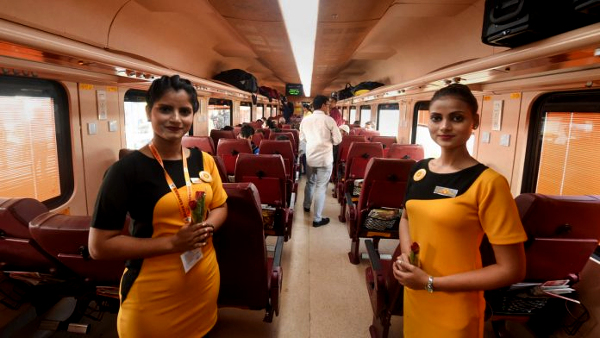
Indian Railways is preparing a wide-ranging overhaul of crowd management at 76 stations across the country, as it moves to make train travel safer and more comfortable during rush hours through a mix of passenger holding areas, stricter access control, wider foot-over-bridges, AI-enabled surveillance and stronger on-ground coordination.
The measures, announced by Union Railways Minister Ashwini Vaishnaw in a reply in the Rajya Sabha on Friday, are aimed at easing congestion at some of the country’s busiest stations, where heavy passenger movement during peak hours often creates safety and operational challenges. At the centre of the plan is the creation of permanent holding areas outside platforms at 76 identified stations. These spaces are being designed as organised waiting zones equipped with seating, drinking water, toilets, ticketing facilities, information displays and security checks so that platforms remain less crowded and passenger movement can be managed more smoothly.
New Delhi Railway Station has already become the first example of this model in operation. According to the government, the station’s holding area is now serving passengers with a range of amenities including additional ticket counters, automatic ticket vending machines, public announcement systems, electronic train information boards, CCTV surveillance, luggage scanners, door frame metal detectors, uninterrupted power supply, improved lighting, high-volume low-speed fans, fire-fighting and lightning protection systems, RO drinking water and separate toilets for men, women and Divyangjan passengers. Similar arrangements are planned for the remaining stations, though implementation timelines will depend on planning and execution at each location.
A key part of the new strategy is tighter access control. Under the proposed system, passengers with confirmed reserved tickets will be allowed direct entry to platforms, while those without tickets or those holding waiting-list tickets will be required to wait in designated holding areas outside. Railway authorities believe this will help reduce overcrowding on platforms and improve overall passenger flow.
To further support movement inside stations, Indian Railways has also developed two new standard designs for wider foot-over-bridges, one measuring 12 metres and the other 6 metres in width. These wider structures are expected to improve pedestrian circulation and reduce bottlenecks, especially at stations that regularly witness high volumes of foot traffic.
Technology is also being brought into the crowd-control plan in a bigger way. AI-enabled CCTV cameras are being installed at railway stations and adjoining areas for closer monitoring, while war rooms are to be set up at major stations so that officials from multiple departments can coordinate in real time during crowd surges or emergencies. In addition, heavy-footfall stations will be equipped with new-generation digital communication systems, including walkie-talkies, announcement systems and calling systems to improve coordination among staff.
Indian Railways is also introducing QR-based identity cards for station staff and service personnel to ensure secure and controlled access. Staff members will also be given redesigned uniforms so they can be identified more easily during emergencies or crisis situations.
In an important administrative change, a senior officer at every major station will be designated as the Station Director, with financial powers to take on-the-spot decisions related to station improvement and crowd management. All departments at such stations will report directly to the Station Director, creating a unified command structure. The Station Director will also be empowered to regulate ticket sales depending on station capacity and the availability of trains, a move that could help prevent crowd build-up beyond manageable limits.
The government said the combined set of measures is intended to modernise railway station management and improve safety, convenience and coordination at high-density stations across the country.
Source: PIB
You may also like
-
BHEL–Coal India Joint Venture Begins Construction of ₹25,016 Crore Indigenous Coal Gasification Project in Odisha
-
PM Modi to Inaugurate RBI’s Tier IV Data Centre and Cybersecurity Training Institute in Bhubaneswar
-
India Creates 11 Crore Digital Farmer IDs Five Months Ahead of Target, Strengthening AgriStack Infrastructure
-
Chak-Hao Black Rice of Manipur and Nagaland: The Aromatic Purple Heritage Grain with GI Recognition
-
Oil India Discovers Natural Gas in Krishna-Godavari Basin, Records Peak Flow of 2 Lakh Cubic Metres Per Day
