GI Produce of India — 04
Among the mangoes of northern India, few are as closely associated with a particular landscape as the Dusseheri is with Malihabad, the historic mango-growing belt west of Lucknow in Uttar Pradesh. Long before the fruit turns yellow in summer markets, the orchards of Malihabad pass through an annual cycle of winter flowering, spring fruit development and weeks of careful observation before harvest. The region’s farmers watch temperature, rainfall, humidity, pests and fruit maturity closely because even small changes during flowering or fruit development can influence the season’s entire crop.
The ripe Malihabadi Dusseheri is not known for spectacular size. Instead, its reputation rests on soft, sweet and almost fibreless flesh, abundant juice, a distinctive fragrance and an elongated shape that has become familiar across northern India. These characteristics, combined with the centuries-old orchard tradition of Malihabad, eventually earned the mango formal geographical recognition when Mango Malihabadi Dusseheri received Geographical Indication registration on 4 September 2009.
A Mango With Several Spellings but One Famous Identity
The name of the variety appears in several forms across India. Consumers may encounter Dusseheri, Dashehari, Dussheri, Dussehri or Dasheri depending on the region, market or institution using the name. India’s Geographical Indications Registry officially records the protected product as “Mango Malihabadi Dusseheri.”
The National Horticulture Board generally describes the cultivar as Dashehari and identifies it as a small-to-medium-sized, elongated mango that develops a yellow colour on ripening. Its flesh is soft and fibreless, and the variety is principally valued as a table mango. APEDA likewise recognises Dusseheri as one of India’s important commercial mango varieties, particularly valued for sweetness, juicy pulp and pleasant flavour.
Although the cultivar is now grown across several parts of India, the GI refers specifically to the mango’s geographical association with Malihabad and its surrounding orchard landscape. This distinction between a cultivar and its place of origin becomes particularly important when discussing geographical indications.
Malihabad — The Orchard Country of Lucknow
Malihabad lies west of Lucknow within the fertile Gangetic plain, where mango orchards have shaped the countryside for generations. The region experiences cool and comparatively dry winters followed by increasingly warm spring conditions and intense summer heat. The southwest monsoon normally arrives around the later stages of the mango season, producing a distinctive annual climatic rhythm suited to mango cultivation.
The soils around Lucknow and Malihabad are largely influenced by the alluvial systems of the Gangetic basin and the Gomti region. These soils, combined with local climatic conditions and centuries of orchard management, have helped shape the reputation of the Malihabadi Dusseheri.
The relationship between geography and mango quality is important because a mango variety is not produced by genetics alone. The same cultivar planted in different environments can display variations in sweetness, colour, fruit size, aroma and maturity period. Soil drainage, summer temperatures, winter conditions, irrigation, flowering weather and orchard management all influence the final fruit.
Malihabad’s importance therefore comes not merely from the presence of Dusseheri trees but from the interaction between the cultivar and a long-established mango-growing environment.
The Famous Mother Tree of Dusseheri
Few major commercial mango varieties possess an origin story as tangible as Dusseheri. Near the historic village associated with the cultivar stands an old mango tree traditionally regarded as the mother tree from which the famous Dusseheri variety spread.
Official horticultural material has described this tree as approximately two to three centuries old. The Indian Council of Agricultural Research has also recognised the historic Malihabad tree as the parent tree associated with the world-famous Dusseheri mango.
The significance of the tree goes far beyond its age. Mangoes cannot always be reproduced faithfully from seed because seedlings show substantial genetic variation. When farmers discover an exceptional tree, they preserve its characteristics through vegetative propagation, particularly grafting.
Through this process, scion material from a desirable tree can be repeatedly multiplied. A single exceptional mango tree can therefore become the genetic ancestor of thousands of trees planted across many generations.
The Dusseheri mother tree represents precisely this horticultural continuity. Its importance lies not simply in surviving for centuries but in providing the genetic foundation for one of northern India’s best-known mango cultivars.
A Fruit of the Awadh Landscape
The rise of Dusseheri is closely connected with the horticultural culture of Awadh, particularly the region around Lucknow and its surrounding estates. Mango cultivation in India is thousands of years older than the Nawabi period, but the courts and landed estates of Awadh played an important role in preserving, selecting and multiplying desirable mango varieties.
Orchards became part of the cultural landscape of the region. Landowners and cultivators maintained trees valued for sweetness, aroma, texture, colour, ripening period and unusual fruit characteristics. Grafting allowed those desirable qualities to be reproduced rather than lost through seedling variation.
Dusseheri emerged from this larger orchard culture and gradually moved beyond its original locality. Over time it became one of the most widely recognised commercial mango varieties of northern India.
Several stories circulate about the exact circumstances in which the original tree was discovered and propagated. Some are rooted in local oral tradition rather than documentary history. The strongest historical evidence therefore lies in the surviving mother-tree tradition, the long-established mango culture of Malihabad and the documented commercial importance of the variety.
The Geography Behind the Sweetness
The annual production cycle of Dusseheri depends heavily on the seasonal climate of the Lucknow region. Mango flowering normally begins during the cooler and drier part of the year. Trees produce large flowering panicles carrying numerous tiny flowers, but only a very small proportion ultimately develop into mature fruit.
Weather during this stage is critical. Unseasonal rainfall can interfere with flowering and pollination, while excessive humidity can encourage fungal diseases. Sudden temperature changes can also influence fruit set and the eventual size of the crop.
Once the young mangoes establish themselves, temperatures rise steadily through spring. April, May and June bring increasingly intense heat, while growers manage irrigation, nutrition, pest control and orchard sanitation.
The Dusseheri has become strongly adapted to this seasonal pattern of cool winter conditions followed by hot fruit-development months. This environmental rhythm, combined with local soils and traditional orchard management, forms an important part of the geographical character behind the Malihabadi Dusseheri.
Long, Yellow and Almost Fibreless
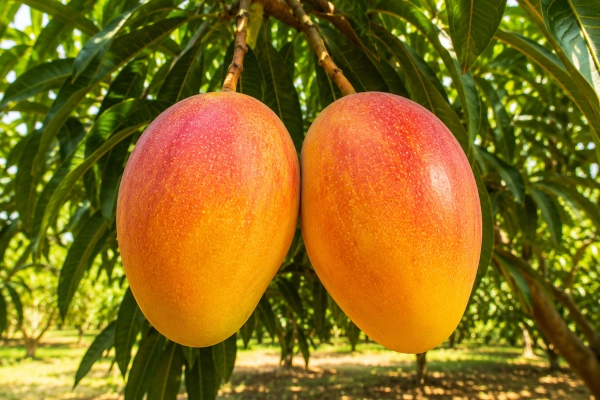
A mature Dusseheri is generally elongated rather than round. The fruit narrows gradually towards the lower end and develops a greenish-yellow to yellow skin as it ripens. Some mangoes may retain traces of green even when the pulp has reached excellent eating quality.
The greatest attraction lies inside.
Dusseheri flesh becomes soft, smooth, juicy and remarkably low in fibre. Its sweetness increases during ripening, while the fruit develops the aroma for which the variety is widely recognised. The soft texture makes it particularly enjoyable as a fresh table mango.
The variety also possesses reasonable keeping quality, which contributed to its spread far beyond the Lucknow region. A mango that tastes exceptional but deteriorates immediately after harvest has limited commercial reach. Dusseheri combines good eating quality with sufficient transportability to move through wholesale and retail markets across northern India.
This combination helped transform what was once a local orchard variety into one of India’s most familiar summer mangoes.
Not Every Dusseheri Is Malihabadi Dusseheri
The distinction between the Dusseheri cultivar and Malihabadi Dusseheri is essential.
Dusseheri trees are cultivated in several Indian states. Graftwood has travelled widely, and orchards producing the variety can be found far beyond Malihabad. A mango grown elsewhere may therefore genuinely belong to the Dusseheri cultivar.
However, that does not automatically make it Malihabadi Dusseheri.
A cultivar refers primarily to genetic identity. A geographical indication protects the relationship between a product and the region from which its recognised reputation originates.
The words Malihabadi Dusseheri therefore carry an additional geographical claim. They refer not merely to a particular mango variety but to fruit associated with the protected producing region and its established horticultural tradition.
This distinction becomes especially important when famous regional produce begins commanding premium prices.
An Orchard Reproduced Through Grafting
A Dusseheri orchard cannot reliably be recreated simply by planting the seeds of excellent fruit. Mango seedlings may differ significantly from the tree that produced them because sexual reproduction introduces genetic variation.
Commercial growers therefore depend heavily on vegetative propagation.
A selected rootstock is grown first, and a scion from a desirable Dusseheri tree is then grafted onto it. The resulting plant carries the fruit-producing characteristics of the chosen cultivar while benefiting from the root system of the rootstock.
This technique is one of the foundations of India’s mango heritage. Grafting allows orchardists to preserve characteristics selected generations earlier and reproduce them across new orchards.
It also makes the quality of nursery material extremely important.
A mango orchard represents a long-term investment. Farmers may wait several years before young trees begin producing commercially significant crops. If a graft is incorrectly labelled or comes from inferior genetic material, the mistake may not become apparent until years later.
For this reason, reliable nurseries, authentic mother plants and scientific propagation are essential to preserving the reputation of traditional varieties such as Malihabadi Dusseheri.
From Traditional Mango to Modern Breeding Parent
The influence of Dusseheri extends beyond traditional orchards.
Indian horticultural scientists have used the cultivar as a parent in modern mango-breeding programmes. One of the most famous examples is Amrapali, developed from a cross between Dusseheri and Neelum.
Amrapali became valued for traits including regular bearing, compact tree growth and suitability for high-density planting. Its development demonstrates how traditional cultivars can become genetic building blocks for modern horticulture.
The story therefore moves across centuries.
Traditional orchardists first identified and preserved exceptional mango characteristics. Scientific breeding programmes later used those established varieties to develop new combinations of desirable traits.
Dusseheri is consequently not simply a historical mango. It remains part of India’s continuing horticultural development.
Waiting for the First Dusseheri of Summer
Dusseheri is closely associated with the early and middle stages of the north Indian mango season. Commercial arrivals generally become significant during June and July, although exact timing varies according to location and annual weather conditions.
The journey to harvest begins months earlier.
Flowering must survive winter and early-spring weather. The young fruit then has to withstand disease, insects, temperature fluctuations and occasional storms while steadily increasing in size.
Fruit intended for distant markets is generally harvested at physiological maturity rather than being allowed to become completely soft on the tree. This ensures that the mango retains enough firmness to survive sorting, packing and transport.
Knowing when to harvest requires considerable experience.
An immature mango may soften after picking but never develop the expected sweetness and aroma. Fruit harvested too late can bruise easily and deteriorate during transport.
The perfect mango seen by a consumer therefore depends upon decisions made in the orchard days or even weeks earlier.
When Malihabad Becomes a Mango Economy
Mango season changes the rhythm of Malihabad.
Orchards that appear quiet during much of the year suddenly become centres of intense activity. Harvest workers enter the fields, fruit is collected and graded, packaging material arrives and trucks begin carrying consignments towards wholesale markets.
The mango economy extends far beyond orchard owners.
Nurseries supply grafted plants. Agricultural labourers prune trees, manage irrigation and assist with pest control. Harvesters collect mature fruit. Packing workers sort mangoes according to size, appearance and quality. Transporters carry consignments to local and distant markets.
Commission agents, wholesalers, retailers and processors form additional layers of the supply chain.
The annual Dusseheri harvest therefore supports a substantial rural and commercial ecosystem. A few weeks of fruit marketing represent the culmination of months of biological development and an entire year of orchard management.
The Journey to GI Recognition
The formal process of securing geographical protection for Malihabadi Dusseheri began when the National Horticulture Board filed the GI application on 15 May 2008.
The application was registered as GI Application No. 125 under Class 31 for agricultural goods. It subsequently appeared in Geographical Indications Journal No. 28, which became available on 24 November 2008.
After completing the registration process, Certificate No. 108 was issued on 4 September 2009, formally recognising Mango Malihabadi Dusseheri as a geographical indication associated with Uttar Pradesh.
The registration has since been renewed and remains an important legal mechanism through which producers can protect the geographical reputation associated with Malihabad’s famous mango.
The registered proprietor is the National Horticulture Board, while the protected product remains classified as an agricultural good under Class 31.
GI Details at a Glance
Geographical Indication: Mango Malihabadi Dusseheri
State: Uttar Pradesh
Product: Agricultural
Class: 31
Application Number: 125
Date of Filing: 15 May 2008
GI Journal: No. 28
Journal Availability Date: 24 November 2008
Certificate Number: 108
GI Certificate Date: 4 September 2009
Registered Proprietor: National Horticulture Board
Geographical Area: Uttar Pradesh
Registration Valid Until: 14 May 2028
What the GI Protects
A geographical indication does not give ownership of a mango cultivar to a single farmer or company.
Instead, it protects a collective geographical reputation.
This principle is particularly important for Dusseheri because the cultivar became so successful that it spread far beyond its original region. Trees producing Dusseheri mangoes can be found across several Indian states.
The GI therefore does not prevent farmers elsewhere from growing the cultivar.
What it protects is the use of the geographical identity associated with Malihabadi Dusseheri.
For consumers, this creates a distinction between variety and origin. A mango may genuinely be Dusseheri while still having been produced outside the Malihabad region.
A strong GI system helps consumers identify genuine geographical origin while helping local producers preserve the commercial value of a reputation built over generations.
The Challenge of Authenticity
The popularity of Dusseheri creates a familiar problem for producers of famous regional foods.
A consumer standing in a market cannot easily determine where every mango was cultivated.
Fruit grown in different places may look extremely similar, especially when the cultivar itself is genetically identical. Appearance alone therefore cannot establish geographical authenticity.
Effective GI protection requires more than legal registration. It depends upon authorised producers, traceability, reliable labelling, grading and consumer awareness.
When these mechanisms function properly, geographical origin becomes commercially meaningful.
Consumers gain greater confidence about what they are buying, while genuine producers gain greater protection from fruit marketed using a regional reputation it has not actually earned.
Uttar Pradesh at the Centre of India’s Mango Landscape
Malihabadi Dusseheri belongs to one of India’s most important mango-producing states.
Uttar Pradesh possesses an enormous orchard economy and a remarkable diversity of mango varieties. Dusseheri is joined by famous cultivars such as Langra, Chausa and Lucknow Safeda, along with numerous smaller regional varieties.
Different parts of the state possess distinct mango-growing environments, harvest periods and horticultural traditions. The result is not one uniform mango landscape but a network of regional orchard cultures extending across the Gangetic plain.
Malihabad occupies a particularly important position within this larger geography because it combines large-scale cultivation with a powerful historical reputation.
Its orchards have become synonymous with mango growing around Lucknow, making the region one of the most recognisable fruit-producing landscapes in northern India.
Malihabadi Dusseheri and the Export Opportunity
India’s mango economy is enormous, but only a relatively small proportion of national production enters international trade.
Dusseheri nevertheless possesses several characteristics favourable for export. The fruit is familiar to consumers, has attractive sweetness and aroma, and possesses reasonable keeping quality when harvested and handled correctly.
The principal challenge is maintaining quality between orchard and consumer.
Fresh mangoes are highly perishable. Temperature management, post-harvest treatment, packaging, residue compliance, phytosanitary certification and transport time all influence whether a fruit arrives overseas in good condition.
For premium regional mangoes, geographical identity could eventually become an important marketing advantage in international markets, particularly among consumers already familiar with Indian mango varieties.
GI recognition gives Malihabad a foundation upon which stronger origin-based branding can be developed.
The Possibility of Sea-Freight Mango Exports
Recent advances in post-harvest technology are beginning to create new possibilities for Indian mango exports.
In 2026, consignments containing Dashehari and other north Indian mango varieties were successfully tested on refrigerated maritime routes. These shipments demonstrated that scientific harvesting, cold-chain management and controlled transport could potentially allow mangoes to survive much longer journeys than conventional handling methods permitted.
This development could become particularly significant for varieties such as Dusseheri.
Air freight is fast but expensive. Sea transport is much cheaper, although the longer journey historically made it difficult to use for delicate premium mangoes.
If reliable sea-freight protocols can be applied commercially to authenticated Malihabadi Dusseheri fruit, growers could gain access to overseas markets at significantly lower transport costs.
Modern post-harvest science may therefore reshape the economics of a mango whose history stretches back several centuries.
More Than a Fresh Table Mango
Dusseheri is primarily consumed fresh, but the fruit can also support a wider processing industry.
Its sweet, fibreless flesh can be converted into pulp, juice, beverages, jams, desserts, candies and other value-added products.
Processing is particularly important for fruit that remains perfectly edible but does not satisfy the visual standards demanded by premium fresh markets.
A mango with superficial blemishes may receive a much lower price even when the pulp inside remains excellent. Processing allows more of that fruit to retain economic value.
It also provides an alternative during years of heavy production, when large volumes of mangoes reach markets within a short period and wholesale prices can fall sharply.
A stronger processing ecosystem therefore reduces waste while creating additional income opportunities around the orchard economy.
Mango Malformation and Orchard Management
Like other commercial mango varieties, Dusseheri faces several horticultural challenges.
One particularly important problem is mango malformation, which can affect both vegetative growth and flowering structures. When floral panicles become malformed, fruit production can decline significantly.
Growers must also contend with mango hoppers, fruit flies, mealybugs, fungal diseases and weather-related damage.
Mango orchards may appear permanent and self-sustaining because the trees can survive for decades, but commercial fruit production requires continuous management.
Pruning, orchard sanitation, irrigation, nutrition, pest control and flowering management can strongly influence both yield and fruit quality.
The success of Malihabadi Dusseheri therefore depends upon horticultural knowledge just as much as favourable soil or climate.
Climate Variability and the Future of Malihabad
Climate variability presents an increasingly serious challenge for mango-growing regions.
Flowering is particularly vulnerable.
Unseasonal rainfall, fog, excessive humidity, unusually warm winter conditions or sudden temperature changes can interfere with pollination and fruit set. Because only a small proportion of mango flowers ultimately become mature fruit, even modest disturbances can have significant consequences.
Later in the season, extreme heat can increase water stress and affect fruit development. Strong winds and storms can cause large-scale fruit drop shortly before harvest, destroying months of accumulated value.
These problems are especially serious for perennial orchard crops.
A mango tree remains in the field for decades, meaning farmers cannot simply change crops from year to year in response to changing weather.
The future resilience of Malihabad’s orchards will therefore depend increasingly on improved forecasting, efficient irrigation, moisture conservation, canopy management, disease surveillance and scientific orchard practices.
Traditional mango culture and modern agricultural science will have to work together.
Protecting an Orchard Heritage, Not Merely a Name
The greatest asset of Malihabad is not simply the commercial name Dusseheri.
It is the living agricultural system behind that name.
That system includes old trees, mother plants, grafting traditions, nurseries, orchard workers, local cultivators, soils, climate and generations of accumulated knowledge.
A GI certificate can protect geographical reputation, but it cannot by itself preserve an orchard tradition.
Historic trees must be conserved. Authentic germplasm must be maintained. Nurseries need reliable propagation material. Farmers need economically viable markets, and consumers need ways to identify genuine geographical origin.
Only when these elements remain connected does a geographical indication become a living form of agricultural heritage rather than merely a legal registration.
The Mango That Carries an Awadh Summer
Malihabadi Dusseheri does not depend upon exceptional size to establish its identity.
Cut open a properly ripened fruit and the reason for its reputation becomes immediately apparent. Beneath the yellow-green skin lies soft, sweet and almost fibreless flesh, rich with juice and carrying the familiar fragrance that generations of consumers associate with the arrival of the north Indian mango season.
Yet flavour explains only part of its importance.
The fruit carries the orchard country of Malihabad, the alluvial landscape around Lucknow, the horticultural culture of Awadh and the extraordinary continuity represented by the famous Dusseheri mother tree.
It also demonstrates the power of grafting. A tree selected generations ago did not remain merely an individual plant. Its genetic qualities were multiplied across orchards, carried to new regions and eventually incorporated into modern mango-breeding programmes.
The 4 September 2009 Geographical Indication registration formally recognised the relationship between Malihabad and its celebrated mango, but the reputation itself was already centuries old.
Every summer, when elongated Dusseheri mangoes begin appearing in the markets of Lucknow and across northern India, that history becomes visible once again.
Malihabadi Dusseheri is therefore more than a sweet seasonal fruit. It is one of the living orchard traditions of Awadh, preserved through geography, grafting, generations of cultivation and the enduring taste of an Indian summer.
You may also like
-
India’s Economic Warfare Challenge: Strategic Autonomy, Energy Security and the Rise of a Global Power
-
India-US Trade Deal Stalemate: Why Washington’s Tariff Pressure Has Failed to Secure an Agreement
-
US Double Standards in Foreign Policy: 16 Recent Cases Involving India, Russia, China and Global Trade
-
India’s Arctic Energy Ambitions: Russian Oil, LNG and a New Sea Route to Indian Ports
-
India and Russia Explore Joint Icebreaker Construction as Maritime Industrial Cooperation Expands
