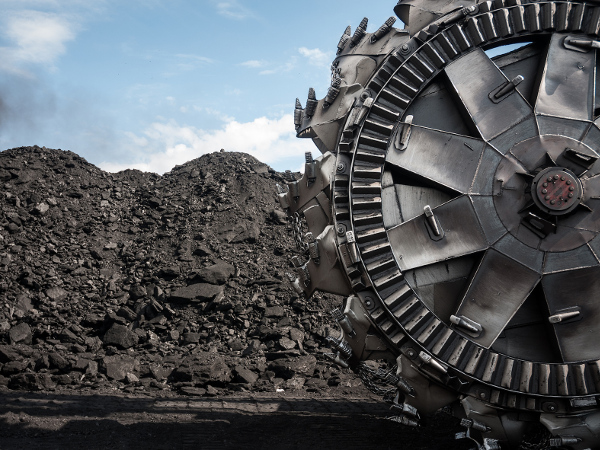
India’s mineral sector has crossed an important reform milestone, with 101 auctioned mineral blocks becoming operational since the introduction of the auction regime in 2015. The achievement, announced by the Ministry of Mines and reported by News On AIR, reflects the government’s push to move beyond merely auctioning mineral assets and ensure that allocated blocks actually transition into production.
The Ministry said the operationalisation of these blocks is helping strengthen India’s domestic mineral production, improve raw material security for core industries, reduce import dependence and support wider economic growth. This is significant because minerals such as iron ore, limestone, bauxite, manganese and chromite are directly linked to major industrial sectors including steel, cement, aluminium, infrastructure and manufacturing.
The milestone also points to the impact of mining-sector reforms introduced over the past decade. Since 2015, India has shifted towards a more transparent and competitive auction-based system for allocating mineral resources. The Ministry said that FY 2025–26 recorded the highest-ever annual performance under the auction regime, with 212 mineral blocks auctioned in a single financial year, showing growing momentum in the country’s mineral allocation framework.
A major part of the success has come through Centre–State coordination. The Ministry of Mines said it worked closely with state governments to speed up statutory clearances, facilitate approvals, monitor progress and resolve implementation challenges. This approach helped convert auctioned blocks from paper allocations into producing assets, which is essential for improving India’s long-term resource security.
Among the states, Odisha leads with 34 operationalised blocks, followed by Karnataka with 18 and Gujarat with 11. Other contributing states include Madhya Pradesh, Rajasthan, Goa, Andhra Pradesh, Chhattisgarh, Maharashtra and Assam. The Ministry also highlighted Assam’s performance, noting that one block was operationalised within just nine months of the Letter of Intent being issued, reflecting faster administrative execution.
The operationalised portfolio is led by iron ore, which accounts for 47 blocks, followed by limestone with 29 blocks. Other minerals in the basket include bauxite, manganese ore, chromite and associated minerals. This spread is important because it supports India’s industrial base at a time when the country is expanding infrastructure, manufacturing capacity and domestic value chains under the broader goals of Aatmanirbhar Bharat and Viksit Bharat 2047.
The successful operationalisation of 101 auctioned mineral blocks therefore marks more than a numerical achievement. It signals a maturing mining governance system where auctions, clearances, state-level execution and production outcomes are being linked more closely. For India’s economy, this means stronger domestic supply chains, improved raw material security and a more predictable mineral ecosystem for industries that form the backbone of infrastructure and manufacturing growth.
You may also like
-
NTPC Identifies Three Nuclear Power Plant Sites as India Advances 30 GW Atomic Energy Expansion
-
Seven Indian SMEs Debut on Stock Exchanges as Electronics, Software and Engineering Firms Access Public Markets
-
India’s Quick Commerce Market Could Reach US$90 Billion by FY31 as Retail Shopping Undergoes Major Transformation
-
India Targets 10% of Global 6G Patents and Standards, Pushes Indigenous Telecom Technologies
-
Chokuwa Rice of Assam — The Traditional “Soak-and-Eat” Grain of the Brahmaputra Valley
