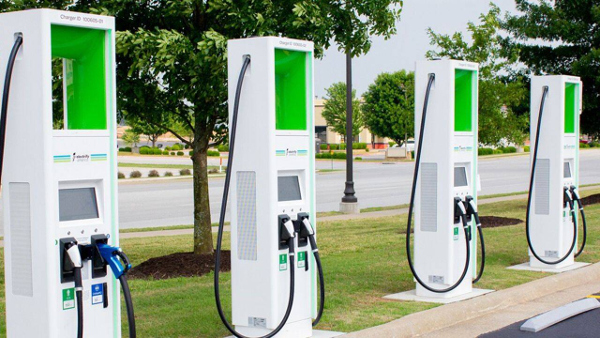
India’s electric mobility programme received a fresh push as the Ministry of Heavy Industries organised a National Conference on “Enabling Nationwide EV Charging Infrastructure under PM E-DRIVE Scheme” in Bengaluru on May 12, 2026. The conference brought together representatives from states, Union Territories, charge point operators, EV manufacturers, oil marketing companies, Central Public Sector Enterprises and automobile industry bodies to discuss the accelerated rollout of public EV charging infrastructure across the country.
Addressing the gathering, Union Minister for Heavy Industries and Steel H.D. Kumaraswamy said the Government of India is committed to building a modern, reliable and future-ready EV charging ecosystem to support the country’s clean mobility transition. He said the PM E-DRIVE Scheme reflects the Centre’s effort to make electric mobility affordable, dependable and accessible across both urban and rural India.
A major announcement at the conference was the approval of Karnataka’s proposal for installing 1,243 EV chargers with a financial outlay of ₹123.26 crore. With this, the total approved EV charging proposals under the scheme have reached ₹503.86 crore, covering the installation of 4,874 EV chargers across different states and Central Public Sector Enterprises. The approved proposals include HPCL, IOCL and BPCL, along with states such as Rajasthan, Andhra Pradesh, Uttar Pradesh, Gujarat, Kerala, Telangana, Karnataka and Tamil Nadu.
The PM E-DRIVE Scheme, formally known as the PM Electric Drive Revolution in Innovative Vehicle Enhancement Scheme, has a total outlay of ₹10,900 crore and is aimed at accelerating EV adoption, creating charging infrastructure and strengthening India’s electric vehicle manufacturing ecosystem. The scheme covers demand incentives and infrastructure support for electric two-wheelers, three-wheelers, buses, trucks, ambulances and other emerging EV segments.
Under the scheme, support is proposed for around 24.79 lakh electric two-wheelers and about 3.16 lakh electric three-wheelers, including e-rickshaws, e-carts and L5 category vehicles. It also provides ₹4,391 crore for the deployment of more than 14,028 electric buses. Out of the total scheme outlay, ₹3,679 crore has been earmarked for demand incentives, while ₹2,000 crore has been specifically allocated for EV public charging infrastructure across the country. Another ₹780 crore has been set aside for modernisation and upgradation of vehicle testing agencies under the Ministry of Heavy Industries.
The conference also highlighted the need for closer coordination between the Centre, state governments, BHEL, charge point operators, oil marketing companies, EV manufacturers and industry stakeholders. According to the Ministry, such coordination will be critical for ensuring scale, interoperability, standardisation and reliability in India’s EV charging network.
Kumaraswamy also referred to the upcoming National Unified EV Charging App, Unified Bharat e-Charge, which is being developed to help EV users discover charging stations, access charging services and make payments across networks through a single digital interface. The Ministry is working with the Ministry of Power, state governments and industry players to improve grid readiness, standardisation and digital integration for the next phase of EV expansion.
The conference comes at a time when India is trying to move from incentive-led EV adoption to infrastructure-backed mass transition. The expansion of charging stations is expected to reduce range anxiety, support electric buses and trucks, encourage private EV ownership and strengthen India’s broader goals of energy security, cleaner transport, Aatmanirbhar Bharat and Net Zero emissions by 2070.
You may also like
-
NTPC Subsidiary NVVN Targets 1,000 MWh Battery Storage Capacity by March 2027
-
DFCCIL Sets New Freight Operations Record with 946 Train Interchanges in a Single Day
-
NTPC Identifies Three Nuclear Power Plant Sites as India Advances 30 GW Atomic Energy Expansion
-
Seven Indian SMEs Debut on Stock Exchanges as Electronics, Software and Engineering Firms Access Public Markets
-
India’s Quick Commerce Market Could Reach US$90 Billion by FY31 as Retail Shopping Undergoes Major Transformation
