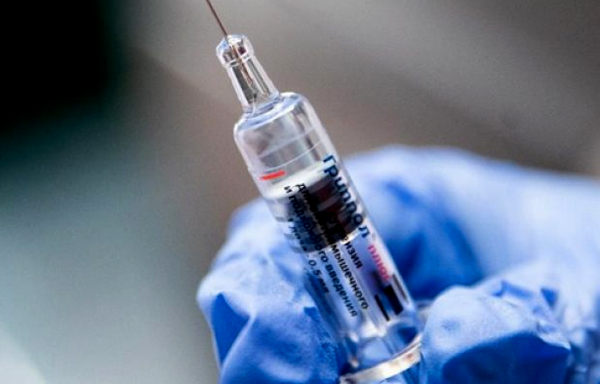
India’s immunisation story is now a demonstration of how a large developing country can build a public-health architecture capable of reaching millions of children and pregnant women year after year, while steadily converting vaccine access into measurable gains in survival, disease control, and health security. The DD News report highlights that India has already eliminated smallpox, polio, and maternal and neonatal tetanus through sustained vaccination efforts, and that record alone places the country among the major public-health success stories of the modern era. India’s last polio case was reported in 2011, a milestone achieved through the Pulse Polio Programme, while routine immunisation has continued to expand through the Universal Immunization Programme (UIP), one of the world’s largest publicly funded vaccination systems.
What makes this achievement especially important is the scale at which India operates. The UIP covers children and pregnant women across the country through government-supported vaccination services, and the programme has been reinforced over the years by targeted campaigns designed to close last-mile gaps in hard-to-reach and low-coverage areas. Mission Indradhanush, launched in 2014, was specifically aimed at raising full immunisation coverage by focusing on unvaccinated and partially vaccinated children and pregnant women, especially in underserved pockets. Its intensified versions were designed to push coverage beyond routine delivery and move closer to the goal of universal protection.
The significance of this effort lies in outcomes, not just infrastructure. Vaccination has played a major role in reducing child mortality and in controlling diseases such as measles-rubella and tuberculosis, while also strengthening India’s ability to respond to newer public-health priorities. In 2026, the government launched a nationwide HPV vaccination campaign for 14-year-old girls to protect against cervical cancer, alongside the rollout of an indigenously manufactured tetanus-diphtheria vaccine, showing that India’s immunisation programme is not frozen in its older successes but is continuing to evolve with changing disease burdens.
The digital backbone behind the programme is also becoming increasingly important. According to a February 2026 government update, the U-WIN portal had registered 11.12 crore children and 3.78 crore pregnant women as of 8 February 2026, allowing beneficiaries to receive vaccination records and QR-based certificates while integrating immunisation data with other health platforms. That matters because vaccine delivery at this scale depends not only on syringes, vials, and field workers, but also on reliable data systems that can track coverage, reduce dropout, and improve accountability. India’s immunisation effort is therefore becoming both a public-health programme and a digital-governance system.
There is also a broader global context to this success. The World Health Organization has described vaccines as one of humanity’s greatest achievements, estimating that over the last 50 years essential vaccines have saved at least 154 million lives worldwide. India’s programme sits inside that larger global story, but with a special significance of its own: it shows that mass immunisation in a country of continental scale is possible when political commitment, public-health networks, cold-chain infrastructure, frontline workers, and digital tools work together. In that sense, India’s immunisation drive is not merely transforming public health domestically; it is also serving as a model of how scale and state capacity can be turned into health protection for millions.
Reference:
DD News
https://ddnews.gov.in/en/celebrating-the-power-of-vaccines-how-indias-immunisation-drive-is-transforming-public-health/
Ministry of Health and Family Welfare — Universal Immunization Programme
https://www.mohfw.gov.in/?q=en/Major-Programmes/universal-immunization-programme-uip
PIB
https://www.pib.gov.in/PressNoteDetails.aspx?ModuleId=3&NoteId=157836&lang=2®=3
PIB / U-WIN update
https://www.pib.gov.in/PressReleaseDetail.aspx?PRID=2241066&lang=1®=3
NHM / Immunization
https://nhm.gov.in/index1.php?lang=1&level=2&lid=220&sublinkid=824
WHO / World Immunization Week 2025
https://www.who.int/campaigns/world-immunization-week/2025
You may also like
-
Ayurveda on Cold Foods and Iced Drinks: Why Food Temperature Matters for Digestion
-
Serum Institute of India-Manufactured Ebola Vaccine Enters Clinical Trial in Uganda
-
Ayurveda and Hydration: How Much Water Should We Really Drink?
-
Warm Water in Ayurveda: When and Why It Is Recommended
-
Women Make Up 43% of India’s Ayush Workforce as Sector Supports 17.6 Lakh Livelihoods
