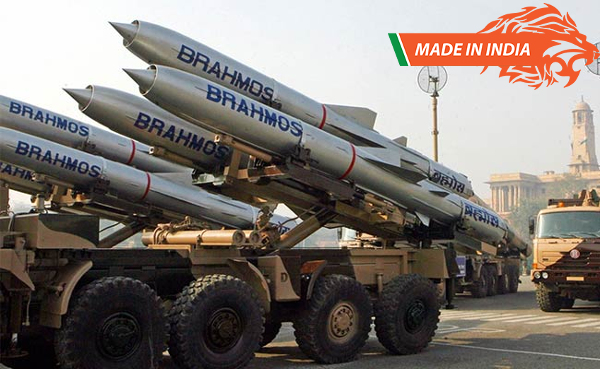
India’s defence export ambitions have taken a major step forward with the confirmation that Vietnam has signed a deal to acquire the BrahMos supersonic cruise missile system. The development marks another important milestone for India’s growing role as a supplier of advanced military systems to friendly nations, especially in Southeast Asia.
The confirmation came from Defence Secretary Rajesh Kumar Singh during his remarks at the Shangri-La Dialogue in Singapore. He stated that the BrahMos agreement with Vietnam had already been signed, while a similar deal with Indonesia was in the final stages. The statement gives official weight to months of reports that India was moving closer to major missile export agreements with two key maritime nations in the Indo-Pacific.
BrahMos is one of India’s most important strategic weapons exports. Developed jointly by India and Russia, the missile is known for its high supersonic speed, precision strike capability and flexible deployment from land, sea and air platforms. For coastal and island nations, it offers a powerful maritime deterrent, especially when deployed as a shore-based anti-ship system.
Vietnam’s acquisition of BrahMos carries deep strategic significance. Vietnam has long focused on strengthening its coastal defence and maritime security architecture due to its geography and its security concerns in the South China Sea. A BrahMos system can strengthen Vietnam’s ability to monitor, deter and respond to hostile naval movement across sensitive maritime zones. For India, the deal reflects a mature defence relationship with Hanoi and a practical extension of its Act East policy.
The Indonesia track is equally important. Indonesia is the world’s largest archipelagic country, sitting across critical sea lanes connecting the Indian Ocean and the Pacific. A BrahMos acquisition would strengthen Jakarta’s maritime strike capability and give its armed forces a credible long-range coastal defence option. While Indonesian officials had earlier confirmed movement on a BrahMos procurement agreement, the latest Indian statement places the deal in the final stages, meaning the public confirmation of full closure is still awaited from all sides.
The wider message is clear: India is no longer only a buyer in the global defence market. It is now becoming a supplier of high-end systems. The earlier BrahMos export deal with the Philippines created the first major breakthrough. Vietnam and Indonesia can now take that momentum further, creating a Southeast Asian customer base for one of India’s most advanced weapon platforms.
This also strengthens India’s strategic diplomacy. Defence exports create long-term relationships because they involve training, maintenance, spares, upgrades, technical support and regular military engagement. A missile system such as BrahMos is not a one-time sale; it creates a sustained defence partnership between India and the purchasing country.
The timing is important. Southeast Asian nations are modernising their militaries, strengthening coastal surveillance and investing in deterrence systems. India’s offer of BrahMos fits into this regional demand for reliable, combat-proven and high-speed precision weapons. It also gives friendly nations an alternative source of advanced military hardware beyond the traditional Western, Russian and Chinese supply chains.
For India’s defence industry, the Vietnam deal is a confidence-building moment. It shows that Indian platforms can compete in serious strategic markets. It also supports the government’s wider objective of expanding defence exports, promoting indigenous manufacturing and positioning India as a dependable security partner.
The final value, quantity and delivery timeline of the Vietnam agreement have not been officially disclosed. Reports suggest that the package may include missile systems, training and logistical support, but those details should be treated as reported estimates until formal information is released.
India’s BrahMos diplomacy is now entering a new phase. The Philippines opened the export door, Vietnam has strengthened the credibility of the platform in Southeast Asia, and Indonesia could become the next major customer. Together, these developments show how India’s defence exports are becoming a serious tool of strategic influence, maritime security cooperation and Indo-Pacific partnership.
You may also like
-
Polish Prime Minister Donald Tusk Arrives in India to Strengthen Strategic Partnership in Defence, Trade and Technology
-
India’s Indigenous Firefighting Robot Moves from INS Vikrant to Army and Air Force
-
India and Singapore Begin SIMBEX 2026 Naval Exercise in Bay of Bengal, Focus on Anti-Submarine Warfare
-
IBSAMAR IX 2026 Concludes in South Africa, Strengthening Maritime Cooperation Between India, Brazil and South Africa
-
Ammunic Systems Develops Indigenous Loitering Munition Warheads and Drone-Integrated Weapon Technologies
