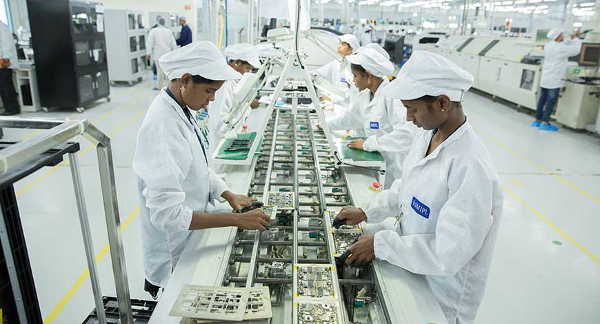
India’s transition towards a larger organised workforce is being powered strongly by young workers, with employees aged 18 to 30 accounting for 79% of new Universal Account Numbers covered by Quess Corp’s Pulse Report FY2026.
The findings provide another indication that formal employment is increasingly becoming an entry point into the labour market for India’s younger population. News on AIR, citing the report, said more than 57,000 new UANs were generated during FY2025-26 within the workforce covered by the study.
Among them, workers aged 21 to 25 alone represented more than 35%, making this the largest individual age group entering formal employment in the report.
Young Workers at the Centre of Formalisation
A Universal Account Number, or UAN, provides an employee with a permanent identity within the Employees’ Provident Fund system. It remains linked to the worker even when the individual changes jobs, helping consolidate provident-fund accounts and access social-security services.
EPFO has also been modernising UAN creation. Aadhaar-based Face Authentication through the UMANG app allows workers to generate and activate UANs digitally, reducing their dependence on employers during the onboarding process.
The age distribution highlighted by the Pulse Report therefore points towards an important labour-market shift. Large numbers of young Indians entering organised employment are simultaneously being brought into systems covering provident-fund savings and other employment-linked benefits.
News on AIR also noted that nearly 59% of new EPFO subscribers in 2024-25 were between 18 and 25 years old, reinforcing the broader trend of younger workers accounting for a substantial share of new formal-sector participation.
Apprenticeships Become Another Gateway to Employment
The report also highlights the growing role of apprenticeships as a bridge between education, skills and employment.
Nearly 64,000 apprenticeship contracts were facilitated under the National Apprenticeship Promotion Scheme in the workforce covered by the study. More than 51% were associated with the automotive sector, demonstrating the continued importance of manufacturing in creating structured entry-level opportunities for young workers.
Apprenticeships can play a particularly important role for workers beginning their careers because they combine workplace exposure with vocational training. For industry, they also provide a pipeline of employees already familiar with manufacturing processes and workplace requirements.
Women Account for Nearly 28% of New UANs
The findings also provide an indication of women’s growing participation in organised employment.
Women represented nearly 28% of the new UANs generated during FY2025-26 in the study and received around 26% of apprenticeship contracts.
Although the numbers indicate that a gender gap remains, expanding women’s participation in formal jobs gives workers greater access to social-security benefits and creates longer-term opportunities for financial independence and career progression.
Formal Employment Spreads Beyond India’s Metros
One of the most notable findings is geographical.
Nearly 69% of the workforce covered by the report was deployed in Tier-II and Tier-III cities, showing that organised employment opportunities are no longer concentrated overwhelmingly in India’s largest metropolitan centres.
This expansion is significant as industries such as manufacturing, retail, logistics, financial services and telecommunications establish deeper networks across smaller cities.
Quess itself operates at considerable scale. The company says it works with more than 2,200 clients and manages a global workforce exceeding 482,000 professionals, while deploying more than 25,000 associates each month across hundreds of locations.
Workforce Becoming More Educated
The educational profile revealed by the study also challenges the assumption that India’s large organised frontline workforce consists predominantly of workers with limited schooling.
Around 96% had completed at least Class 10, while approximately 61% had completed Class 12 or higher. Nearly 30% possessed graduate or postgraduate qualifications.
This increasingly educated workforce is likely to influence the type of jobs employers create. As automation and digital systems spread across retail, logistics, manufacturing and services, companies will increasingly require workers who can combine operational abilities with digital and technical skills.
India’s Employment Story Is Increasingly a Youth Story
Quess describes its Pulse Report FY2026 as an analysis of India’s changing employment ecosystem drawing on EPFO and PLFS statistics, industry studies, macroeconomic indicators and workforce trends. It examines demographic change alongside factors such as technology adoption, Global Capability Centre expansion, policy reforms and sectoral growth.
The findings suggest three changes are occurring simultaneously: young Indians are entering organised employment in substantial numbers, formal jobs are spreading deeper into Tier-II and Tier-III cities, and apprenticeships are becoming a more important route from education into industry.
For a country with one of the world’s largest young populations, the larger challenge will be to sustain this momentum by creating enough productive jobs while improving skills and expanding access to employment-linked social security.
References
- News on AIR – 79% of New UANs Generated During 2025-26 Belong to Age Group Between 18 to 30
https://newsonair.gov.in/79-of-new-uans-generated-during-2025-26-belong-to-age-group-between-18-to-30/ - Quess Corp – Quess Pulse Report FY2026
https://www.quesscorp.com/reports/quess-pulse-report-fy2026/ - Employees’ Provident Fund Organisation / PIB – Aadhaar Face Authentication-Based UAN Generation and Activation Through UMANG App
https://www.pib.gov.in/PressReleasePage.aspx?PRID=2120326 - Quess Corp – Company and Workforce Information
https://www.quesscorp.com/
You may also like
-
Koraput Kalajeera Rice of Odisha: The GI-Tagged Aromatic Heritage of India’s Ancient Rice-Growing Region
-
ICAR Scientists Develop Indigenous Protective Gloves for Cotton Farmers, Sign Commercial Manufacturing Agreement
-
BHEL–Coal India Joint Venture Begins Construction of ₹25,016 Crore Indigenous Coal Gasification Project in Odisha
-
PM Modi to Inaugurate RBI’s Tier IV Data Centre and Cybersecurity Training Institute in Bhubaneswar
-
India Creates 11 Crore Digital Farmer IDs Five Months Ahead of Target, Strengthening AgriStack Infrastructure
