FY27
India’s auto components industry is expected to maintain strong growth momentum in FY27, with the sector projected to expand by 8–10 percent, according to the Automotive Component Manufacturers Association. The growth outlook reflects steady domestic vehicle demand, rising export opportunities and the increasing global competitiveness of Indian component manufacturers.
The industry recorded a turnover of ₹7.60 lakh crore, equivalent to around US$ 85.9 billion, registering 12.7 percent growth in rupee terms over the previous financial year. This performance shows the sector’s expanding role in India’s manufacturing economy and its growing importance within the global automotive supply chain.
A key driver of this growth has been strong demand from original equipment manufacturers. As passenger vehicles, two-wheelers, commercial vehicles and electric mobility segments continue to expand, component makers are seeing sustained orders from vehicle manufacturers. The replacement market has also supported growth, as India’s large vehicle base creates continuous demand for spare parts, maintenance components and aftermarket products.
Exports remain another important pillar for the sector. Indian auto component makers are increasingly supplying to global markets as international manufacturers look for reliable, cost-effective and quality-driven sourcing destinations. Investments in localisation, technology upgradation and manufacturing excellence are helping Indian firms improve competitiveness and meet global quality standards.
However, the sector continues to face challenges. Imports remain high in certain advanced categories, especially electronics and electric vehicle components. This has contributed to a trade deficit in the sector. As vehicles become more software-driven, connected and electric, demand for advanced sensors, semiconductors, battery systems, power electronics and precision components is rising. Building domestic capability in these areas will be crucial for reducing import dependence.
The transition to electric vehicles is creating both opportunity and pressure for the auto components industry. Traditional component makers are adapting their product portfolios, while new suppliers are entering areas such as battery packs, motors, controllers, charging systems and lightweight materials. Companies that invest early in advanced EV technologies are likely to gain an advantage as India’s electric mobility market grows.
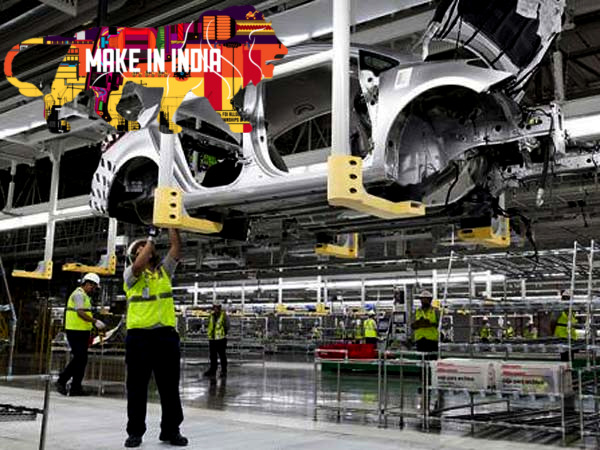
Localisation will be one of the most important priorities for the industry in the coming years. Deeper domestic manufacturing of high-value components can reduce vulnerability to global supply disruptions, improve cost competitiveness and strengthen India’s position as a preferred manufacturing hub. It can also support the government’s broader goals of Make in India and Aatmanirbhar Bharat.
Small and medium enterprises remain a vital part of the auto components ecosystem. Many tier-2 and tier-3 suppliers provide critical parts, machining support, assemblies and specialised manufacturing services. Yet labour shortages, skill gaps and the need for technology upgrades remain pressing concerns, especially for smaller firms. Addressing these challenges through skilling, automation and better access to finance will be important for sustained growth.
Despite these challenges, the long-term outlook remains positive. India’s automotive market is expanding, export demand is improving, and global companies are increasingly looking at India as a sourcing and manufacturing base. Favourable policy support, rising domestic consumption, supply-chain diversification and investments in advanced technologies are expected to support the next phase of growth.
The auto components sector is no longer limited to conventional mechanical parts. It is moving toward electronics, software-linked systems, lightweight materials, safety technologies and EV-specific components. This transformation will define the industry’s future competitiveness.
With projected growth of 8–10 percent in FY27, India’s auto components industry is entering a new stage of expansion. Strong domestic demand, export potential, localisation efforts and technology-led manufacturing can help the sector become one of the major pillars of India’s industrial rise. As global automotive supply chains evolve, India has a strong opportunity to position itself as a trusted, high-quality and innovation-driven hub for automotive components.
You may also like
-
EON Space Labs and Dhruva Space Advance Indian Space Hardware on Transporter-18 Mission
-
SatLeo Labs’ TAPAS-1 Reaches Orbit, Advancing India’s Private Thermal-Imaging Capability
-
TakeMe2Space’s MOI-1A Reaches Space on Falcon 9 Transporter-18 Mission
-
Bank of Baroda Enters Pension Fund Management After PFRDA Appointment
-
SCI and India’s Push for a Larger Indigenous Maritime Fleet
