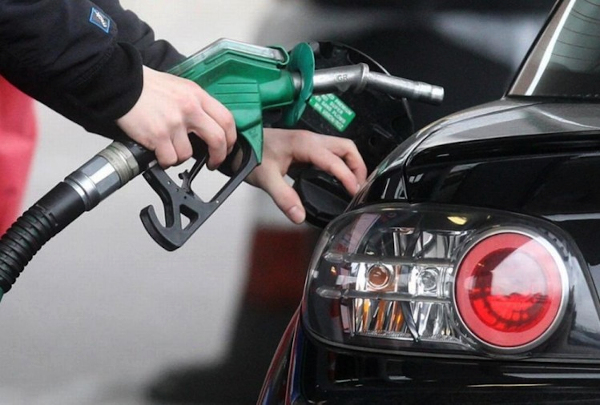
As tensions in West Asia continue to reshape energy routes and regional movement, the Government of India has rolled out a broad response spanning petroleum supply, LPG distribution, natural gas availability, maritime safety and support for Indian nationals across the Gulf and neighbouring countries. The April 4, 2026 update from the Ministry of Petroleum and Natural Gas presents a coordinated picture of crisis management in which fuel availability, consumer reassurance, supply-chain continuity and overseas assistance move together as part of a single national response framework.
At the heart of the response lies the effort to maintain stable supplies of petrol, diesel and LPG despite the closure of the Strait of Hormuz. The government has prioritized domestic LPG and PNG, along with high-priority consumers such as hospitals and educational institutions, while also raising refinery output and stretching booking intervals to manage demand more efficiently. Citizens have been encouraged to rely on official information channels, use digital booking systems for LPG, shift to alternate fuels such as PNG, induction and electric cooking where feasible, and conserve energy in everyday use. States and Union Territories have also been asked to accelerate PNG connections for both domestic and commercial users so that dependence on bottled fuel eases over time.
A large enforcement and monitoring apparatus has accompanied these supply measures. State governments have been asked to institutionalize daily press briefings, activate dedicated control rooms, monitor misinformation, intensify inspections and issue timely allocation orders for commercial LPG and superior kerosene oil. Twenty-one States and Union Territories are already carrying out press briefings. On the enforcement side, more than 3,700 raids were conducted in a single day to curb hoarding and black marketing of LPG. Public sector oil marketing companies have issued around 1,000 show-cause notices to LPG distributorships so far, and 27 distributorships have faced suspension. These steps show a strong administrative effort to combine public communication with market discipline during a period of heightened pressure.
LPG management has emerged as one of the most visible parts of the response. Industry-wide online LPG bookings rose to 95 percent yesterday, while DAC-based authenticated deliveries climbed sharply from 53 percent in February 2026 to 89 percent yesterday, strengthening traceability and reducing diversion risk. Around 51 lakh domestic LPG cylinders were delivered in a single day. For smaller and more flexible purchases, 5 kg free-trade LPG cylinders are available at nearby distributors against any valid ID, with address proof waived. More than 71,000 such cylinders were sold yesterday alone, and about 5.7 lakh have been sold since March 23, 2026. In commercial supply, the Centre has permitted refining companies and petrochemical complexes to make specified C3 and C4 streams available for critical sectors, while commercial LPG allocation has been set at 70 percent of pre-crisis levels, including a reform-linked component. Since March 14, 2026, a total of 72,047 metric tonnes of commercial LPG has been sold.
Natural gas and PNG expansion form the medium-term backbone of the strategy. Domestic PNG and CNG transport users are receiving full supplies, while industrial and commercial consumers connected to the grid are receiving 80 percent of average consumption. Supply to operating urea plants has been running at about 70 to 75 percent of the previous six-month average, and from April 6, 2026, that level is set to rise to about 90 percent. Supplies to other industrial and commercial sectors, including those connected through city gas distribution networks, are also set for an additional 10 percent enhancement from the same date. Several structural measures support this push: the Natural Gas and Petroleum Products Distribution Order, 2026 aims to speed pipeline expansion; PNGRB has directed city gas entities to accelerate domestic PNG connections; the National PNG Drive 2.0 has been extended to June 30, 2026; and more than 3.5 lakh PNG connections have already been gasified since March 2026, with over 3.8 lakh customers registered for fresh connections.
The government has also moved on pricing, liquid fuels and alternative household energy support. All refineries are operating at high capacity with adequate crude inventories, and domestic LPG production from refineries has been raised to support consumption. To shield consumers from the surge in crude prices, excise duty on petrol and diesel has been reduced by ₹10 per litre. Export levies of ₹21.5 per litre on diesel and ₹29.5 per litre on aviation turbine fuel have also been imposed to support domestic availability. In addition, an extra allocation of 48,000 kilolitres of kerosene has been made for States and Union Territories, while a March 29 gazette notification has enabled PDS kerosene storage and distribution through designated PSU oil company service stations in PDS-SKO-free regions. Eighteen States and Union Territories have already issued kerosene allocation orders.
Maritime operations and overseas citizen support make up the third major pillar of the response. The Ministry of Ports, Shipping and Waterways continues to monitor Indian shipping movements, seafarer welfare and port operations, while the Directorate General of Shipping runs a 24×7 control room that has handled 5,015 calls and 10,425 emails since activation. LPG vessel Green Sanvi has safely crossed the Strait of Hormuz carrying 46,650 metric tonnes of LPG with 25 seafarers on board. Seventeen Indian-flagged vessels carrying 460 Indian seafarers remain in the western Persian Gulf region under active monitoring, and more than 1,320 Indian seafarers have already been repatriated, including 190 in the last 24 hours. Across India, ports remain operational and State Maritime Boards in Gujarat, Maharashtra, Goa, Kerala, Andhra Pradesh and Puducherry have reported smooth functioning.
Indian missions across the region are simultaneously operating round-the-clock helplines, issuing advisories, facilitating visas and consular support, coordinating transit through neighbouring countries and assisting students, crew members and stranded citizens. A group of Indian fishermen stranded in Iran is returning to India via Armenia, while air travel from the region is gradually improving. Since February 28, around 6.75 lakh passengers have travelled from the region to India. Travel arrangements are being adapted country by country, including via Armenia and Azerbaijan for Iran, Egypt and Jordan for Israel, and Jordan and Saudi Arabia for Iraq. The Indian mission in Abu Dhabi is also assisting five Indian nationals injured in an attack, four of whom have already been discharged. Taken together, these measures show a crisis-response architecture built around energy stability at home, safe passage at sea and active welfare support for Indians across a volatile region.
Reference: PIB
You may also like
-
Jeeraphool Rice of Chhattisgarh — Surguja’s Fragrant Cumin-Shaped Heritage Grain
-
India’s E-Commerce Platforms Record ₹24,000 Crore Festive Sales in Two Days as Meesho Reports 75% Surge in Orders
-
India’s Economic Warfare Challenge: Strategic Autonomy, Energy Security and the Rise of a Global Power
-
India-US Trade Deal Stalemate: Why Washington’s Tariff Pressure Has Failed to Secure an Agreement
-
US Double Standards in Foreign Policy: 16 Recent Cases Involving India, Russia, China and Global Trade
