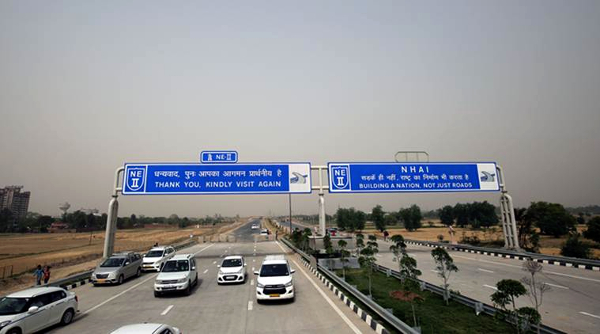
India’s highway tolling system is moving deeper into its digital phase, with government sources showing a clear policy direction toward cash-light, faster and more transparent transactions at National Highway fee plazas. In a PIB release issued on 20 February 2026, the Ministry of Road Transport and Highways said NHAI was contemplating the complete discontinuation of cash transactions at National Highway fee plazas from 1 April 2026, after which toll payments would be processed exclusively through digital modes using FASTag or UPI. The stated objective is to build a fully digital tolling ecosystem that improves lane throughput, reduces congestion, and brings greater consistency and transparency to toll collection across more than 1,150 fee plazas on National Highways and Expressways. The same release said FASTag penetration has already crossed 98 percent, showing how deeply electronic toll collection has entered everyday highway travel in India.
The official rationale rests on operational efficiency as much as commuter convenience. According to the PIB note, plaza-level assessments found that cash payments contribute to congestion, longer waiting times during peak traffic periods, and transaction-related disputes. A digital-only system, in contrast, allows toll plazas to process vehicles faster and with fewer manual interventions. Government messaging on FASTag over the past few years has consistently pushed the same direction: smoother traffic flow, lower friction at plazas, and a more technology-driven highway network. NHAI’s own materials describe FASTag as a nationwide electronic toll collection system that has transformed fee collection by shifting a dominant share of transactions onto RFID-enabled tags linked to bank or prepaid accounts.
An additional official push came through the National Highways Fee (Determination of Rates and Collection) (Second Amendment) Rules, 2026, notified on 18 March 2026 and brought into effect from 17 March 2026. The amendment creates a technology-driven recovery system for “unpaid user fee” in cases where a vehicle’s passage is recorded by electronic toll collection infrastructure but the toll amount remains unrealised. Under the new framework, e-notices can be issued to registered vehicle owners through SMS, email, mobile apps and an online portal, with the unpaid amount set at twice the applicable toll; however, payment within 72 hours limits the liability to the original toll amount alone. The rules also link toll enforcement with the VAHAN database, provide a 72-hour window for grievance submission, and allow pending dues to trigger restrictions on vehicle-related services after 15 days, giving the digital tolling regime a much stronger legal and enforcement backbone.
At the user level, the digital toll ecosystem has already been built out in considerable detail. On the official IHMCL FASTag user page, FASTags are shown as available through NH toll plazas, bank branches, point-of-sale locations, RTOs, transport hubs and online channels. The same page says bank-issued FASTags can be recharged through net banking, UPI and debit or credit cards, while NHAI FASTags linked to the NHAI prepaid wallet can be recharged through the My FASTag app using net banking, UPI and cards. IHMCL also says BBPS-enabled cash top-up remains available at point-of-sale locations at toll plazas for recharging the tag itself. In other words, the payment side at the toll barrier is moving toward digital-only collection, while the recharge ecosystem remains wide enough to support users across banking and digital-payment preferences.
Enforcement has also become tighter around the physical use of FASTag. In a July 2024 NHAI press release, the authority said vehicles entering toll lanes with a FASTag that is deliberately kept unaffixed on the front windshield would be charged double user fee. NHAI added that such a tag is not entitled to carry out electronic toll collection transactions at the plaza and can also be blacklisted. That step matters because a fully digital tolling regime depends as much on correct tag usage as on payment rails. The tolling system becomes faster only when the tag is active, readable and properly affixed on the assigned vehicle.
Taken together, the official government material points to a decisive policy direction: Indian highway tolling is being redesigned around FASTag and UPI, with cash steadily pushed to the margins.The larger trajectory, however, is already clear in government documents by faster tolling, digital payments, stricter compliance, and a highway network built for seamless movement rather than cash-window friction.
Reference:
https://www.pib.gov.in/PressReleasePage.aspx?PRID=2230756®=3&lang=1
https://ihmcl.co.in/fastag-user/
https://nhai.gov.in/nhai/sites/default/files/2024-07/Press_Release-NHAI-to-Charge-Double-Toll-from-Vehicles-with-Non-affixed-FASTag-on-Front-Windshield.pdf
https://nhai.gov.in/nhai/sites/default/files/2025-09/NHAI-Annual_Report_2023-24_English.pdf
You may also like
-
India’s E-Commerce Platforms Record ₹24,000 Crore Festive Sales in Two Days as Meesho Reports 75% Surge in Orders
-
India’s Economic Warfare Challenge: Strategic Autonomy, Energy Security and the Rise of a Global Power
-
India-US Trade Deal Stalemate: Why Washington’s Tariff Pressure Has Failed to Secure an Agreement
-
US Double Standards in Foreign Policy: 16 Recent Cases Involving India, Russia, China and Global Trade
-
India’s Arctic Energy Ambitions: Russian Oil, LNG and a New Sea Route to Indian Ports
