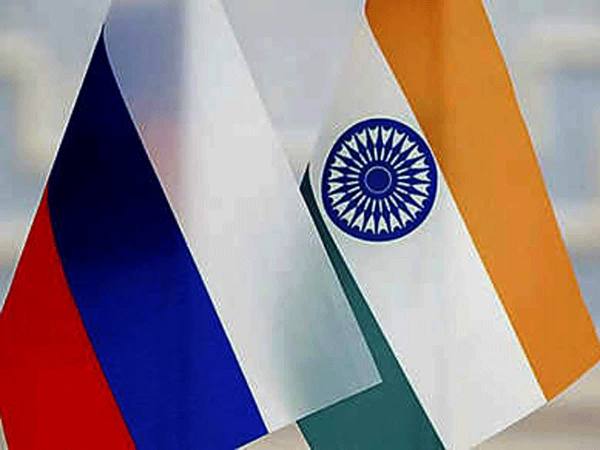
India and Russia have moved to give their long-standing strategic partnership a stronger economic foundation as External Affairs Minister S. Jaishankar held a series of high-level engagements in Moscow covering trade, energy, fertilisers, nuclear cooperation, technology and major international issues. His meetings with Russian President Vladimir Putin, Foreign Minister Sergey Lavrov and First Deputy Prime Minister Denis Manturov underscored an effort by both governments to convert their traditionally strong political relationship into a broader and more balanced economic partnership.
Jaishankar’s visit centred on the 27th session of the India-Russia Inter-Governmental Commission on Trade, Economic, Scientific, Technological and Cultural Cooperation, which he co-chaired with Manturov. The commission serves as the principal institutional mechanism for advancing bilateral economic engagement and covers sectors ranging from trade and investment to energy, industry, science, technology and connectivity.
Economic ties between the two countries have expanded dramatically in recent years. Bilateral trade in goods has risen more than four-fold from around $13 billion in 2021-22 to nearly $60 billion in 2025-26. The rapid expansion has demonstrated the scale of economic complementarity between India and Russia, particularly in energy and commodities, but it has also created a structural challenge. India’s trade deficit with Russia has widened to more than $50 billion, making a more balanced commercial relationship one of New Delhi’s principal priorities.
India is consequently pushing for greater access for its products and companies in the Russian market. Removing tariff and non-tariff barriers, improving payment arrangements and creating stronger business-to-business links are expected to become central to the next phase of bilateral economic engagement. Both countries have already set a target of taking annual trade to $100 billion by 2030, but achieving that objective sustainably will require Indian exports to grow alongside imports from Russia.
The effort to rebalance trade could open opportunities for Indian pharmaceuticals, agricultural products, engineering goods, chemicals, machinery, textiles, automobiles and technology services. At the same time, Russian companies have opportunities to deepen their participation in India’s expanding manufacturing, infrastructure, transport, energy and industrial sectors. Greater private-sector involvement is increasingly important because the future of the economic relationship cannot depend solely on government-to-government transactions or commodity trade.
Energy remains one of the strongest pillars of India-Russia cooperation. The two countries have developed extensive engagement in oil and petroleum products while continuing cooperation in nuclear energy. Fertiliser supplies have also assumed strategic importance for India’s agricultural economy. Moscow and New Delhi are now looking beyond the traditional buyer-seller relationship towards longer-term cooperation involving technology, infrastructure, refining, petrochemicals and investment.
Civil nuclear cooperation remains another durable component of the partnership. Russia has played a central role in the development of the Kudankulam Nuclear Power Plant, making nuclear energy one of the clearest examples of long-term technological cooperation between the two countries. Continued engagement in this field gives the bilateral relationship an important strategic dimension extending well beyond conventional trade.
The economic agenda is also expanding into new industrial sectors. Recent India-Russia mechanisms have examined cooperation involving railway infrastructure, aerospace, critical minerals, rare earths, fertilisers, power engineering, unmanned aerial systems, advanced manufacturing and new technologies. Such sectors could help diversify a relationship that has traditionally been identified primarily with defence and energy.
Connectivity will be equally important if the two countries are to achieve their trade ambitions. India and Russia have supported greater utilisation of the International North-South Transport Corridor while also examining the Chennai-Vladivostok Eastern Maritime Corridor and cooperation involving the Northern Sea Route. More efficient transport networks could reduce logistics costs, shorten transit times and allow a much wider range of goods to become commercially viable in bilateral trade.
Another important component is the proposed Free Trade Agreement between India and the Eurasian Economic Union. Progress on such an arrangement could provide Indian companies with improved access to a wider Eurasian market while creating new opportunities for Russian and Eurasian businesses in India. Better payment mechanisms and stronger banking links are also being pursued to ensure that expanding trade can operate through reliable financial channels.
The economic discussions were reinforced at the highest political level when Jaishankar called on President Vladimir Putin at the Kremlin. He conveyed a personal message from Prime Minister Narendra Modi and briefed the Russian President on the deliberations of the 27th IRIGC-TEC. The interaction demonstrated that economic cooperation is increasingly receiving direct political attention from the leadership of both countries.
Jaishankar also held wide-ranging discussions with Foreign Minister Sergey Lavrov. Their talks covered bilateral cooperation, regional developments, global challenges and multilateral issues, reflecting the broader strategic character of India-Russia relations. Both countries continue to engage closely through forums such as BRICS, the Shanghai Cooperation Organisation, the United Nations and the G20 even as the international environment becomes increasingly complex.
The combination of diplomatic coordination and economic expansion gives the India-Russia relationship a distinctive character. New Delhi continues to pursue strategic autonomy and maintain partnerships across different geopolitical groupings, while Moscow views India as an important long-term economic and political partner in Asia. Their relationship has therefore continued to evolve despite major changes in the international system.
The Moscow engagements indicate that India and Russia are increasingly focused on precisely that transition. Their traditional strategic partnership remains important, but its next phase is likely to be shaped as much by manufacturing, energy security, nuclear technology, connectivity, critical minerals and commercial integration as by conventional geopolitics. If the two countries can address the trade imbalance while opening new sectors for investment and industrial collaboration, the $100-billion trade objective for 2030 could become the foundation for a significantly broader India-Russia economic relationship.
You may also like
-
India and Ghana Expand Agricultural Partnership Through New ICAR–CSIR-CRI Agreement
-
India Hands Over Three Tonnes of Anti-Tuberculosis Medicines to Sri Lanka
-
India and Austria Move to Deepen Security and Strategic Cooperation
-
India Offers Space-Based Climate Monitoring and Ocean Science Expertise to Pacific Partners at Pre-COP31
-
India and Switzerland Move to Deepen Strategic Science and Technology Partnership
