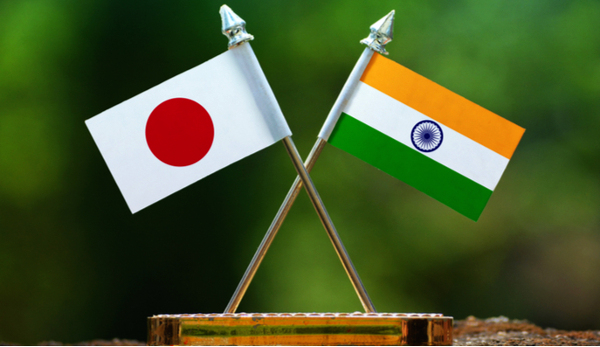
India and Japan have reinforced their growing maritime partnership following a goodwill visit by two Japanese Maritime Self-Defense Force warships to Mumbai, during which senior naval officers from both countries held discussions on strengthening bilateral naval cooperation and promoting security in the Indo-Pacific region.
The commanding officers of Japanese warships JS Takanami and JS Kirisame called on Vice Admiral Sanjay Vatsayan, Flag Officer Commanding-in-Chief of the Indian Navy’s Western Naval Command, during their visit to Mumbai. The engagement was reported by Akashvani News on 11 November 2026, citing information provided by the Western Naval Command.
According to the Indian Navy, the interaction provided an opportunity for both sides to exchange views on matters of mutual interest and reaffirm their commitment to strengthening maritime cooperation. The goodwill visit reflects the shared objective of India and Japan to promote a free, open, peaceful and prosperous Indo-Pacific.
Japanese Naval Warships Visit India’s Western Naval Command
The visit of JS Takanami and JS Kirisame represents another engagement between the Indian Navy and the Japan Maritime Self-Defense Force (JMSDF), reflecting the increasing frequency of professional interactions between the two maritime services.
JS Takanami is a guided-missile destroyer belonging to the Takanami class of the Japanese Maritime Self-Defense Force, while JS Kirisame is a Murasame-class destroyer. Both classes form part of Japan’s surface combatant fleet and are designed to undertake a range of maritime operations, including anti-submarine warfare, air defence and surface warfare.
The ships’ visit to Mumbai provided an opportunity for their commanding officers to engage directly with the leadership of India’s Western Naval Command, one of the Indian Navy’s principal operational commands.
Headquartered in Mumbai, the Western Naval Command is responsible for naval operations across strategically important areas of the Arabian Sea and India’s western maritime approaches.
Interactions between visiting naval delegations and operational commanders help strengthen professional relationships, improve familiarity with naval procedures and maintain channels of communication between maritime forces.
The Western Naval Command stated that the latest engagement reflects the commitment of both navies to deepen mutual understanding and strengthen bilateral maritime cooperation.
India–Japan Maritime Security Cooperation Agreement
The goodwill visit comes against the backdrop of expanding institutional cooperation between the Indian Navy and the Japan Maritime Self-Defense Force.
On 20 August 2026, Defence Minister Rajnath Singh and Japanese Defence Minister Shinjiro Koizumi held bilateral discussions in New Delhi and reaffirmed their commitment to strengthening defence cooperation under the India–Japan Special Strategic and Global Partnership.
During the meeting, the two countries signed a Memorandum of Arrangement on Maritime Security Cooperation, establishing a framework for closer operational engagement between their naval forces.
The arrangement identifies several areas for enhanced cooperation, including Maritime Domain Awareness, information sharing, search and rescue operations, humanitarian assistance and disaster relief.
Both countries also agreed to strengthen coordination for protecting Sea Lines of Communication through mutual naval visits, joint exercises, personnel exchanges and logistical cooperation.
The framework includes opportunities for cooperation involving port facilities, maintenance and repair capabilities, and professional exchanges between naval specialists.
The visit of the Japanese destroyers to Mumbai is consistent with the broader objective of maintaining regular interactions between the two maritime forces, although no specific new operational arrangement was announced during the latest meeting.
Expanding Naval Interoperability Through Joint Exercises
India and Japan have steadily expanded naval cooperation through bilateral and multilateral exercises designed to strengthen operational coordination.
The Japan–India Maritime Exercise (JAIMEX) provides a dedicated bilateral framework for improving interoperability, professional understanding and operational familiarity between the Indian Navy and the JMSDF.
The two countries also participate in Exercise MALABAR alongside the United States and Australia, bringing together four major maritime forces operating across the Indo-Pacific.
In November 2026, the Indian Navy’s indigenous guided-missile stealth frigate INS Sahyadri arrived at Yokosuka Naval Base in Japan to participate in MALABAR 2026.
The ship reached Yokosuka on 4 November and was welcomed by representatives of the Japan Maritime Self-Defense Force.
The exercise involves professional interactions, operational planning and coordinated naval activities intended to strengthen interoperability and mutual confidence among participating navies.
Such engagements provide valuable opportunities for participating forces to improve communication procedures, operational coordination and the ability to work together during maritime security operations.
The simultaneous expansion of naval interactions in India and Japan reflects the depth of the developing maritime relationship between the two countries.
Cooperation in Naval Shipbuilding and Defence Technology
Beyond operational engagements, India and Japan are exploring opportunities to strengthen defence industrial cooperation, particularly in naval technology and shipbuilding.
During their meeting in August 2026, the defence ministers identified maritime security cooperation, mine countermeasure capabilities and naval shipbuilding as important areas for further collaboration.
The discussions included the possibility of combining Japan’s technological expertise with India’s shipbuilding and manufacturing capabilities.
Both countries also expressed interest in exploring joint development opportunities in naval ship design and related technologies under the Make in India framework.
During a subsequent meeting on the sidelines of the ASEAN Defence Ministers’ Meeting-Plus in the Philippines on 28 October 2026, the two defence ministers reviewed progress in these discussions.
They acknowledged continuing consultations on maritime security cooperation, including potential collaboration in mine countermeasure capabilities and naval shipbuilding.
For India, such cooperation could create opportunities to strengthen domestic defence manufacturing, improve access to specialised naval technologies and support the development of advanced maritime platforms.
However, these initiatives remain areas of ongoing discussion, and the latest goodwill visit has not been reported as involving any new shipbuilding contract or technology-transfer agreement.
Strategic Importance of India–Japan Maritime Partnership
The maritime partnership between India and Japan has considerable strategic importance because both countries depend heavily on secure international shipping routes for trade, energy supplies and economic connectivity.
The Indian Ocean and western Pacific contain some of the world’s most important maritime trade routes, linking major manufacturing centres, energy-producing regions and international markets.
India occupies a significant geographical position in the Indian Ocean, while Japan is a major maritime trading economy with extensive commercial and energy interests across the region.
Closer naval cooperation enables both countries to strengthen professional coordination, exchange maritime security perspectives and contribute to regional stability.
The partnership also supports cooperation in maritime surveillance, humanitarian operations, disaster response and the protection of vital shipping routes.
India and Japan have consistently emphasised the importance of freedom of navigation, respect for international law and a peaceful maritime environment.
Their expanding naval engagement forms part of a broader strategic relationship that includes defence cooperation, infrastructure development, technology partnerships and economic connectivity.
Strengthening India’s Indo-Pacific Maritime Partnerships
The visit of JS Takanami and JS Kirisame to Mumbai demonstrates the continuing importance of regular naval diplomacy in strengthening bilateral defence relationships.
By facilitating direct interactions between naval commanders, such visits help maintain institutional familiarity and reinforce cooperation established through formal defence agreements and joint exercises.
The engagement also complements India’s wider efforts to develop maritime partnerships with countries across the Indo-Pacific in support of regional security, stability and cooperation.
The Indian Navy’s participation in multinational exercises, operational deployments and international naval exchanges reflects its expanding role in promoting maritime security across strategically important ocean regions.
For Japan, closer engagement with the Indian Navy provides additional opportunities to strengthen cooperation with a major maritime partner in the Indian Ocean.
The latest meeting between the Japanese commanding officers and Vice Admiral Sanjay Vatsayan represents another step in this continuing relationship.
As India and Japan expand their maritime security cooperation framework, regular naval visits, joint exercises and professional exchanges are expected to remain important instruments for strengthening mutual understanding and operational cooperation in the Indo-Pacific.
You may also like
-
CRPF Moves to Acquire Kamikaze Drones to Strengthen Counter-Insurgency Capabilities
-
India and Ecuador Hold Sixth Foreign Office Consultations to Strengthen Bilateral Relations
-
India and Norway Explore Joint Technologies to Transform Industrial Waste into Sustainable Construction Resources
-
India and Italy to Expand Scientific Cooperation in Space, Aerospace, Biotechnology and Advanced Research
-
India–Canada CEPA Negotiations Advance as Trade Ministers Discuss Expanding Economic Partnership
