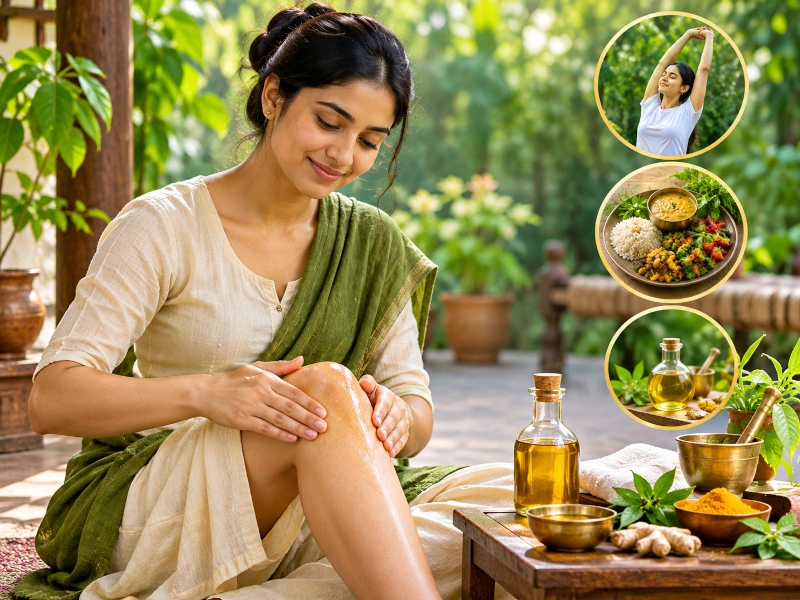
Understanding Joint Health Through Ayurveda
Healthy joints are essential for comfortable movement, physical independence and everyday activities. Walking, climbing stairs, bending, lifting objects and maintaining posture all depend upon the coordinated functioning of bones, muscles, ligaments, tendons and joints. When joint mobility becomes restricted, even simple activities can become uncomfortable, affecting both physical well-being and quality of life.
Ayurveda approaches joint health through a combination of daily movement, appropriate nourishment, oil massage, rest and balanced lifestyle practices. Rather than viewing joint discomfort exclusively as a localised problem, the traditional system considers the condition of the body as a whole, including digestion, physical activity, seasonal influences and the balance of the Doṣas.
In Ayurvedic understanding, Vāta Doṣa plays a particularly important role in movement and joint function. Vāta is associated with mobility, dryness, lightness and change. When Vāta becomes aggravated, Ayurveda traditionally associates it with symptoms such as joint stiffness, discomfort, cracking sensations and reduced flexibility. The classical concept of Sandhigata Vāta describes a condition involving the joints and is frequently discussed in relation to degenerative joint disorders.
Modern medical science explains joint discomfort through several mechanisms, including cartilage degeneration, inflammation, injury, autoimmune disease and changes in the tissues supporting the joints. These medical explanations are distinct from Ayurvedic Doṣa theory, although both approaches recognise the importance of maintaining mobility and addressing factors that contribute to physical discomfort.
The Ayurvedic approach to everyday joint care emphasises regularity, moderate physical activity, appropriate food habits and practices intended to maintain comfort and flexibility. These measures can form part of a broader approach to musculoskeletal well-being while complementing appropriate medical care.
The Role of Vāta in Joint Movement
Vāta is one of the three principal Doṣas described in Ayurveda, alongside Pitta and Kapha. It is traditionally associated with movement, communication and the regulation of several physiological activities. Within this framework, the proper functioning of joints depends partly upon balanced Vāta, while excessive dryness and irregular movement are considered contributing factors in certain joint-related complaints.
Classical Ayurvedic descriptions associate aggravated Vāta with pain, stiffness, restricted movement and sensations of dryness in different parts of the body. In conditions involving the joints, these symptoms may be interpreted within the broader categories of Vāta disorders.
Ayurveda also assigns importance to Śleṣaka Kapha, a subdivision of Kapha traditionally associated with lubrication and stability within the joints. In this conceptual framework, balanced Vāta supports movement while Śleṣaka Kapha contributes to smoothness and structural support.
These descriptions reflect the traditional physiological understanding of Ayurveda and should not be interpreted as direct equivalents of modern anatomical structures such as synovial fluid or articular cartilage.
The central Ayurvedic principle is that comfortable movement depends upon maintaining an appropriate balance between mobility, stability and nourishment. Daily habits that encourage excessive strain, prolonged inactivity or irregular routines are therefore considered undesirable for joint well-being.
Daily Movement: Keeping the Joints Active
Regular physical movement is one of the most important practices for maintaining joint health. Ayurveda describes appropriate physical exercise through the concept of Vyāyāma, which forms part of Dinacharya, the traditional daily routine.
Classical Ayurvedic guidance recommends physical activity according to an individual’s strength, age, constitution, season and physical condition. Exercise is considered beneficial when performed in moderation, while excessive exertion is discouraged because it may produce fatigue and aggravate physical discomfort.
From a modern medical perspective, regular exercise helps maintain muscle strength, joint flexibility, balance and mobility. Strong muscles provide additional support to joints, while suitable movement can reduce stiffness and improve everyday functioning.
Walking is a practical activity for many individuals because it can be incorporated into daily routines without specialised equipment. A comfortable morning or evening walk allows the hips, knees and ankles to move repeatedly through their normal functional patterns. The duration and intensity should be adjusted according to physical capacity, existing joint conditions and medical advice.
Gentle mobility exercises can also be incorporated into the day. Slow movements of the shoulders, wrists, fingers, hips, knees and ankles help maintain range of motion without requiring strenuous activity. Individuals who spend long periods sitting may benefit from standing, changing posture and walking briefly at regular intervals.
Ayurveda’s emphasis on moderate Vyāyāma is consistent with the modern understanding that regular, appropriately selected movement helps maintain joint function and reduces the effects of prolonged inactivity.
However, exercise should not be forced through significant pain. Individuals with arthritis, recent injuries or restricted mobility may require an exercise programme designed by a qualified healthcare professional.
Yoga and Gentle Stretching for Joint Flexibility
Yoga provides another means of incorporating controlled movement into daily life. Gentle postures, breathing awareness and gradual stretching can support flexibility, muscular endurance and balance when practised according to individual ability.
Practices such as Tāḍāsana, gentle shoulder movements and carefully modified standing postures may help individuals develop awareness of posture and movement. Simple seated mobility exercises may also be useful for people who find prolonged standing uncomfortable.
For the knees and hips, movements should remain within a comfortable range and avoid excessive pressure on painful joints. Individuals with established osteoarthritis or other joint disorders should be cautious with deep squatting, forceful twisting and postures that place substantial weight upon affected areas.
Yoga is not intended to replace medical treatment for arthritis or other musculoskeletal diseases. Its value in everyday joint care lies primarily in encouraging controlled movement, improving physical awareness and supporting a regular activity routine.
The Ministry of Ayush’s Common Yoga Protocol similarly emphasises that practices should be performed according to individual capacity and that people experiencing chronic disease or pain should seek appropriate professional guidance.
The objective of joint-friendly yoga is not to achieve difficult postures but to preserve comfortable movement, improve physical stability and reduce unnecessary strain.
Abhyanga: The Ayurvedic Tradition of Oil Massage
Abhyanga, the application of oil to the body through massage, occupies an important place in Ayurvedic Dinacharya. Classical Ayurvedic texts describe oil massage as a practice associated with physical comfort, nourishment and the management of Vāta-related conditions.
Traditional Ayurvedic guidance frequently recommends oil application to the body, particularly the head, ears and feet. Sesame oil is commonly used in traditional practice, while specialised medicated oils may be selected by qualified Ayurvedic practitioners according to the individual’s condition.
For everyday joint care, gentle oil massage may provide a sense of warmth and relaxation to the muscles surrounding the joints. The process generally involves applying a small quantity of suitable oil and using slow, comfortable movements without excessive pressure.
Massage around the knees, shoulders, elbows and ankles may be incorporated into a personal care routine when the skin and underlying tissues are healthy. Particular attention should be given to avoiding vigorous pressure over painful or vulnerable areas.
In the Ayurvedic framework, Abhyanga is traditionally regarded as a Vāta-pacifying practice, particularly when dryness, stiffness and physical fatigue are prominent concerns.
Modern evidence indicates that massage may provide temporary relief from discomfort and promote relaxation in some individuals. However, there is insufficient high-quality evidence to conclude that routine oil massage can restore damaged cartilage, reverse arthritis or prevent degenerative joint disease.
The practical value of Abhyanga lies in its role as a gentle self-care practice that may improve comfort and encourage regular attention to the body’s physical condition.
Massage should be avoided over acutely swollen, red, hot or injured joints, open wounds, skin infections or areas where a fracture or blood clot is suspected. Persistent joint symptoms require medical evaluation rather than continued massage alone.
The Importance of Warmth and Comfortable Movement
Ayurveda traditionally associates Vāta with qualities such as coldness and dryness. Consequently, warmth is frequently incorporated into Vāta-oriented lifestyle recommendations, particularly when stiffness and discomfort are prominent.
Warm bathing, appropriately applied heat and comfortable indoor temperatures may help some individuals manage muscular tightness and stiffness. A warm bath before gentle stretching can make movement feel more comfortable, particularly after prolonged inactivity.
Modern healthcare guidance also recognises that heat therapy may temporarily reduce stiffness and improve comfort in certain musculoskeletal conditions. However, heat is not suitable for every type of joint problem. Recently injured or acutely inflamed joints may respond better to cold therapy, depending upon the cause of the symptoms.
Ayurvedic practices involving warm oil should therefore be adapted to the individual’s condition rather than followed mechanically. Oil should never be heated to a temperature capable of irritating or burning the skin.
The broader objective is to create conditions that encourage comfortable movement while avoiding excessive physical strain.
Food Habits and the Ayurvedic Concept of Joint Nourishment
Ayurveda considers food an essential component of maintaining bodily strength and the proper functioning of tissues. The concepts of Āhāra, Agni and Dhātu Poṣaṇa are central to its understanding of nourishment and physical well-being.
Agni refers to the traditional Ayurvedic concept of digestive and metabolic transformation. Ayurveda maintains that appropriate digestion supports tissue nourishment, while irregular eating habits and unsuitable food choices may disturb bodily balance.
The traditional concept of Asthi Dhātu relates to bone tissue, while Majjā Dhātu is associated with marrow and related tissue functions. Ayurvedic dietary recommendations for musculoskeletal health are therefore considered within a broader framework of supporting the body’s tissues rather than nourishing individual joints in isolation.
For everyday joint care, Ayurveda generally encourages freshly prepared meals, regular eating schedules and food selected according to digestive capacity, constitution and seasonal conditions.
Warm, well-cooked meals are commonly recommended in traditional Vāta-oriented dietary guidance. Preparations such as vegetable soups, cooked cereals, rice, pulses and appropriately spiced dishes can provide nourishment while remaining relatively easy to incorporate into daily routines.
However, modern nutritional requirements remain important. Joint health depends upon adequate protein, vitamins, minerals and overall energy intake, and no particular Ayurvedic food should be regarded as capable of independently preventing or curing arthritis.
The most practical dietary principle is to maintain regular, nutritionally balanced meals that support muscle strength, bone health and healthy body weight.
Protein, Calcium and Vitamin D for Musculoskeletal Health
Muscle strength plays an important role in protecting and supporting joints. Adequate dietary protein helps maintain and repair muscle tissue, particularly in older adults and individuals recovering from periods of reduced physical activity.
Indian diets can provide protein through pulses, lentils, beans, milk, curd, paneer, nuts, seeds, eggs, fish and other suitable foods. A balanced combination of these foods can help individuals meet their nutritional requirements according to their age, activity level and dietary preferences.
Calcium and vitamin D are essential for bone health. Calcium contributes to maintaining bone structure, while vitamin D supports calcium absorption and normal bone metabolism. Milk products, fortified foods and selected plant-based sources can contribute to calcium intake, while vitamin D may be obtained through appropriate sunlight exposure, fortified foods and supplements when medically indicated.
These nutrients are important for the musculoskeletal system, but adequate intake should not be confused with a treatment for cartilage degeneration or inflammatory arthritis.
Traditional Ayurvedic dietary practices can be accommodated within a balanced modern diet, provided that nutritional adequacy is maintained.
Turmeric, Ginger and Traditional Culinary Spices
Turmeric and ginger occupy an established place in Indian culinary traditions and Ayurvedic dietary practices. Both are widely used in household cooking and are traditionally associated with digestive comfort and other health-related properties.
Turmeric contains curcuminoids, including curcumin, which have been investigated for their potential anti-inflammatory effects. Ginger also contains biologically active compounds that have attracted scientific interest in relation to inflammation and discomfort.
Some clinical studies have examined turmeric or curcumin preparations for osteoarthritis symptoms, but the overall evidence remains limited by differences in formulations, study quality and duration. These findings do not establish that ordinary culinary quantities of turmeric can prevent joint degeneration or replace proven medical treatment.
Using turmeric and ginger as part of a varied diet is generally different from consuming concentrated extracts or high-dose supplements. Supplements may interact with medications and can produce adverse effects in certain individuals.
Within everyday Ayurvedic food habits, the most reasonable approach is to use familiar culinary spices in moderate quantities according to individual tolerance.
Traditional ingredients can contribute to a varied and enjoyable diet, but joint health depends upon the overall dietary pattern rather than the medicinal reputation of any single spice.
Maintaining a Healthy Body Weight
Body weight has an important influence on the health of weight-bearing joints, particularly the knees, hips and ankles. Excess body weight increases the mechanical load carried during walking, stair climbing and other everyday activities.
Maintaining a healthy weight can reduce stress on these joints and may improve mobility and pain in people living with osteoarthritis. Regular physical activity and balanced nutrition are therefore important components of long-term joint care.
Ayurveda approaches weight management through dietary moderation, regular physical activity, appropriate digestion and consistent lifestyle habits. Its emphasis on avoiding excessive eating and inactivity can be incorporated into practical daily routines.
However, weight reduction should not involve extreme dietary restriction or prolonged fasting, especially among older adults or individuals with chronic medical conditions. Preserving muscle mass and adequate nutrition is essential.
A gradual, sustainable approach that combines balanced meals with suitable physical activity is generally preferable to sudden changes in diet or exercise.
Avoiding Prolonged Sitting and Repetitive Joint Strain
Modern working habits frequently involve long periods of sitting, extensive computer use and limited physical movement. These routines can contribute to muscular tightness, reduced physical conditioning and discomfort in the neck, back, shoulders and other joints.
Ayurveda places considerable importance on maintaining a balanced relationship between activity and rest. Excessive exertion is discouraged, but prolonged inactivity is also inconsistent with the broader objective of preserving strength and mobility.
Individuals working at desks can incorporate short movement breaks throughout the day. Standing periodically, walking a short distance, gently moving the shoulders and changing sitting positions can reduce the duration of uninterrupted inactivity.
Workstations should also be arranged to support comfortable posture. Screens positioned at suitable heights, supportive seating and convenient placement of frequently used equipment may reduce unnecessary muscular strain.
People performing physically demanding work should pay attention to lifting techniques, repetitive movements and the need for adequate recovery.
The central principle is to avoid both extremes: excessive strain that overwhelms the joints and prolonged inactivity that weakens the muscles supporting them.
Joint Care During Ageing
Ageing is associated with changes in muscle mass, bone density, balance and the tissues surrounding joints. These changes can influence physical capacity, but reduced mobility should not automatically be accepted as an unavoidable consequence of growing older.
Regular, appropriately selected activity can help older adults preserve strength, flexibility and independence. Walking, gentle resistance exercises, balance training and comfortable range-of-motion activities may be incorporated according to individual health conditions.
Ayurvedic traditions generally regard Vāta as increasingly prominent during later life. Consequently, lifestyle recommendations for older adults often emphasise regularity, warmth, suitable nourishment, gentle massage and avoidance of excessive exertion.
These traditional practices can be understood as part of a broader self-care routine, while medical assessment remains important for diagnosing conditions such as osteoarthritis, osteoporosis and inflammatory joint diseases.
Older adults experiencing difficulty walking, repeated falls, persistent pain or progressive weakness should seek professional evaluation. Appropriate treatment and physiotherapy can help maintain function and reduce the risk of further disability.
Sleep, Recovery and Joint Comfort
Adequate sleep contributes to physical recovery, normal physiological functioning and the regulation of pain perception. Poor sleep can increase fatigue and make existing discomfort more difficult to tolerate.
Ayurveda gives considerable importance to Nidrā, or sleep, as one of the fundamental supports of health. Regular sleep schedules, appropriate rest and avoidance of excessive physical exertion form part of its broader lifestyle recommendations.
For individuals experiencing joint discomfort, a comfortable sleeping position and suitable support from pillows or bedding may reduce unnecessary strain. People with shoulder, hip or knee pain may need to adjust their sleeping arrangements according to their symptoms.
Consistent sleep habits can complement exercise, nutrition and other measures intended to maintain musculoskeletal well-being.
However, persistent night pain, significant sleep disruption or progressive symptoms should not be managed through lifestyle changes alone.
Recognising When Joint Pain Requires Medical Attention
Not all joint discomfort is related to ageing, inactivity or the lifestyle imbalances described in traditional Ayurvedic theory. Joint pain can arise from injuries, infections, inflammatory arthritis, gout, autoimmune disorders and other medical conditions that require specific treatment.
Persistent swelling, redness, warmth, restricted movement or pain affecting several joints should be evaluated by a qualified healthcare professional. Sudden severe pain, fever associated with a swollen joint, an inability to bear weight or symptoms following a significant injury may require urgent medical attention.
Individuals with rheumatoid arthritis, gout, osteoarthritis or other diagnosed joint disorders should continue appropriate medical treatment while discussing any complementary Ayurvedic practices with their healthcare providers.
Herbal medicines and specialised Ayurvedic formulations should not be used without considering their quality, safety, possible interactions and suitability for the individual. Some traditional preparations may contain potentially harmful substances, including heavy metals, and should not be assumed safe merely because they are described as natural.
Ayurvedic lifestyle practices are most appropriately used as supportive measures within a comprehensive approach to health.
Building a Practical Daily Routine for Joint Health
A sustainable joint-care routine does not require elaborate procedures or strenuous physical activity. It can begin with a consistent waking time, a few minutes of comfortable movement and a balanced breakfast that provides adequate nourishment.
During the morning, individuals may undertake walking, gentle stretching or other suitable exercise according to their physical capacity. Those who find oil massage relaxing may incorporate gentle Abhyanga on healthy skin, taking care to avoid inflamed or injured areas.
Throughout the day, regular changes in posture and short movement breaks can help prevent prolonged inactivity. Balanced meals containing vegetables, whole grains, appropriate protein sources and other nutrient-rich foods support general health and muscle maintenance.
Evening activities may include a comfortable walk or gentle mobility exercises, followed by sufficient time for rest and recovery. Maintaining a regular sleep schedule completes the daily routine.
The value of this approach lies in consistency rather than intensity. Small, sustainable habits practised regularly can contribute more to long-term mobility and physical well-being than occasional periods of excessive exercise or restrictive dietary practices.
Ayurveda’s Enduring Approach to Joint Health
Ayurveda’s approach to joint health is rooted in the relationship between movement, nourishment, rest and daily discipline. Its traditional concepts of Vāta, Śleṣaka Kapha, Vyāyāma, Abhyanga and Āhāra provide a framework for understanding how everyday habits are believed to influence physical comfort and mobility.
Modern medical evidence strongly supports appropriately selected exercise, muscle strengthening, healthy weight management and adequate nutrition as important components of maintaining joint function. Gentle massage and warmth may provide temporary comfort for some individuals, although their benefits and limitations should be understood realistically.
The enduring relevance of Ayurvedic lifestyle guidance lies in its encouragement of regular self-care and moderation. Rather than relying upon a single remedy, it draws attention to the cumulative influence of movement, food habits, rest and personal routines.
Healthy joints are best supported through a balanced combination of regular movement, adequate nourishment, muscular strength, appropriate rest and timely medical care. By incorporating suitable traditional practices alongside evidence-based health guidance, individuals can develop practical routines that support mobility, comfort and physical independence throughout life.
You may also like
-
India’s Government Healthcare Spending Triples to ₹4.14 Lakh Crore, Household Medical Expenditure Share Declines
-
Lupin’s Ranluspec Biosimilar Launched Across Europe Through Sandoz Partnership
-
Alembic Pharmaceuticals Secures USFDA Approval for Generic Cancer Drug, Eligible for 180-Day Exclusivity
-
Ayurveda and Blood Pressure: Lifestyle, Stress and Dietary Discipline
-
AIIMS Delhi Performs India’s First Open Fetal Surgery to Repair Severe Spinal Defect
