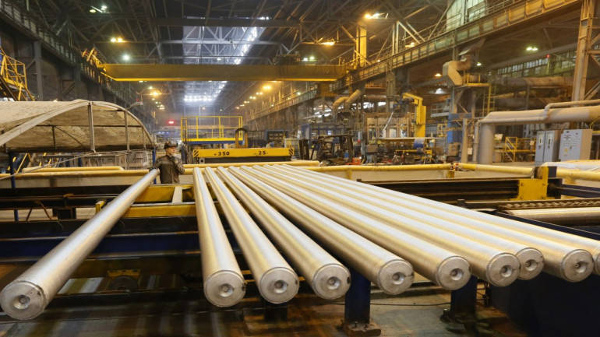
India is preparing a new National Steel Policy that will extend the country’s steel-sector roadmap to 2047, with the proposed framework targeting more than 600 million tonnes of steelmaking capacity and over 500 million tonnes of domestic consumption. Steel Secretary Sandeep Poundrik has indicated that the draft policy will be placed in the public domain for stakeholder consultation before it is finalised.
The proposed framework is being shaped around India’s long-term industrial and infrastructure requirements under the Viksit Bharat 2047 vision. It is expected to address capacity expansion, raw-material security, green steel, speciality products, import substitution and the technological modernisation of smaller steel producers.
New Policy to Extend India’s Steel Roadmap Beyond 2030
India’s current National Steel Policy 2017 was designed around targets extending to 2030-31. It envisages crude steelmaking capacity of 300 million tonnes, crude steel production of 255 million tonnes and finished steel production of about 230 million tonnes by that period.
The proposed new National Steel Policy will push this planning horizon further to 2047. The emerging target of more than 600 million tonnes of steelmaking capacity would effectively double the 2030-31 capacity objective and create a much larger domestic steel ecosystem over the next two decades.
This expansion will require corresponding investment in mining, transport, power, logistics, manufacturing equipment and downstream steel-consuming industries.
Domestic Steel Consumption Expected to Rise Sharply
India’s future steel growth is expected to be driven primarily by domestic demand.
Infrastructure, construction, railways, highways, urban development, housing, automobiles, renewable energy, defence production, capital goods and industrial manufacturing are all expected to require significantly larger quantities of steel as the economy expands.
Official data show that finished steel consumption has risen substantially over the past decade, increasing from about 77 million tonnes in 2014-15 to more than 160 million tonnes by 2025-26.
The new policy is therefore expected to focus not only on increasing production capacity but also on ensuring that Indian steelmakers are able to supply the grades and products required by a more advanced industrial economy.
Speciality Steel and Stainless Steel to Receive Greater Attention
The proposed National Steel Policy is expected to give stronger emphasis to speciality steel, stainless steel and other high-value products.
India has already introduced a Production Linked Incentive scheme for speciality steel to encourage domestic manufacturing of grades that have traditionally depended on imports.
These products are important for sectors such as automobiles, electrical equipment, defence, aerospace, energy and advanced engineering.
Increasing domestic production of premium steel would allow India to reduce import dependence while improving value addition across the steel sector.
The future competitiveness of the industry will depend not only on the volume of steel produced but also on the technological sophistication and quality of that steel.
Import Substitution and Quality Control to Remain Important
Reducing dependence on imported steel, particularly low-quality and sub-standard material, is expected to remain an important part of the new policy.
India already uses Steel Quality Control Orders to regulate the manufacture and import of steel products that do not meet prescribed standards. The Steel Import Monitoring System also provides greater visibility over incoming steel products.
Trade-remedy measures such as anti-dumping and safeguard duties can be used when imports are found to cause injury to domestic producers under applicable rules.
The proposed policy is expected to strengthen this broader framework by encouraging domestic production of steel grades that are currently imported.
Smaller Steel Producers Likely to Receive Greater Support
India’s secondary steel industry and smaller steel producers account for a significant part of the country’s manufacturing base.
The government has previously encouraged these producers to adopt more energy-efficient technologies and improve productivity. The proposed 2047 framework is expected to expand this approach by supporting greater technology adoption, modernisation and improved competitiveness.
Steel Secretary Sandeep Poundrik has also spoken about a proposed ₹5,000 crore support programme for smaller steel producers, with incentives that could be linked partly to production and reductions in carbon emissions.
Modernisation of this segment will be important because India’s future steel expansion will involve both large integrated producers and thousands of smaller plants serving regional and specialised markets.
Green Steel to Become a Central Part of the Policy
Decarbonisation is expected to become one of the defining features of India’s next steel policy.
Steel production is highly energy-intensive, and the government has already introduced a Green Steel Taxonomy to encourage lower-emission production.
The proposed policy is expected to seek a reduction in the average carbon intensity of steel production from about 2.54 tonnes of carbon dioxide per tonne of crude steel to around 1.54 tonnes by 2047.
This would support India’s broader national objective of reaching net-zero emissions by 2070.
Reducing emissions while simultaneously increasing steel output will require substantial investment in energy efficiency, renewable power, scrap utilisation, green hydrogen, cleaner fuels and more efficient steelmaking processes.
Green Hydrogen Could Play a Larger Role in Steelmaking
Hydrogen is increasingly being examined as a future pathway for reducing emissions from steel production.
The direct-reduced-iron route using hydrogen could eventually become more commercially viable as the cost of renewable hydrogen falls.
India’s expanding renewable-energy capacity and domestic electrolyser manufacturing ecosystem could support this transition over the longer term.
The steel industry’s decarbonisation is likely to involve several technologies rather than a single solution. Electric arc furnaces, scrap recycling, renewable power, natural gas, hydrogen and carbon-management technologies are all expected to play a role.
Iron Ore Demand Could Reach 772 Million Tonnes
A steelmaking industry with more than 600 million tonnes of annual capacity will require a much larger raw-material base.
The emerging policy framework reportedly projects iron ore demand of around 772 million tonnes by 2047.
India has substantial domestic iron ore resources, but supplying this scale of demand will require expansion in mining, beneficiation, pelletisation, rail connectivity and mineral logistics.
Greater use of lower-grade ores through beneficiation will also become increasingly important as overall steel production rises.
The need to secure reliable and cost-effective iron ore supply will therefore become one of the most important supporting elements of the new policy.
Coking Coal Demand Could Rise to 214 Million Tonnes
Coking coal remains one of the most significant raw-material challenges for India’s steel industry.
The emerging 2047 framework reportedly projects coking coal demand of around 214 million tonnes.
India’s domestic availability of high-quality metallurgical coal remains limited, which means the steel industry continues to depend heavily on imports.
The proposed policy is therefore expected to encourage diversification of supply through overseas assets, joint ventures and strategic international partnerships.
Indian companies are also exploring alternative sources of coking coal in order to reduce dependence on a small group of supplier countries.
Raw-material security will become increasingly important as India’s steel industry expands towards the proposed 2047 capacity target.
Overseas Mining Assets Could Support Long-Term Supply Security
The new policy is expected to encourage Indian steel producers and public-sector companies to secure greater access to overseas raw-material resources.
Investments in iron ore and coking coal assets abroad could provide additional supply security while reducing exposure to disruptions in global commodity markets.
Joint ventures, long-term offtake agreements and strategic partnerships with resource-rich countries could become more important as India’s steel demand rises.
This would complement domestic mining and help create a more diversified raw-material base for the industry.
India’s Steel Capacity Has Already Crossed 220 Million Tonnes
India’s crude steelmaking capacity had already reached approximately 222 million tonnes per annum by June 2026.
Crude steel production stood at about 168 million tonnes during 2025-26, while finished steel consumption rose to approximately 163.7 million tonnes.
India has remained the world’s second-largest crude steel producer since 2018.
The country’s share of global crude steel production has also increased significantly over the past decade, reflecting the steady expansion of domestic manufacturing capacity.
These figures provide the industrial base from which the proposed 600 million tonne capacity target for 2047 would be pursued.
Steel Expansion Will Require Major Infrastructure Investment
Achieving a steelmaking capacity of more than 600 million tonnes will require substantial expansion beyond steel plants themselves.
New mines, beneficiation facilities, pellet plants, freight corridors, rail infrastructure, ports, power systems and industrial logistics will all be needed to support the projected increase in production.
Steel-intensive sectors will also need to expand simultaneously in order to absorb the additional output.
This makes the proposed National Steel Policy closely linked with India’s broader plans for infrastructure, manufacturing, urbanisation and industrial development.
The policy will therefore influence not only steel producers but also mining companies, logistics operators, engineering firms, equipment manufacturers and energy suppliers.
From 300 Million Tonnes in 2030 to More Than 600 Million Tonnes by 2047
The proposed National Steel Policy represents the next major stage in India’s steel-sector development.
The National Steel Policy 2017 established the goal of reaching 300 million tonnes of crude steelmaking capacity by 2030-31. The new framework is expected to extend that ambition beyond 600 million tonnes by 2047 while also expanding domestic consumption, speciality steel production and green steel capacity.
The next phase of growth will therefore be defined by more than production volumes alone.
Raw-material security, decarbonisation, technological modernisation, import substitution, high-value steel production and efficient logistics will increasingly determine the competitiveness of the industry.
With domestic steel demand continuing to rise alongside infrastructure and manufacturing, the proposed National Steel Policy is set to become a key component of India’s industrial strategy for 2047, aligning scale, technology and sustainability with the country’s long-term development goals.
References
Ministry of Steel, Government of India — India’s Steel Sector Advances Towards Self-Reliance, Press Information Bureau, May 5, 2026.
https://www.pib.gov.in/PressReleasePage.aspx?PRID=2258028
Ministry of Steel, Government of India — Official update on crude steelmaking capacity and the Green Steel Initiative, 2026.
https://www.pib.gov.in/PressReleasePage.aspx?PRID=2288774
Ministry of Steel, Government of India — Demand for Steel and Metals, Press Information Bureau, August 5, 2025.
https://www.pib.gov.in/PressReleasePage.aspx?PRID=2152523
Press Information Bureau — Cabinet Approves National Steel Policy 2017, May 3, 2017.
https://www.pib.gov.in/PressReleasePage.aspx?PRID=1489109
India Brand Equity Foundation — India to Release New National Steel Policy, Eyes 600 Million Tonnes Capacity by 2047, September 30, 2026.
https://www.ibef.org/news/india-to-release-new-national-steel-policy-eyes-600-million-tonnes-capacity-by-2047-steel-secretary-mr-sandeep-poundrik
You may also like
-
Essar-Backed Mesabi Metallics Announces $18 Billion US Steel Investment Linking Minnesota Mine With Iowa Plant
-
SAIL Tests Mongolian Coking Coal as India Diversifies Steelmaking Raw Material Supplies
-
India Notifies New Fuel-Efficiency Norms for Passenger Vehicles From 2027
-
India to Auction Two Offshore Mineral Blocks in Andaman Sea
-
Cabinet Approves ₹1.86 Lakh Crore Green Energy Corridor Phase III With 50 GWh Battery Storage
