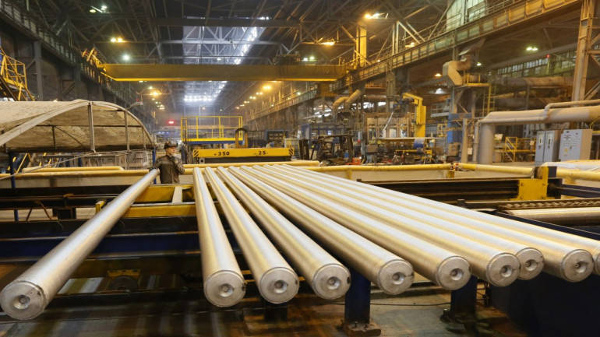
Steel Authority of India Limited has brought a one-metric-tonne sample of Mongolian coking coal to India by air for testing, marking its first such trial as the state-owned steelmaker examines additional sources of a raw material that remains crucial to conventional steel production.
The sample was flown in earlier in September 2026 and will be evaluated for its suitability in SAIL’s steelmaking operations. The exercise is exploratory rather than a commercial import arrangement, but it gives SAIL an opportunity to assess Mongolia as a potential future source of metallurgical coal.
SAIL Begins First Trial of Mongolian Coking Coal
SAIL had been working on the Mongolian trial since 2025 as part of a broader effort to diversify coking coal procurement.
The company will assess the imported sample for parameters relevant to blast furnace and coke-making operations before deciding whether Mongolian material can be incorporated into its raw-material mix.
Coking coal differs from thermal coal because it is used to produce metallurgical coke, which performs essential chemical and structural functions in conventional blast furnace steelmaking. Its quality therefore directly affects coke performance, furnace efficiency and steel production economics.
The small size of the current shipment reflects the nature of the exercise. A one-tonne airlift allows laboratory and technical evaluation without committing SAIL to the much more difficult task of moving commercial volumes from landlocked Mongolia to India.
India Imports About 95 Per Cent of Its Coking Coal Requirement
India’s steel industry remains heavily dependent on overseas coking coal because domestic production cannot provide enough material of the required grades and quality.
Around 95 per cent of India’s coking coal requirement is currently met through imports, according to industry estimates cited by Reuters, with Australia supplying at least half of those volumes.
Coking coal is also a major cost component in conventional steel production, accounting for close to 40 per cent of steelmaking costs in some operations. Changes in international prices can therefore quickly affect margins across integrated steel plants.
Indian steelmakers have already been increasing procurement from countries including Russia, Mozambique and the United States.
Mongolia Offers Strong Metallurgical Coal Potential
Mongolia has developed into a major supplier of metallurgical coal in Asia, supported by large deposits and close access to the Chinese steel industry.
Its importance as a coking coal producer has grown rapidly in recent years. Mongolia exported more than 60 million tonnes of coking coal to China in 2025, while infrastructure improvements at border crossings and new rail connections have helped increase volumes further.
Some Mongolian coking coals are valued for comparatively favourable ash and sulphur characteristics, making them suitable for blending with other metallurgical coals.
For India, however, the central question is whether such coal can be delivered at a commercially viable cost.
Transport Remains the Main Commercial Challenge
Mongolia is landlocked and has no direct access to a seaport. Bulk coal destined for India would therefore have to cross another country before reaching a maritime export terminal.
A route through China would be geographically shorter, but existing India-China political and trade complexities make such an arrangement difficult. An alternative route through Russia would involve substantially greater distances and additional rail and port handling.
Those logistics could raise landed costs enough to offset the advantage of competitively priced Mongolian coal.
The current airlift therefore tests only the coal’s technical suitability. Any future commercial procurement would require a separate assessment of railway capacity, transit arrangements, port access, shipping costs and overall delivered price.
Coking Coal Demand Will Rise With India’s Steel Expansion
The trial comes as India prepares for a major increase in steelmaking capacity.
India currently has around 220 million tonnes of crude steelmaking capacity and is developing a long-term policy framework aimed at reaching approximately 600 million tonnes by 2047.
Government projections indicate that coking coal requirements could rise to around 214 million tonnes as the steel industry expands towards that target.
India’s coking coal demand is already expected to increase by around 3 to 5 per cent during 2026-27 as domestic steel output grows.
SAIL Is Also Strengthening Domestic Coking Coal Access
The Mongolian experiment is taking place alongside efforts by SAIL to improve access to domestic coal.
In September 2026, SAIL and Bharat Coking Coal Limited signed an agreement to jointly develop two coal blocks in West Bengal — the Indikatta Ramnagore block associated with SAIL and BCCL’s East of Damagoria, also known as Kalyaneshwari.
SAIL also operates a dedicated Central Coal Supply Organization that manages indigenous washed coking coal supplies to its major integrated steel plants and evaluates different coal grades for use in steelmaking.
These domestic initiatives, combined with selective testing of overseas sources, give SAIL more flexibility in planning future coal procurement.
A Technical Trial With Long-Term Relevance
The one-tonne Mongolian shipment is too small to affect SAIL’s immediate coal requirements, and any larger imports will depend on whether transport economics can be made viable.
Its value lies in establishing whether Mongolian coal is technically suitable for Indian steelmaking before commercial questions are considered.
As India expands steel capacity, SAIL’s decision to test a new source reflects a practical effort to widen procurement options while maintaining attention on quality, cost and logistics.
References
Reuters — “India’s SAIL flies in Mongolian coking coal as it seeks new supplies, sources say,” September 30, 2026.
https://www.reuters.com/world/china/indias-sail-flies-mongolian-coking-coal-it-seeks-new-supplies-sources-say-2026-09-30
Steel Authority of India Limited — Central Coal Supply Organization.
https://www.sail.co.in/en/plants/central-coal-supply-organization
Steel Authority of India Limited — Press Releases.
https://www.sail.co.in/en/press-release
Reuters — Report on India’s proposed steel policy and 600-million-tonne steelmaking capacity target by 2047, September 29, 2026.
https://www.reuters.com/world/india/india-plans-new-steel-policy-600-million-tons-capacity-by-2047-secy-says-2026-09-29
S&P Global Commodity Insights — “Mongolian coking coal’s rising role in China’s steel supply chain,” July 8, 2026.
You may also like
-
Essar-Backed Mesabi Metallics Announces $18 Billion US Steel Investment Linking Minnesota Mine With Iowa Plant
-
India Notifies New Fuel-Efficiency Norms for Passenger Vehicles From 2027
-
India to Auction Two Offshore Mineral Blocks in Andaman Sea
-
Cabinet Approves ₹1.86 Lakh Crore Green Energy Corridor Phase III With 50 GWh Battery Storage
-
Rewa Sunderja Mango — Govindgarh’s Golden Royal Mango and the Orchard Legacy of the Kymore Plateau
