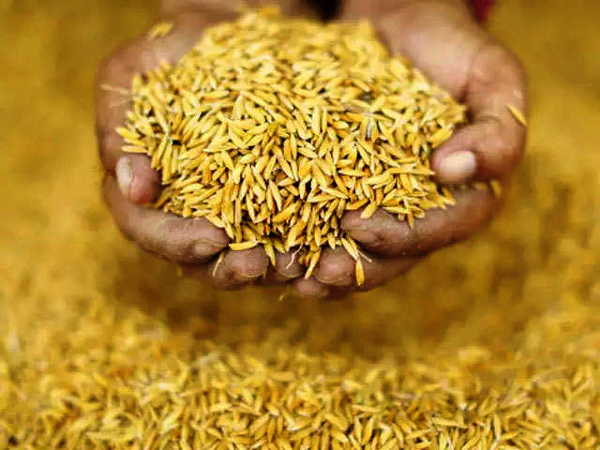
India has recorded a sharp rise in foodgrain and horticulture production over the past decade, even as the average size of operational landholdings in the country has continued to decline. According to data cited by the Ministry of Agriculture and Farmers Welfare, the average size of operational holdings fell to 1.08 hectares in 2015–16 from 1.15 hectares in 2010–11. Yet, during the same broad period, agricultural output has shown strong growth, underlining the increasing productivity of Indian farming.
The government said total foodgrain production at the all-India level rose from 265.0 million tonnes in 2013–14 to 357.7 million tonnes in 2024–25. Horticulture production also increased significantly, climbing from 277.4 million tonnes in 2013–14 to 369.1 million tonnes in 2024–25, according to the third advance estimates. The figures suggest that despite smaller average farm sizes, improvements in technology, crop planning and policy support have helped sustain growth in agricultural output.
To make more productive use of available land, the Agriculture Ministry has been implementing a range of programmes aimed at crop diversification, higher cropping intensity and better farm incomes. Under the Rashtriya Krishi Vikas Yojana (RKVY) and the Crop Diversification Programme, states are being supported to shift towards region-specific high-value crops, pulses, oilseeds and horticulture. Other key schemes include Soil Health and Fertility, the Mission for Integrated Development of Horticulture (MIDH), the National Mission on Edible Oils (NMEO)-Oil Palm, NMEO-Oilseeds, Mission for Atmanirbharta in Pulses, Paramparagat Krishi Vikas Yojana (PKVY) for organic and sustainable farming, and Rainfed Area Development (RAD). These initiatives are intended to promote climate-resilient, diversified and higher-value agriculture.
The Indian Council of Agricultural Research (ICAR) has also been playing a major role in supporting productivity gains. The council has developed location-specific crop varieties and technologies aimed at improving cultivation on different types of land. These include bio-engineering measures to reduce soil erosion caused by rainwater runoff, sand dune stabilization, shelter belt technology to control wind erosion, and reclamation techniques for problematic soils. ICAR has also developed a gypsum-based technology package involving land levelling, bunding, flushing, removal of excess water, use of good-quality irrigation water, soil amendments, crop selection and efficient nutrient management.
To strengthen climate resilience, ICAR released 2,900 crop varieties between 2014 and 2024, of which 2,661 are tolerant to one or more biotic or abiotic stresses. This is expected to help farmers cope better with changing weather patterns and other environmental challenges while maintaining yields on limited land.
The government has also emphasized collectivisation as a way to address the economic constraints faced by small and marginal farmers. Since 2020, it has been implementing the Central Sector Scheme for Formation and Promotion of 10,000 Farmer Producer Organizations (FPOs). The scheme aims to organize farmers into collectives so they can improve bargaining power, benefit from economies of scale, cut production costs and secure better market access through aggregation and value addition.
Under the scheme, each FPO can receive financial assistance of up to Rs. 18 lakh over three years. It also provides a matching equity grant of up to Rs. 2,000 per farmer member, subject to a ceiling of Rs. 15 lakh per FPO, along with a credit guarantee facility of up to Rs. 2 crore for project loans. In addition, Rs. 25 lakh is provided to Cluster Based Business Organizations for handholding support to each FPO for five years. The government said 10,000 FPOs have now been registered under the scheme, helping millions of small and marginal farmers overcome the disadvantages of shrinking landholdings through collective farming, input procurement, value addition and improved market linkages.
The information was shared by Minister of State for Agriculture and Farmers Welfare Shri Ramnath Thakur in a written reply in the Rajya Sabha on March 27, 2026.
Source: PIB
You may also like
-
India’s E-Commerce Platforms Record ₹24,000 Crore Festive Sales in Two Days as Meesho Reports 75% Surge in Orders
-
India’s Economic Warfare Challenge: Strategic Autonomy, Energy Security and the Rise of a Global Power
-
India-US Trade Deal Stalemate: Why Washington’s Tariff Pressure Has Failed to Secure an Agreement
-
US Double Standards in Foreign Policy: 16 Recent Cases Involving India, Russia, China and Global Trade
-
India’s Arctic Energy Ambitions: Russian Oil, LNG and a New Sea Route to Indian Ports
