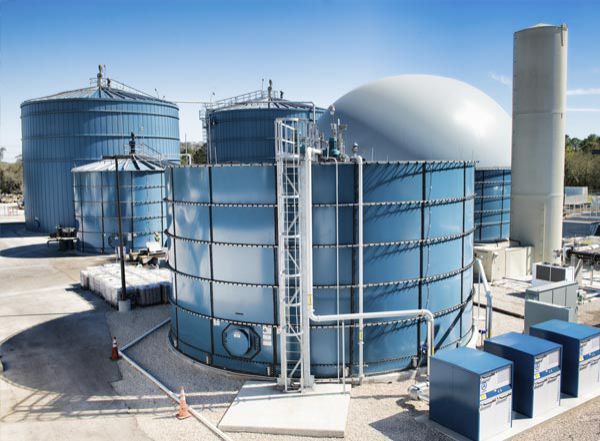
India has put in place a new pricing architecture for Compressed Biogas that seeks to solve one of the most persistent challenges facing the country’s emerging bioenergy industry — providing producers with a commercially viable price without placing a disproportionate burden on CNG and household piped-gas consumers.
Under the National Circular Bioenergy Scheme, or GOBARdhan, the administered procurement price for Compressed Biogas has been fixed at ₹2,110 per MMBtu, equivalent to approximately ₹105 per kilogram of CBG. The Government will simultaneously provide affordability support of ₹10 per kilogram, substantially reducing the portion of the revised price that has to be absorbed through the domestic gas market.
The framework forms part of India’s much larger effort to transform agricultural residue, cattle dung, press mud, municipal organic waste and other biodegradable material into domestically produced renewable gas.
Government Clarifies Consumer Impact
The Ministry of Petroleum and Natural Gas issued a detailed clarification on 29 August after concerns were raised that the higher CBG procurement price could translate into a substantial increase in CNG and domestic PNG prices.
Under the earlier mechanism, the price paid to CBG producers was linked to 85 per cent of the retail selling price of CNG. On the basis of the latest revision, this worked out to approximately ₹1,478 per MMBtu.
The new administered price of ₹2,110 per MMBtu therefore represents an apparent increase of about 43 per cent at the producer-procurement level.
However, this is not the amount that will be passed directly to consumers.
The Government will provide ₹10 per kilogram in affordability support, which corresponds to approximately ₹215 per MMBtu for CBG containing 95 per cent methane. After accounting for this assistance, the effective CBG cost to be recovered through the wider gas system falls to approximately ₹1,895 per MMBtu.
Compared with the prevailing ₹1,478 per MMBtu level, the effective increase is therefore approximately 28 per cent rather than 43 per cent.
A Much Larger Gas Pool Will Absorb the Cost
A second part of the mechanism is equally important.
CBG supplied under the programme will not simply be purchased at ₹2,110 per MMBtu and then resold directly to individual CNG or household PNG customers.
Instead, it will be pooled with other domestically produced natural gas.
Under the earlier system, the incremental cost of CBG was spread over the relatively limited quantity of Administered Price Mechanism gas allocated to the CNG transport and domestic PNG segments.
Under the revised framework, the net CBG cost will be distributed across a domestic gas base estimated to be 2.5 to three times larger than the earlier pool.
The Petroleum Ministry expects this substantially wider cost-sharing base, together with the government-funded affordability support, to make the impact on an individual gas consumer negligible.
The mechanism is therefore intended to achieve two objectives simultaneously: provide a sufficiently attractive price for producers to operate CBG facilities sustainably while preventing the clean-fuel transition from translating into a material increase in household and transport fuel bills.
Stable Pricing Addresses a Major CBG Industry Challenge
Long-term price uncertainty has been one of the obstacles to rapid expansion of India’s CBG industry.
A biogas plant requires substantial upfront investment, along with long-term arrangements for feedstock collection, transportation, gas purification, storage, manure processing and eventual delivery of the fuel.
Investors and lenders therefore need reasonable certainty about both demand and the price that a plant will receive for its output.
The new ₹2,110-per-MMBtu administered price is intended to provide that certainty.
The framework has a minimum ten-year horizon, giving project developers considerably greater visibility over future revenue and strengthening the commercial case for investment in new plants and capacity expansion.
This is important because India’s CBG ambitions require the sector to move from relatively scattered projects towards industrial-scale deployment across the country.
Part of the ₹23,731-Crore National GOBARdhan Scheme
The revised pricing mechanism is one component of the much larger ₹23,731-crore GOBARdhan National Circular Bioenergy Scheme, approved by the Union Cabinet on 6 August 2026.
The programme will operate from FY2026-27 to FY2035-36 and is intended to increase India’s domestic CBG production nearly ten-fold.
Rather than treating different elements of the bioenergy industry separately, GOBARdhan brings pricing, assured offtake, financing, pipeline infrastructure and ecosystem development under a unified framework administered by the Ministry of Petroleum and Natural Gas.
The programme builds on earlier initiatives including SATAT, support for organic manure, biomass-aggregation machinery, pipeline infrastructure and financial assistance available under India’s bioenergy programmes.
More than 200 CBG plants had already been commissioned when the new national programme was announced.
Assured Market for CBG Producers
Price certainty alone is insufficient unless producers also have customers for their gas.
GOBARdhan therefore establishes an assured CBG offtake framework linked to India’s mandatory CBG blending trajectory.
City Gas Distribution companies will procure increasing quantities of CBG as India gradually raises the renewable-gas component of CNG used in transport and PNG supplied to households.
The notified CBG obligation is scheduled at 3 per cent in FY2026-27, 4 per cent in FY2027-28 and 5 per cent from FY2028-29 onwards for the CNG transport and domestic PNG segments.
For developers, this creates a long-term demand signal alongside the new administered price.
The combination is designed to improve project bankability and make CBG projects more attractive to commercial lenders and institutional investors.
Capital Assistance for New Plants
The Government is also addressing the high initial capital cost of developing CBG facilities.
Eligible greenfield projects can receive capital assistance of up to ₹2 crore for every tonne per day of installed CBG production capacity.
The assistance is not restricted to the gas-producing machinery itself. It can support important parts of the surrounding value chain, including equipment required for feedstock aggregation and facilities for processing and adding value to organic manure generated as a by-product.
Brownfield projects expanding their production capacity can also qualify.
This could make participation easier for smaller developers, cooperatives, rural businesses and MSMEs that would otherwise face difficulty raising sufficient capital.
Pipeline Connectivity to Expand the CBG Market
Transportation is another important challenge because many CBG plants are located near agricultural or organic-waste sources rather than close to major gas markets.
GOBARdhan therefore includes support for both standalone and cluster-based pipelines connecting CBG plants with City Gas Distribution networks and trunk gas pipelines.
Greater pipeline integration would allow renewable gas produced in rural areas to enter the wider gas network rather than being restricted to consumption near the plant itself.
It could also reduce reliance on costly road transportation of compressed gas, improve plant utilisation and expand the geographic market available to producers.
Turning Agricultural Waste Into an Energy Resource
CBG is produced by processing biodegradable material such as cattle dung, crop residue, press mud from sugar mills, food waste and municipal organic waste.
During anaerobic digestion, microorganisms break down this organic matter and produce biogas. After impurities and carbon dioxide are removed and the methane concentration is increased, the resulting fuel can be compressed and used in much the same manner as conventional natural gas.
Because high-quality CBG is chemically comparable with natural gas, it can be integrated into India’s existing gas infrastructure and used in vehicles, homes, commercial establishments and industrial applications.
Unlike fossil natural gas, however, its feedstock originates from renewable biological material that would otherwise often be burned, dumped or allowed to decompose.
New Revenue Opportunities for Farmers
Expansion of the CBG industry could also create a new market for agricultural residues.
Large quantities of straw, crop residue, animal waste and other biomass are generated annually across rural India.
Much of this material currently has limited economic value, while some crop residue is burned because farmers lack commercially viable alternatives for disposal.
A large network of CBG plants can turn these residues into feedstock with an identifiable economic value.
Farmers could earn additional income by supplying crop waste, while village-level businesses could emerge around collection, baling, storage and transportation.
CBG plants themselves require workers for operations, maintenance, logistics and feedstock handling, creating an additional rural employment ecosystem.
Organic Fertiliser Is an Important Co-Product
The process produces more than renewable gas.
After anaerobic digestion, nutrient-rich material remains and can be processed into fermented organic manure and liquid fermented organic manure.
Expanding the CBG industry could therefore simultaneously increase production of organic soil inputs.
This creates a circular system in which agricultural and organic wastes are converted into energy while nutrients are returned to agriculture through manure products.
The Government expects expansion of this value chain to strengthen scientific waste management and improve the economics of CBG plants beyond fuel sales alone.
Strengthening India’s Energy Security
The programme also has a strategic energy-security dimension.
India remains significantly dependent on imported natural gas. Increasing domestic production of renewable gas allows part of that demand to be met using resources generated within the country.
Every unit of CBG entering the gas network can potentially displace a corresponding quantity of fossil gas.
At scale, this could reduce exposure to fluctuations in international LNG prices, geopolitical disruptions and foreign-exchange requirements.
Unlike conventional domestic gas production, the feedstock required for CBG is geographically dispersed across India’s farms, livestock operations, sugar industry and urban waste streams.
That gives the country an opportunity to create a decentralised renewable-gas industry alongside its conventional energy infrastructure.
Credit Support for Smaller Developers
Access to finance has historically been another difficulty for renewable-gas projects because lenders must evaluate uncertainties involving feedstock availability, technology performance, gas sales and project revenues.
The unified programme therefore includes a dedicated credit-guarantee mechanism for eligible MSME-based CBG projects.
By sharing part of the lending risk, the Government intends to increase institutional credit, reduce collateral pressures and make financing more accessible to smaller developers.
The framework specifically seeks to widen participation by MSMEs, first-time developers and women entrepreneurs rather than allowing the sector to remain concentrated only among large energy companies.
From Waste Management to a Circular Bioeconomy
The significance of the revised CBG price extends beyond the gas sector.
India faces several interconnected challenges: agricultural residue disposal, urban organic waste, methane emissions, dependence on imported fuels and the need for additional rural income.
CBG provides a mechanism through which these problems can be addressed together.
Crop residue can become an industrial feedstock. Cattle dung and food waste can become renewable gas. Organic material that might otherwise emit methane in dumps can be processed under controlled conditions. The residual digestate can return to farms as manure.
This is the circular-bioeconomy model that GOBARdhan seeks to expand nationally.
A Carefully Structured Producer-Consumer Balance
The most important feature of the revised pricing system is therefore not simply the headline increase from ₹1,478 to ₹2,110 per MMBtu.
The higher procurement price is designed to make CBG production more economically sustainable, while the ₹10-per-kilogram government affordability support reduces the amount entering the consumer cost pool.
The remaining cost is then distributed across a domestic gas base substantially larger than the one previously used.
In effect, India is attempting to prevent two potential failures at the same time: CBG projects becoming commercially unviable because producers are paid too little, and renewable-gas expansion losing public support because consumers are asked to absorb the entire additional cost.
If the mechanism succeeds, it could provide the commercial foundation needed to move India’s CBG industry from hundreds of individual plants towards a national-scale renewable gas network.
Combined with assured offtake, capital assistance, pipeline connectivity, credit guarantees and rising blending obligations, the pricing framework makes CBG an increasingly important component of India’s effort to turn waste into energy, rural income and domestic fuel security.
You may also like
-
India Explores 3,000 km Power Corridor to Supply 2,000 MW of Clean Electricity to Singapore
-
Punjab’s Rail Coach Factory Advances Vande Bharat Manufacturing as 16-Coach Trainset Undergoes 180 kmph Trial
-
Himachal Startup Tecnod8.AI Develops Industrial AI Copilot for Advanced Manufacturing
-
Skyroot Aerospace Partners with Brazil’s Concert Technologies to Develop New Orbital Launch Vehicle
-
Subex Wins $700,000 African Telecom Contract for AI-Powered HyperSense Fraud Management Technology
