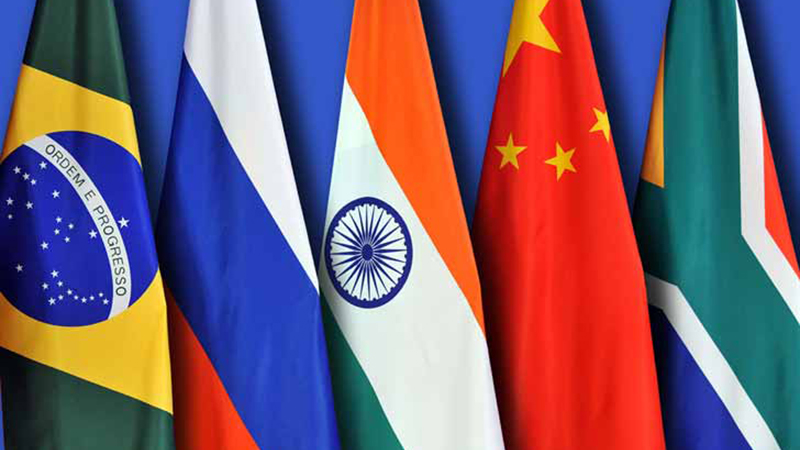
India inaugurated the 12th BRICS Parliamentary Forum at the historic Samvidhan Sadan in New Delhi on 26 October 2026, bringing together parliamentary leaders and delegations from BRICS member and partner countries. The two-day gathering focuses on strengthening parliamentary institutions, promoting international cooperation and addressing shared developmental challenges through dialogue and legislative engagement.
Lok Sabha Speaker Om Birla inaugurated the forum in the Central Hall of Samvidhan Sadan, emphasising the importance of parliamentary cooperation in advancing global peace, sustainable development and people-centric governance. Prime Minister Narendra Modi also interacted with parliamentary delegations attending the gathering, reflecting the importance India attaches to parliamentary engagement under its 2026 BRICS Chairship.
Organised around the theme “Strengthening Parliaments for People-Centric Development,” the forum brings together parliamentary representatives to deliberate on institutional resilience, technological innovation, global governance and sustainability. The discussions are structured around four interconnected pillars: resilience, innovation, cooperation and sustainability.
The gathering provides an additional platform for international engagement by connecting parliamentary institutions and legislators alongside the diplomatic and governmental mechanisms already operating within BRICS.
India Places Parliamentary Diplomacy at the Centre of BRICS Cooperation
The 12th BRICS Parliamentary Forum marks an important event under India’s chairship of BRICS in 2026. By hosting parliamentary delegations from member and partner countries, India is seeking to strengthen dialogue among legislative institutions and promote greater cooperation on issues affecting citizens across participating nations.
Addressing the inaugural session, Lok Sabha Speaker Om Birla welcomed the delegates and highlighted the importance of mutual respect, parliamentary cooperation and shared responsibility in responding to international challenges.
He observed that BRICS countries represent considerable geographical, cultural, linguistic and social diversity. Despite their different national circumstances and developmental priorities, participating countries share aspirations for peace, security, economic opportunities and improved living standards.
According to the Speaker, parliamentary engagement can help countries develop mutual understanding, strengthen institutional relationships and identify areas where cooperation can produce practical benefits.
The forum therefore extends BRICS engagement beyond conventional diplomatic discussions by encouraging parliamentary institutions to exchange experiences and contribute to the development of common approaches to emerging challenges.
Prime Minister Narendra Modi Interacts with BRICS Parliamentary Delegations
Prime Minister Narendra Modi interacted with parliamentary representatives from BRICS countries during the inaugural programme in New Delhi.
The Prime Minister’s participation highlighted the importance of continued engagement among participating countries through different institutional channels.
India’s BRICS Chairship provides opportunities for discussions involving governments, diplomatic representatives, business organisations and parliamentary institutions. The Parliamentary Forum contributes to this process by bringing legislators and parliamentary leaders into the wider conversation on international cooperation.
Ahead of the event, the Prime Minister’s Office also highlighted an article by Lok Sabha Speaker Om Birla discussing the forum’s role in strengthening dialogue among BRICS member and partner countries.
The article identified institutional resilience, governance of artificial intelligence, South-South cooperation and sustainability as important subjects for the gathering.
These priorities reflect the increasing importance of parliamentary institutions in examining technological, economic and social developments that extend beyond national boundaries.
Strengthening Parliamentary Institutions and Democratic Accountability
Institutional resilience forms the first major pillar of the 12th BRICS Parliamentary Forum.
During his inaugural address, Om Birla emphasised that parliamentary institutions must continually strengthen their ability to respond to changing circumstances while maintaining accountability, transparency and effective legislative oversight.
He observed that parliaments are evolving institutions whose responsibilities must remain connected to the changing expectations of citizens.
The discussions on institutional resilience examine how legislative frameworks, parliamentary procedures and oversight mechanisms can contribute to more responsive governance.
The forum also provides an opportunity for participating countries to exchange experiences concerning parliamentary administration, institutional capacity and approaches to public accountability.
Such exchanges are particularly relevant as governments face increasingly complex challenges involving technological change, economic uncertainty and evolving public expectations.
By strengthening cooperation between parliamentary institutions, the forum seeks to improve the ability of legislatures to address shared challenges through informed debate and constructive engagement.
Artificial Intelligence and Digital Transformation Emerge as Major Priorities
Technological innovation constitutes the second pillar of the forum, with particular attention to artificial intelligence and digital transformation.
The discussions recognise that digital technologies are increasingly influencing government administration, public services, economic activity and the functioning of legislative institutions.
Artificial intelligence presents opportunities to improve information processing, administrative efficiency and access to public services. At the same time, its expanding use raises questions involving transparency, accountability, privacy and the responsible exercise of technological power.
The forum provides a platform for examining how parliamentary institutions can contribute to frameworks that promote human-centred technological development.
India’s experience with digital public infrastructure and technology-enabled governance forms part of the wider discussion on innovation and public service delivery.
The emphasis on human-centred innovation reflects the need to ensure that technological progress remains connected to public welfare and institutional accountability.
Parliamentary cooperation can help participating countries exchange regulatory experiences and identify approaches to technological governance that reflect their respective legal and developmental circumstances.
Parliamentary Cooperation and Reform of Global Governance
The third pillar of the forum concerns international cooperation and the development of a more representative system of global governance.
Om Birla highlighted the importance of parliamentary dialogue in building mutual trust, bridging differences and encouraging peaceful approaches to international challenges.
He observed that the participating countries share a responsibility to transform discussions into practical cooperation that improves people’s lives.
The forum provides an opportunity for legislative institutions to exchange views on international developments and explore how parliamentary engagement can complement diplomatic initiatives.
The discussions also reflect the wider BRICS emphasis on increasing the participation and representation of developing countries in international decision-making.
For India, the gathering provides another channel for advancing dialogue with countries across Asia, Africa, Latin America and other regions represented within the BRICS framework.
The emphasis remains on cooperation through parliamentary institutions rather than the negotiation of binding agreements between governments.
India Highlights the Importance of the Global South
The role of the Global South featured prominently in the Lok Sabha Speaker’s inaugural address.
Om Birla emphasised that the concerns and aspirations of developing countries should receive meaningful attention in international cooperation and policy discussions.
Countries across the Global South face differing developmental circumstances, but many share challenges involving infrastructure investment, technological access, climate resilience, education and economic opportunities.
Parliamentary institutions can contribute to these discussions by representing public concerns and examining how international commitments translate into national policies.
The BRICS Parliamentary Forum provides an additional opportunity for participating countries to discuss these issues and identify areas for constructive engagement.
India’s emphasis on people-centric development places public welfare and institutional responsiveness at the centre of the forum’s agenda.
The approach also recognises that international cooperation becomes more meaningful when it contributes to measurable improvements in the lives of citizens.
Sustainable Development and Environmental Responsibility
Sustainability forms the fourth major pillar of the 12th BRICS Parliamentary Forum.
The discussions address the responsibility of parliamentary institutions to support development strategies that balance economic progress with environmental protection and social inclusion.
During his inaugural address, Om Birla emphasised the connection between development and environmental stewardship.
He highlighted the importance of collective action in addressing environmental challenges and ensuring that economic development benefits present and future generations.
Parliaments play an important role in examining environmental legislation, reviewing public expenditure and overseeing government programmes related to sustainable development.
The forum allows participating countries to exchange experiences concerning these responsibilities and discuss approaches suited to their national circumstances.
Sustainability is therefore presented not as an isolated environmental concern but as a broader developmental priority connected with economic opportunity, public welfare and long-term institutional planning.
Youth Participation and Opportunities for Future Generations
Om Birla also highlighted the importance of involving young people in national development and democratic institutions.
He called upon participating countries to recognise the aspirations of younger generations and create opportunities that allow their abilities to contribute to economic and social progress.
Youth participation is particularly relevant to discussions involving education, employment, technological innovation and the future of parliamentary institutions.
As digital technologies reshape economic activity and public communication, younger generations are increasingly involved in developing new approaches to professional work, entrepreneurship and civic participation.
Parliaments can contribute by strengthening legislative discussions on education, skill development, economic opportunities and public participation.
The forum’s emphasis on young people reflects the wider objective of ensuring that international cooperation produces benefits extending beyond immediate institutional priorities.
Parliamentary Diplomacy Through Bilateral and Multilateral Engagements
Alongside the principal sessions, the 12th BRICS Parliamentary Forum provides opportunities for bilateral and multilateral interactions among visiting delegations.
The programme includes discussions involving parliamentary leaders and parliamentary friendship groups, offering participating countries opportunities to strengthen institutional relationships.
A special meeting of the Chairpersons of International Affairs Committees is also included in the forum’s programme.
This meeting is intended to examine parliamentary diplomacy, institutional capacity-building and the exchange of legislative practices among BRICS member and partner countries.
Such interactions can support regular communication between parliamentary institutions and encourage cooperation in areas where countries share legislative or administrative interests.
The forum also provides opportunities to discuss parliamentary procedures, institutional development and mechanisms for improving engagement between legislatures.
These activities complement government-to-government diplomacy while recognising that parliamentary institutions have distinct constitutional responsibilities within their respective countries.
India Emphasises Practical Outcomes from International Dialogue
During his address, Om Birla stressed that the success of BRICS cooperation should ultimately be measured by its contribution to people’s lives.
Referring to Prime Minister Narendra Modi’s vision of developing BRICS as an ecosystem capable of producing solutions, the Speaker encouraged participating parliaments to move beyond dialogue towards meaningful cooperation.
He emphasised that discussions should contribute to practical outcomes and help strengthen the relationship between international cooperation and public welfare.
This approach places importance on the implementation of agreed priorities, continued institutional engagement and the identification of areas where cooperation can address shared developmental challenges.
The forum’s four pillars provide a broad structure for these discussions, connecting institutional effectiveness with innovation, international cooperation and sustainable development.
The emphasis on practical outcomes also highlights the need for parliamentary institutions to maintain regular engagement after the conclusion of international meetings.
A New Opportunity to Strengthen India’s Parliamentary Diplomacy
The 12th BRICS Parliamentary Forum is being held in New Delhi on 26 and 27 October 2026, bringing together representatives of parliamentary institutions from participating member and partner countries.
The event reflects India’s continued engagement with BRICS through multiple institutional mechanisms, including parliamentary dialogue.
The forum’s discussions on resilience, innovation, cooperation and sustainability address issues that increasingly influence national governance and international relations.
For India, the gathering offers an opportunity to share its parliamentary experiences while learning from the practices and priorities of other participating countries.
The participation of parliamentary delegations also contributes to maintaining regular institutional relationships and broadening channels of international communication.
As the discussions continue, the forum is expected to strengthen parliamentary dialogue and identify opportunities for cooperation in areas connected with people-centric development.
Strengthening BRICS Cooperation Through Parliamentary Engagement
India’s hosting of the 12th BRICS Parliamentary Forum demonstrates the growing importance of parliamentary diplomacy in international cooperation.
The inaugural session brought together legislative leaders around shared concerns involving democratic accountability, technological transformation, global governance and sustainability.
Om Birla’s emphasis on mutual trust, peaceful dialogue and practical outcomes established the principal direction of the gathering.
The forum also highlighted the importance of recognising the aspirations of younger generations and ensuring that the perspectives of developing countries receive meaningful attention.
Through continued dialogue among parliamentary institutions, BRICS member and partner countries can strengthen channels of cooperation that complement their existing diplomatic relationships.
The ongoing discussions in New Delhi provide a foundation for deeper parliamentary engagement and the development of institutional partnerships focused on shared challenges and long-term public welfare.
References
- Press Information Bureau, Lok Sabha Secretariat, 26 October 2026. Lok Sabha Speaker Inaugurates 12th BRICS Parliamentary Forum 2026; Calls for Empowering Parliaments to Advance People-Centric Development. Release ID: 2328441.
https://www.pib.gov.in/PressReleseDetailm.aspx?PRID=2328441 - Press Information Bureau, Lok Sabha Secretariat, 22 October 2026. 12th BRICS Parliamentary Forum to be Held in the Central Hall of Samvidhan Sadan on 26–27 October 2026: Lok Sabha Speaker. Release ID: 2326629.
https://www.pib.gov.in/PressReleseDetailm.aspx?PRID=2326629 - Press Information Bureau, Prime Minister’s Office, 26 October 2026. Prime Minister Shares an Article by Lok Sabha Speaker Shri Om Birla Highlighting the Role of the 12th BRICS Parliamentary Forum in Strengthening Parliamentary Dialogue and Cooperation. Release ID: 2328342.
https://www.pib.gov.in/PressReleseDetailm.aspx?PRID=2328342 - Press Information Bureau, Rajya Sabha Secretariat, 26 October 2026. Deputy Chairman Shri Harivansh Delivers Welcome Address at the Inaugural Session of the 12th BRICS Parliamentary Forum. Release ID: 2328640.
https://www.pib.gov.in/PressReleseDetailm.aspx?PRID=2328640
You may also like
-
India Strengthens Trade Ties with Netherlands as Piyush Goyal Visits Port of Rotterdam
-
India to Train 600 Nigerian Army Soldiers in Specialised Jungle and Mountain Warfare
-
India and Russia Strengthen Parliamentary Diplomacy as Om Birla Meets State Duma Chairman Vyacheslav Volodin
-
India Seeks South Korean Shipbuilding Partnerships as Sarbananda Sonowal Begins Four-Day Visit to Busan
-
India and Italy Hold First Maritime Security Dialogue in Rome, Strengthen Strategic Maritime Cooperation
