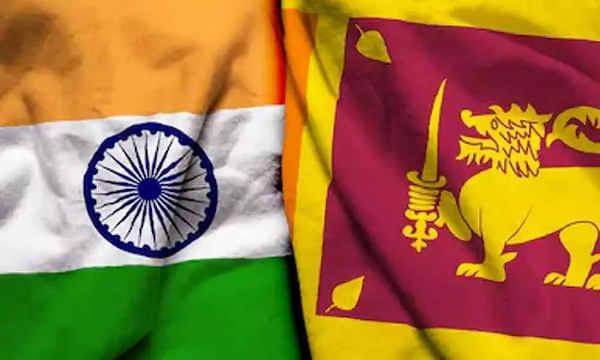
India has handed over a three-tonne consignment of essential anti-tuberculosis medicines to Sri Lanka, reinforcing New Delhi’s continuing support for the island nation’s public health system.
India’s High Commissioner to Sri Lanka, Santosh Jha, handed over the medicines to Sri Lankan Minister of Health and Mass Media Nalinda Jayatissa in Colombo on October 7, 2026. The consignment is intended to support Sri Lanka’s tuberculosis treatment and control programmes.
The medicines had earlier been dispatched from India on September 28 aboard an Indian Air Force C-130J aircraft. External Affairs Minister S. Jaishankar confirmed the shipment at the time, stating that India remained committed to supporting Sri Lanka’s public health system.
India Uses Rapid Airlift for Medical Assistance
The decision to transport the anti-TB medicines aboard an Indian Air Force C-130J enabled the consignment to reach Colombo quickly.
Tuberculosis remains a major public-health challenge across South Asia, making uninterrupted access to essential medicines critical for treatment continuity and disease control.
India’s latest support therefore addresses an immediate healthcare requirement while also fitting into a broader pattern of medical cooperation with Sri Lanka.
Healthcare Remains a Major Pillar of India–Sri Lanka Cooperation
India’s health-sector engagement with Sri Lanka extends well beyond emergency medicine supplies.
The High Commission of India in Colombo lists several major healthcare initiatives supported by New Delhi, including the island-wide Suwa Seriya ambulance service, the 150-bed multi-specialty hospital at Dickoya, assistance to Jaffna Teaching Hospital and district hospitals in Kilinochchi and Mullaitivu, and the construction of a surgical unit at Batticaloa Teaching Hospital.
These projects reflect a development model centred on accessible public infrastructure and direct community benefit.
New Hospital Infrastructure in Mannar and Mullaitivu
The anti-TB medicine assistance comes alongside fresh Indian-supported hospital projects in northern Sri Lanka.
On September 16, 2026, Sri Lankan President Anura Kumara Dissanayake, High Commissioner Santosh Jha and Health Minister Nalinda Jayatissa jointly laid the foundation stones for an Accident and Emergency Unit at the District General Hospital in Mannar and a four-storey Medical Ward Complex at the District General Hospital in Mullaitivu.
India is providing SLR 600 million in grant assistance for each project, taking the combined value to SLR 1.2 billion.
The Mannar project includes a two-storey Accident and Emergency facility along with essential medical equipment. It is intended to improve emergency response and provide timely treatment during the critical “golden hour.”
The Mullaitivu project is designed to expand inpatient and screening capacity and strengthen treatment for non-communicable diseases.
Development Cooperation Reaches All 25 Districts
India’s development cooperation with Sri Lanka now extends across all 25 districts of the country.
According to the High Commission of India, the overall development partnership exceeds US$7.5 billion, including around US$880 million in grant assistance. Healthcare, housing, education, transport, agriculture and community infrastructure form important parts of this engagement.
The health sector has been especially prominent because many Indian-supported projects provide services directly to communities rather than focusing only on large strategic infrastructure.
Neighbourhood First in Practical Form
The delivery of anti-tuberculosis medicines illustrates the practical dimension of India’s Neighbourhood First approach.
Rather than functioning only through high-level diplomacy, the relationship increasingly includes medicines, hospitals, ambulances, training and community-level infrastructure.
This form of cooperation also strengthens institutional ties between Indian and Sri Lankan health systems while responding to immediate public needs.
India–Sri Lanka Health Partnership Continues to Deepen
The three-tonne anti-TB consignment is modest in scale compared with large infrastructure projects, but its public-health value is direct and immediate.
Combined with new hospital infrastructure in Mannar and Mullaitivu and earlier Indian-supported healthcare programmes, the latest assistance shows how health cooperation is becoming one of the most consistent pillars of India–Sri Lanka ties.
For both countries, that cooperation adds a strong people-centric dimension to the bilateral relationship and reinforces a partnership built increasingly around practical development outcomes.
References
- External Affairs Minister S. Jaishankar — Official statement on dispatch of approximately three tonnes of anti-tuberculosis medicines to Colombo aboard an Indian Air Force C-130J, September 28, 2026.
- High Commission of India, Colombo — Official communication on handover of anti-tuberculosis medicines to Sri Lanka, October 7, 2026.
- High Commission of India, Colombo — Foundation Stones Laid for Indian Grant Assistance Projects in District General Hospitals of Mannar and Mullaitivu, September 16, 2026.
- High Commission of India, Colombo — India Extends SLR 600 Million Grant Assistance for Construction of Accident and Emergency Unit at District General Hospital, Mannar, September 9, 2025.
- High Commission of India, Colombo — Official Development Cooperation overview.
You may also like
-
India and Austria Move to Deepen Security and Strategic Cooperation
-
India Offers Space-Based Climate Monitoring and Ocean Science Expertise to Pacific Partners at Pre-COP31
-
India and Switzerland Move to Deepen Strategic Science and Technology Partnership
-
Indian and Argentine Armies Complete Joint Himalayan Expedition to Mt Abi Gamin and Mt Kamet
-
Ajit Doval and David Morrison Review India-Canada Security and Law-Enforcement Cooperation
