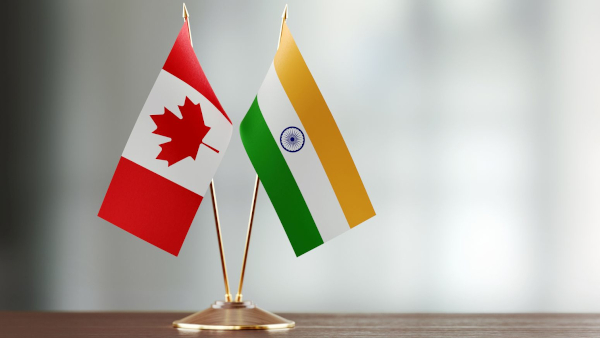
India and Canada have begun the fourth round of negotiations for their proposed Comprehensive Economic Partnership Agreement in New Delhi, as the two governments try to complete the trade pact before the end of 2026.
The latest round began on September 14 and is scheduled to continue until September 18. Discussions are covering some of the most important elements of the proposed agreement, including trade in goods, services, rules of origin and technical barriers to trade.
The negotiations follow the third round held in Ottawa in July and continue a process that has moved rapidly since the two countries formally launched CEPA negotiations in March.
CEPA Negotiations Launched in March
India and Canada formally launched negotiations for the Comprehensive Economic Partnership Agreement on March 2, 2026, during Canadian Prime Minister Mark Carney’s visit to New Delhi.
Commerce and Industry Minister Piyush Goyal and Canadian International Trade Minister Maninder Sidhu signed the Terms of Reference that established the framework, frequency and modalities for negotiations. The two governments described their objective as an ambitious, balanced and mutually beneficial agreement covering trade in goods and services along with other agreed policy areas.
The launch also established a much larger commercial objective. Prime Minister Narendra Modi said India and Canada were aiming to raise bilateral trade to US$50 billion by 2030, with the proposed CEPA expected to provide the institutional framework needed to expand trade and economic engagement.
Negotiations Have Advanced Through Successive Rounds
The second round of negotiations was held at Vanijya Bhawan in New Delhi from May 4 to 8. According to the Commerce Ministry, negotiators held detailed discussions covering trade in goods, trade in services, intellectual property, rules of origin, sanitary and phytosanitary measures and technical barriers to trade.
At the conclusion of that round, India and Canada agreed to continue negotiations in a constructive and collaborative manner and confirmed that the following round would take place in Ottawa in July.
The fourth round now brings negotiators back to New Delhi, with the focus increasingly shifting toward the provisions that will determine actual market access once an agreement is concluded.
Rules of Origin Will Be Critical
Rules of origin are among the important issues being negotiated because they determine which products will qualify for preferential tariff treatment under the CEPA.
Such provisions establish the level of production or value addition that must take place within India or Canada before a product can claim the benefits of the agreement. Effective rules are particularly important in preventing goods originating in third countries from being routed through one partner simply to take advantage of lower tariffs.
Technical barriers to trade are another important component. Differences in product standards, testing requirements, certification procedures and regulatory approvals can restrict trade even when tariffs are reduced. Resolving or simplifying such barriers could therefore be as important for exporters as the tariff concessions themselves.
Services Form an Important Part of India’s Interest
The proposed CEPA is not limited to merchandise trade. Services are a major part of the negotiations and are particularly important to India because of the country’s strength in information technology, telecommunications and business services.
The Commerce Ministry has identified telecommunications, computer and information services and other business services among India’s important services exports to Canada. A comprehensive agreement could provide a more predictable framework for companies operating across the two markets.
The agreement is also expected to address a wider range of commercial issues as negotiations progress, with both governments seeking a framework that goes beyond conventional tariff reductions.
Goods Trade Stood at About $8 Billion in 2025–26
India–Canada merchandise trade was around US$8 billion during 2025–26. Indian exports to Canada stood at approximately US$4.67 billion, while imports were around US$3.28 billion, according to figures released by the Commerce Ministry in May.
India’s exports to Canada include pharmaceuticals, machinery and engineering products, iron and steel products, electronics, chemicals, textiles and garments, seafood and other manufactured goods.
Canada, in turn, is an important supplier of pulses, fertilisers, mineral fuels, paper and pulp, metals and other commodities required by the Indian economy.
The structure of the trade relationship gives both governments reasons to seek wider market access. India is looking for stronger opportunities for manufactured goods and services, while Canada sees India as a growing market for agriculture, energy, critical minerals and advanced manufacturing.
Both Governments Have Set a Year-End Deadline
The political direction behind the negotiations has remained consistent throughout the year.
During Goyal’s visit to Canada in May, the two governments again committed themselves to an ambitious and mutually beneficial CEPA and explicitly stated their objective of concluding negotiations before the end of 2026.
The same deadline was reiterated during India–Canada Foreign Office Consultations held in New Delhi on September 2. Officials from both countries reaffirmed their commitment to completing the CEPA negotiations before the end of the year and set a shared objective of raising bilateral trade to C$70 billion, equivalent to roughly ₹4.65 lakh crore, by 2030.
The C$70-billion target corresponds broadly with the US$50-billion objective announced when the negotiations were launched in March.
Trade Pact Emerging as Economic Anchor of Renewed Relationship
The CEPA negotiations have acquired additional importance because they are proceeding alongside a wider revival of institutional engagement between India and Canada.
The two governments have expanded discussions in areas including energy, critical minerals, science and technology, education, defence and security cooperation and people-to-people links. The proposed trade agreement is consequently being positioned as one of the principal economic pillars of the renewed bilateral relationship.
During Goyal’s May visit to Canada, discussions also identified clean energy, critical minerals, agri-food, advanced manufacturing, digital technologies and skills development as areas with considerable scope for greater commercial cooperation.
The fourth negotiating round will therefore be important in determining whether the political commitment to finish the agreement this year can be converted into agreement on the more difficult commercial provisions.
With only a few months remaining before the self-imposed deadline, negotiators will increasingly have to move from identifying areas of cooperation to resolving differences over market access, tariff treatment, services and regulatory rules. A successful conclusion would give India and Canada their most comprehensive bilateral trade framework and provide the structure for pursuing their much larger 2030 trade target.
You may also like
-
India and Ghana Expand Agricultural Partnership Through New ICAR–CSIR-CRI Agreement
-
India Hands Over Three Tonnes of Anti-Tuberculosis Medicines to Sri Lanka
-
India and Austria Move to Deepen Security and Strategic Cooperation
-
India Offers Space-Based Climate Monitoring and Ocean Science Expertise to Pacific Partners at Pre-COP31
-
India and Switzerland Move to Deepen Strategic Science and Technology Partnership
