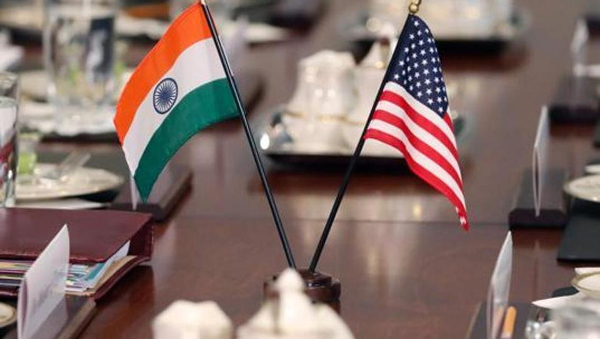
Prime Minister Narendra Modi and US President Donald Trump reviewed the expanding India-US partnership during a telephone conversation on September 30, 2026, with discussions covering trade, defence, energy, critical technologies and other areas of mutual interest. The two leaders reaffirmed their commitment to advancing the India-US Comprehensive Global Strategic Partnership and agreed to remain closely engaged.
The latest conversation reflects the increasingly interconnected nature of India-US relations, where defence cooperation, advanced technology, energy security, manufacturing and trade are developing as parallel pillars of the broader strategic partnership.
Defence Cooperation Remains a Major Pillar
Defence featured prominently in the September 30 review. India and the United States have steadily expanded military cooperation beyond conventional equipment purchases towards industrial collaboration, logistics, maintenance, technology development and resilient defence supply chains.
The wider framework for this cooperation was strengthened in February 2025 when the two countries launched the US-India COMPACT initiative, formally titled Catalyzing Opportunities for Military Partnership, Accelerated Commerce and Technology for the 21st Century. The initiative was intended to bring defence, commerce and technology cooperation under a broader results-oriented framework.
India and the United States have also placed greater emphasis on joint development and joint production. During Prime Minister Modi’s February 2025 visit to Washington, both sides discussed a new defence cooperation framework covering interoperability, logistics, repair and maintenance alongside industrial collaboration.
This shift is important because the India-US defence partnership is increasingly moving from a buyer-seller relationship towards deeper participation by industries, technology companies and defence research ecosystems in both countries.
Critical Technologies Gain Greater Strategic Importance
Critical and emerging technologies formed another central part of the September 30 discussion.
India and the United States have identified artificial intelligence, semiconductors, quantum technologies, biotechnology, energy, space and defence technology as major areas for future cooperation. These sectors are increasingly important not only for economic growth but also for national security, advanced manufacturing and resilient supply chains.
The TRUST initiative, or Transforming the Relationship Utilizing Strategic Technology, was established to encourage cooperation between governments, universities and private companies in these areas. It also seeks to strengthen trusted technology ecosystems and protect sensitive technologies while expanding commercial and research partnerships.
Under the initiative, India and the United States have also agreed to develop stronger supply chains for semiconductors, critical minerals, advanced materials and pharmaceuticals.
Artificial Intelligence and Semiconductor Cooperation Expands
Artificial intelligence has become one of the most significant emerging areas in India-US technology cooperation.
The two countries previously agreed to work towards a roadmap for accelerating AI infrastructure in India. The proposed framework includes cooperation in large-scale data centres, computing infrastructure, advanced processors, AI models and applications.
Semiconductors are closely connected with this strategy. India’s efforts to expand domestic semiconductor manufacturing, chip design and electronics production create opportunities for deeper cooperation with US companies and research institutions.
The broader objective is to strengthen technology supply chains while increasing India’s participation in high-value manufacturing and advanced electronics.
Critical Minerals Become Part of Technology Security
Critical minerals have also emerged as an important component of India-US technology cooperation.
Lithium, cobalt, rare earth elements and other strategic minerals are essential for electric vehicles, renewable energy technologies, electronics, defence systems and advanced manufacturing. Both countries have therefore identified mineral supply security as an area requiring deeper cooperation.
The February 2025 bilateral framework included a Strategic Mineral Recovery initiative aimed at recovering and processing critical minerals from major industrial sectors. India and the United States also agreed to expand cooperation across exploration, beneficiation, processing and recycling technologies.
This approach links mineral security directly with semiconductor production, clean energy, defence manufacturing and future technology industries.
Energy Security Remains Central to Bilateral Relations
Energy was another major subject reviewed during the September 30 telephone conversation.
India and the United States have built a broad energy relationship covering crude oil, liquefied natural gas, clean-energy technologies and other areas connected with long-term energy security.
India’s growing economy continues to require reliable and diversified energy supplies. The United States, meanwhile, has become an important global producer and exporter of hydrocarbons. This creates a natural commercial foundation for expanding bilateral energy trade.
Energy cooperation is also becoming increasingly connected with technology and manufacturing. Clean-energy systems, advanced materials, energy storage, nuclear cooperation and critical minerals are gradually expanding the scope of the relationship beyond conventional oil and gas trade.
Trade Remains Closely Linked With Strategic Cooperation
Trade formed another important part of the Modi-Trump discussion.
The two countries have been working to expand market access, reduce trade barriers and strengthen supply-chain integration. Under the COMPACT framework, India and the United States had earlier agreed to pursue a broader bilateral trade agreement covering goods and services.
The trade relationship increasingly intersects with strategic sectors such as defence manufacturing, pharmaceuticals, electronics, energy, semiconductors and advanced technology.
Greater industrial cooperation between Indian and American companies can therefore influence both bilateral trade volumes and long-term manufacturing partnerships.
Trusted Supply Chains Become a Shared Priority
One of the clearest themes emerging from recent India-US cooperation is the development of trusted and resilient supply chains.
The two countries have identified semiconductors, pharmaceuticals, critical minerals and advanced materials as sectors where dependence on concentrated global supply chains can create economic and strategic vulnerabilities.
The TRUST framework seeks to address these vulnerabilities through investment, manufacturing partnerships, technology cooperation and diversification of supply sources.
For India, this aligns with efforts to expand domestic manufacturing and reduce dependence on imported strategic technologies. For American companies, India’s growing industrial base and large domestic market create opportunities for production partnerships and long-term investment.
Regional and International Developments Also Discussed
The two leaders also exchanged views on regional and international developments and discussed ongoing efforts related to global peace and security. The official statement did not provide a detailed breakdown of every international issue covered during the call.
This broader consultation reflects the strategic dimension of India-US relations, which extends beyond bilateral economic and technological cooperation.
Regular communication at the leadership level provides both countries with a mechanism to discuss global developments while continuing work on defence, trade, technology and energy cooperation.
India-US Partnership Expands Across Interconnected Sectors
The September 30 conversation illustrates how the India-US partnership is increasingly being shaped by the convergence of several strategic sectors.
Defence manufacturing now overlaps with advanced electronics and artificial intelligence. Energy security is connected with critical minerals and clean technologies. Semiconductor production is linked with industrial policy and national security, while trade agreements increasingly affect technology and manufacturing supply chains.
These connections are gradually transforming the Comprehensive Global Strategic Partnership into a broader industrial and technological relationship.
India’s expanding manufacturing capacity, technology ecosystem and demand for energy combine with American strengths in advanced research, defence systems, semiconductors, artificial intelligence and energy production to create multiple areas for sustained cooperation.
The continued engagement between the two governments provides a framework for expanding these partnerships across defence, energy, critical technologies, trade and advanced manufacturing, strengthening the long-term foundations of India-US cooperation.
References
Prime Minister’s Office, Government of India — “PM speaks with US President Donald Trump,” September 30, 2026.
https://www.pmindia.gov.in/en/news_updates/pm-speaks-with-us-president-donald-trump/
Akashvani News / News On AIR — “PM Modi, US President Trump discuss bilateral cooperation in trade, defence, energy over phone,” September 30, 2026.
https://newsonair.gov.in/pm-modi-us-president-trump-discuss-bilateral-cooperation-in-trade-defence-energy-over-phone/
Prime Minister’s Office, Government of India — “India–U.S. Joint Statement during the visit of Prime Minister of India to US,” February 13, 2025.
https://www.pmindia.gov.in/en/news_updates/india-u-s-joint-statement-during-the-visit-of-prime-minister-of-india-to-us/
Prime Minister’s Office, Government of India — “Press Statement by PM during the India–USA Joint Press Conference,” February 13, 2025.
https://www.pmindia.gov.in/en/news_updates/press-statement-by-pm-during-the-india-usa-joint-press-conference/
You may also like
-
Rajnath Singh to Lead Indian Delegation at ASEAN Defence Summit in Philippines, Strengthening Indo-Pacific Security Cooperation
-
India Hosts 12th BRICS Parliamentary Forum in New Delhi
-
India Strengthens Trade Ties with Netherlands as Piyush Goyal Visits Port of Rotterdam
-
India to Train 600 Nigerian Army Soldiers in Specialised Jungle and Mountain Warfare
-
India and Russia Strengthen Parliamentary Diplomacy as Om Birla Meets State Duma Chairman Vyacheslav Volodin
