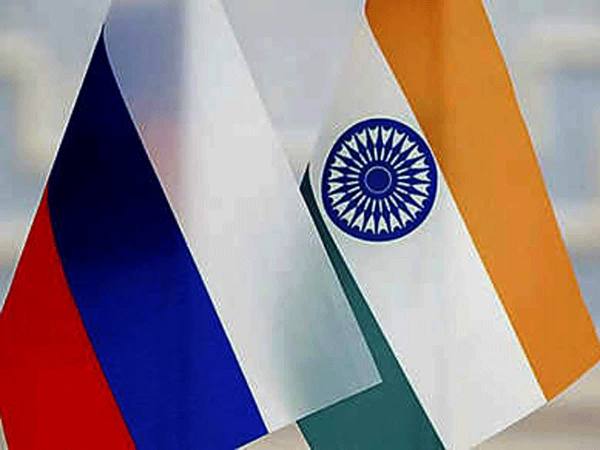
External Affairs Minister Dr. S. Jaishankar will undertake a two-day official visit to Russia on August 23–24, with economic cooperation, technology, trade and major regional issues expected to dominate discussions between New Delhi and Moscow.
According to the Ministry of External Affairs, Jaishankar is travelling at the invitation of Russian First Deputy Prime Minister Denis Manturov and will co-chair the 27th Session of the India-Russia Inter-Governmental Commission on Trade, Economic, Scientific, Technological and Cultural Cooperation, or IRIGC-TEC. The mechanism serves as one of the principal platforms for coordinating the expanding economic relationship between the two countries.
During the visit, Jaishankar will also meet Russian Foreign Minister Sergey Lavrov, with the two ministers expected to exchange assessments of regional and global developments in addition to reviewing bilateral ties. The meeting continues the regular high-level diplomatic engagement maintained between India and Russia despite considerable changes in the international strategic environment.
The IRIGC-TEC has become increasingly important as India and Russia attempt to broaden their relationship beyond traditional areas such as defence and energy. The previous, 26th session was held in Moscow in August 2025 and focused on reducing tariff and non-tariff barriers, improving logistics and connectivity, facilitating smoother payment mechanisms, strengthening business-to-business links and advancing negotiations for a possible free trade agreement between India and the Eurasian Economic Union.
Both countries have set a target of taking annual bilateral trade to $100 billion by 2030. India-Russia merchandise trade reached a record $68.7 billion in FY2024-25, although the balance remained heavily tilted toward Russia. India’s exports stood at around $4.9 billion, while imports from Russia reached approximately $63.8 billion, driven largely by oil and petroleum products, fertilisers and other commodities. Expanding Indian exports has consequently emerged as an important objective in bilateral economic discussions.
The two governments have also adopted a Programme for the Development of Strategic Areas of India-Russia Economic Cooperation till 2030, aimed at expanding industrial collaboration and creating new partnerships in advanced technology. Both sides have expressed interest in strengthening cooperation in high-technology manufacturing, pharmaceuticals, energy, transport connectivity and other emerging sectors while creating a more balanced and sustainable trade relationship.
Science and technology are expected to remain an important part of the discussions. The IRIGC-TEC framework covers cooperation ranging from industrial and scientific research to technology partnerships and cultural exchanges, giving the two countries a mechanism for identifying projects that extend beyond conventional commodity trade.
Energy is another major pillar of the relationship. Russia has become one of India’s most important suppliers of crude oil, while cooperation also extends to civil nuclear energy. Jaishankar said earlier this year that India sees Russia as a trusted partner in peaceful nuclear cooperation as the country works toward its long-term objective of expanding nuclear-generation capacity.
Connectivity and payment arrangements are likely to remain central to the economic agenda as well. The two sides have been working on reducing logistical bottlenecks and developing mechanisms that can support growing trade while insulating commercial transactions from disruptions in the international financial system. Progress on the proposed India-Eurasian Economic Union trade agreement could further expand market access if negotiations advance.
Jaishankar’s meeting with Lavrov will give the two foreign ministers an opportunity to discuss broader geopolitical developments alongside the economic agenda. India and Russia maintain regular coordination through platforms including BRICS, the Shanghai Cooperation Organisation, the G20 and the United Nations, even as New Delhi continues to pursue an independent foreign policy based on partnerships with multiple major powers.
The August 23–24 visit therefore represents more than another round of diplomatic consultations. With bilateral trade already approaching $70 billion and both governments targeting $100 billion by 2030, the 27th IRIGC-TEC will provide an important opportunity to move from rapidly expanding trade volumes toward a broader relationship built on investment, technology, manufacturing, connectivity and more balanced economic exchanges.
Jaishankar’s discussions with Manturov and Lavrov are expected to reinforce the institutional depth of the India-Russia Special and Privileged Strategic Partnership while identifying new areas in which the two countries can expand cooperation over the remainder of the decade.
You may also like
-
India Strengthens Trade Ties with Netherlands as Piyush Goyal Visits Port of Rotterdam
-
India to Train 600 Nigerian Army Soldiers in Specialised Jungle and Mountain Warfare
-
India and Russia Strengthen Parliamentary Diplomacy as Om Birla Meets State Duma Chairman Vyacheslav Volodin
-
India Seeks South Korean Shipbuilding Partnerships as Sarbananda Sonowal Begins Four-Day Visit to Busan
-
India and Italy Hold First Maritime Security Dialogue in Rome, Strengthen Strategic Maritime Cooperation
