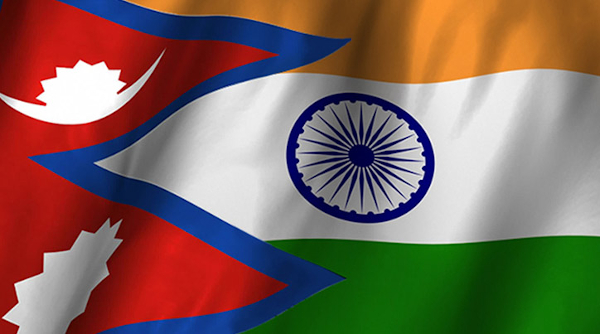
India and Nepal have moved to deepen their economic partnership as Nepal begins the difficult process of rebuilding after devastating floods damaged communities, transport links and critical hydropower infrastructure across the Himalayan country.
Nepal’s Finance Minister Swarnim Wagle held bilateral talks with India’s Finance and Corporate Affairs Minister Nirmala Sitharaman in New Delhi on September 17, with post-flood reconstruction forming a major part of discussions that also covered trade, investment, energy, connectivity and broader development cooperation.
The talks come only days after India approved Nepal’s request for additional electricity imports following severe damage to its hydropower system. Under the arrangement, Nepal can import up to 654 MW of electricity from India for 18 hours every day until December 31, providing an immediate energy lifeline while damaged generating infrastructure is assessed and restored.
Taken together, the developments show India-Nepal cooperation moving simultaneously on two tracks: immediate support for Nepal’s power requirements and longer-term economic cooperation for reconstruction and recovery.
Wagle and Sitharaman Discuss Reconstruction
Wagle arrived in New Delhi on September 17 for his first high-level visit to India since the catastrophic floods that struck Nepal on August 26.
During his meeting with Sitharaman, the two finance ministers held discussions covering Nepal’s post-disaster requirements as well as the wider economic relationship between the neighbouring countries.
According to information released following the meeting, the discussions covered development cooperation, trade, investment, energy and connectivity, alongside opportunities to broaden bilateral economic engagement.
Post-flood reconstruction has assumed particular importance because the disaster damaged not only homes and communities but also infrastructure essential to Nepal’s economy.
Roads, bridges and hydropower installations were among the assets affected, creating a recovery challenge extending well beyond immediate humanitarian relief.
Wagle’s visit therefore comes as Kathmandu shifts attention from emergency response towards rebuilding damaged infrastructure and restoring economic activity.
India Opens Power Supply as Nepal’s Hydropower System Takes a Hit
Energy has emerged as one of the most immediate areas of cooperation.
Nepal normally obtains almost all of its domestic electricity generation from hydropower. In recent years, expanding hydroelectric capacity has allowed the country not only to meet a larger proportion of its own electricity requirements but also to become an increasingly important seasonal electricity exporter to India.
The August floods abruptly disrupted that progress.
Floodwaters damaged or affected more than a dozen hydropower installations, significantly reducing generating capacity and forcing Nepal to suspend electricity exports as it sought additional power for domestic consumption.
India subsequently approved Nepal’s request to begin importing electricity earlier than would normally have been required during the seasonal transition.
Under the arrangement, the Nepal Electricity Authority can obtain up to 654 MW from India for 18 hours each day between midnight and 6 pm.
The approval runs from September 13 until December 31, 2026.
Two Cross-Border Lines Will Carry the Electricity
The electricity will reach Nepal through two existing cross-border transmission corridors.
Up to 600 MW can be supplied through the Muzaffarpur-Dhalkebar 400 kV transmission line, the principal high-capacity electricity connection between the two countries.
A further 54 MW can be transmitted through the Tanakpur-Mahendranagar 132 kV line, bringing the total approved capacity to 654 MW.
These connections illustrate the importance of the cross-border electricity infrastructure that India and Nepal have steadily developed over recent years.
Power trade between the two countries was initially dominated by electricity flowing from India into Nepal during periods of shortage. Expansion of Nepalese hydropower subsequently transformed the relationship into an increasingly two-way electricity market, with Nepal exporting surplus hydropower to India during periods of high generation.
The flood has temporarily reversed that direction.
Instead of exporting its seasonal surplus, Nepal can now draw substantial electricity from the Indian grid while its damaged hydropower system recovers.
A Two-Way Electricity Relationship
The ability to reverse electricity flows according to seasonal or emergency requirements demonstrates how the India-Nepal electricity relationship has evolved beyond a conventional supplier-and-buyer arrangement.
Nepal possesses enormous hydropower potential because of its Himalayan river systems and elevation differences. India, meanwhile, has a much larger electricity market and a rapidly expanding transmission network capable of absorbing Nepalese hydropower when it is available.
This creates a complementary relationship.
During periods of high water flow, Nepal can generate surplus hydroelectricity and sell it into India. During periods of low generation or unexpected disruption, electricity can move in the opposite direction.
The present emergency demonstrates the practical value of that interconnected system.
Cross-border transmission capacity that was built partly to facilitate regional electricity trade can now provide resilience after a natural disaster severely disrupted Nepal’s domestic generation.
Reconstruction Goes Beyond Electricity
Restoring electricity generation will be only one component of Nepal’s recovery.
The August floods caused extensive physical damage across affected areas, leaving the government with reconstruction requirements involving transport infrastructure, public facilities, energy assets and housing.
Nepalese authorities have consequently begun seeking international assistance for recovery and rebuilding.
Wagle’s meetings in New Delhi place India near the centre of that effort because of the scale and depth of the existing economic relationship between the two countries.
India has long participated in development projects across Nepal involving roads, rail links, integrated check posts, transmission lines, health facilities, education and community infrastructure.
The post-flood reconstruction programme creates another area in which this existing framework could be used.
The precise scale and structure of additional Indian reconstruction assistance have not yet been announced, so discussions in New Delhi should be regarded as part of an evolving process rather than as a finalised financial package.
Trade and Investment Also on the Table
The talks between Wagle and Sitharaman were not restricted to disaster recovery.
Trade and investment were explicitly included in the discussions, indicating that both governments are looking beyond emergency assistance towards the longer-term economic relationship.
India is Nepal’s largest trading partner and one of its most important sources of investment. Nepal’s economy is also closely connected with India through transport corridors, energy trade, tourism, financial flows and the movement of people across the open border.
Improving physical connectivity can therefore have effects well beyond bilateral commerce.
Roads, railways, transmission infrastructure and integrated border facilities can lower the cost of moving goods between Nepal and Indian markets while also giving landlocked Nepal improved access to Indian ports and international supply chains.
Energy adds another dimension because Nepal’s hydropower resources have the potential to become an increasingly important source of export revenue.
Rebuilding damaged generating assets and expanding future capacity will consequently matter both for domestic electricity security and Nepal’s wider economic development.
Wagle’s Visit Extends Beyond the Finance Ministry
The finance minister’s programme in India reflects this broader agenda.
Wagle is also scheduled to meet External Affairs Minister S. Jaishankar during his stay in New Delhi, extending discussions beyond immediate financial and reconstruction issues into the wider bilateral relationship.
His programme includes engagement with Indian business leaders through the Confederation of Indian Industry, providing an opportunity to discuss private investment and commercial cooperation.
Wagle is also scheduled to participate in an academic discussion on development economics at the Delhi School of Economics.
The combination of government, business and academic engagements indicates that Kathmandu is using the visit not simply to seek post-disaster support but also to discuss Nepal’s longer-term economic recovery and development.
From Disaster Assistance to Economic Integration
The present situation highlights an important feature of India-Nepal relations.
Geography makes the two economies unusually interconnected. Nepal’s major transport routes, external trade corridors and electricity links are closely tied to India, while Nepal’s hydropower resources offer India access to renewable electricity generated immediately across its northern frontier.
That interdependence becomes especially visible during a crisis.
When Nepal’s hydropower infrastructure was damaged, existing cross-border transmission lines allowed India to approve substantial electricity supplies within days. The same bilateral framework can now support reconstruction discussions involving infrastructure, investment and economic recovery.
The 654 MW electricity arrangement is therefore more than an emergency power supply.
It demonstrates how infrastructure built for long-term economic integration can also provide resilience when one of the two countries faces an unexpected shock.
For Nepal, the immediate priority is restoring damaged infrastructure and stabilising electricity supply. For India, supporting that recovery reinforces a neighbourhood relationship in which energy, trade, connectivity and development cooperation are becoming increasingly intertwined.
The Wagle-Sitharaman meeting in New Delhi marks the beginning of the next stage: moving from immediate disaster response towards reconstruction while using the recovery process to strengthen the broader economic partnership between the two neighbours.
References
Nepal News — Nepal, India Finance Ministers Discuss Post-Flood Reconstruction and Economic Partnership
https://english.nepalnews.com/s/diplomacy/nepal-india-finance-ministers-discuss-post-flood-reconstruction-and-economic-partnership
The Kathmandu Post — Finance Minister Swarnim Wagle Reaches New Delhi
https://kathmandupost.com/politics/2026/09/17/finance-minister-swarnim-wagle-heads-to-new-delhi
You may also like
-
Nayan Technologies Selected by JSW MG Motor to Advance AI-Based Road Monitoring and Smart Mobility
-
From ‘We Will Coup Whoever We Want’ to Starlink in India: Elon Musk, Corporate Pressure and National Sovereignty
-
Starlink-Ukraine, Myanmar and Drug Smuggling: Why India Must Regulate Satellite Internet for National Security
-
Four ICAR-Developed Potato Varieties Account for Nearly 75% of India’s Cultivation Area
-
JSW Steel’s Crude Steel Production Rises 5% to 7.27 Million Tonnes in Q2 FY2027
