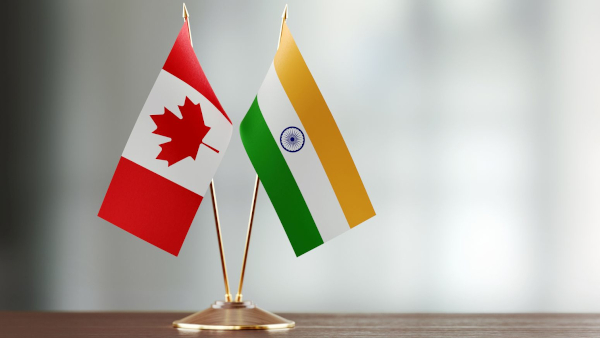
India and Canada are preparing for another round of high-level diplomatic discussions as Canadian Foreign Minister Anita Anand undertakes an official visit to India and the United Arab Emirates from 13 to 16 October 2026. The visit is expected to advance bilateral cooperation in trade, energy, defence, security and people-to-people relations, reflecting efforts by both governments to strengthen a partnership that has gained momentum over the past year.
Global Affairs Canada announced the visit on 12 October 2026, confirming that Anand will meet External Affairs Minister Dr S. Jaishankar in New Delhi. The discussions will focus on implementing the bilateral cooperation roadmap and identifying opportunities for closer engagement in strategically important sectors.
The forthcoming meeting will mark the eleventh engagement between the two foreign ministers since September 2025, demonstrating the increased frequency of diplomatic exchanges between New Delhi and Ottawa.
The visit also coincides with renewed efforts to strengthen economic relations through negotiations for a Comprehensive Economic Partnership Agreement (CEPA). Both governments have established the objective of increasing annual bilateral trade to CAD 70 billion by 2030, compared with CAD 30.4 billion recorded in 2025.
India and Canada Prepare for Eleventh Foreign Ministers’ Meeting
External Affairs Minister S. Jaishankar and Canadian Foreign Minister Anita Anand are scheduled to hold discussions during Anand’s visit to New Delhi.
According to Global Affairs Canada, the meeting will examine progress under the bilateral roadmap, which covers trade, energy, security, defence cooperation and people-to-people relations. The ministers are expected to review opportunities for strengthening institutional engagement and expanding cooperation in areas of mutual economic and strategic interest.
The frequency of their meetings reflects the diplomatic engagement that has developed since September 2025. Both governments have sought to maintain regular communication through bilateral meetings, international conferences and other diplomatic channels.
During their meeting on the sidelines of the United Nations General Assembly in New York on 27 September 2026, Jaishankar and Anand reviewed progress in implementing the bilateral cooperation roadmap. They also discussed trade negotiations, energy security, critical minerals and civil nuclear cooperation.
The ministers acknowledged opportunities to expand economic engagement and agreed to maintain close contact as both countries pursued shared priorities.
The October meeting will build upon these discussions, providing another opportunity to translate diplomatic commitments into practical cooperation.
India–Canada Relations Gain Momentum Through Renewed Diplomatic Engagement
India and Canada share nearly eight decades of diplomatic relations, supported by trade, investment, education and extensive connections between their populations.
Relations experienced significant tensions in recent years, particularly over security concerns and allegations involving activities affecting Indian and Canadian territory. These disagreements disrupted several areas of diplomatic engagement and complicated progress on bilateral trade negotiations.
Since 2025, both governments have undertaken steps to rebuild institutional dialogue and strengthen cooperation in areas where their economic and strategic interests overlap.
The renewed engagement has included ministerial visits, foreign office consultations and discussions concerning trade, security, energy, education and investment.
On 2 September 2026, India and Canada held their annual Foreign Office Consultations at Hyderabad House in New Delhi. The Indian delegation was led by Secretary (East) Rudrendra Tandon, while Canada’s delegation was headed by Deputy Minister of Foreign Affairs Arun Thangaraj.
Both sides reviewed progress in restoring institutional cooperation and reaffirmed the importance of respecting sovereignty, territorial integrity and the rule of law.
The consultations also examined the work of bilateral mechanisms covering critical minerals, science and technology, security, defence cooperation, education, culture and consular matters.
Anand’s forthcoming visit represents a continuation of this process, with both countries seeking to deepen cooperation while maintaining dialogue on outstanding concerns.
India and Canada Aim to Expand Bilateral Trade to CAD 70 Billion by 2030
Economic cooperation is expected to occupy an important place in the foreign ministers’ discussions.
According to official Canadian government figures, bilateral trade in goods and services reached CAD 30.4 billion in 2025, including approximately CAD 11 billion in merchandise trade.
The economic relationship spans agricultural products, pharmaceuticals, machinery, minerals, financial services, technology and education-related services.
Canada has identified India as an important market for expanding exports and diversifying its international commercial relationships. India’s growing economy and demand for energy, advanced technology and industrial raw materials create opportunities for Canadian businesses.
For India, stronger commercial relations with Canada could provide access to natural resources, specialised technologies, investment capital and new export markets.
Both governments have established a shared objective of increasing annual bilateral trade to CAD 70 billion by 2030.
Achieving this target would require sustained growth in commercial exchanges, improvements in market access and the development of stronger business relationships.
The proposed Comprehensive Economic Partnership Agreement is expected to play an important role in advancing these objectives.
Comprehensive Economic Partnership Agreement Negotiations Move Forward
India and Canada have resumed negotiations towards a Comprehensive Economic Partnership Agreement intended to strengthen bilateral trade and investment.
During their September 2026 Foreign Office Consultations, both countries reiterated their commitment to concluding the negotiations before the end of the year.
The fifth negotiating round was scheduled for 5–9 October 2026, following discussions between Canadian International Trade Minister Maninder Sidhu and Indian Commerce and Industry Minister Piyush Goyal.
A comprehensive agreement could address tariffs, services, investment, regulatory cooperation and other matters affecting commercial activity.
For Indian exporters, improved market access could create opportunities in pharmaceuticals, engineering products, machinery and other manufactured goods.
Canadian companies could benefit from greater access to India’s expanding market for industrial technology, agricultural products, natural resources and services.
The negotiations remain an ongoing process, and neither government has announced a completed agreement as part of the 12 October visit announcement.
The foreign ministers’ discussions are expected to provide political direction for continued economic engagement.
Canada Sends Its Largest Trade Delegation to India in Over 30 Years
Anand’s visit coincides with a major Canadian trade mission aimed at strengthening commercial cooperation.
On 9 October 2026, Global Affairs Canada announced that International Trade Minister Maninder Sidhu would lead a delegation of nearly 300 Canadian business representatives to India from 12 to 17 October.
The programme includes engagements in Mumbai and Bengaluru and represents Canada’s largest trade mission to India in more than three decades.
Participating businesses come from sectors including aerospace, space technology, clean energy, information and communication technology, life sciences and agriculture.
The mission is intended to connect Canadian enterprises with Indian companies, potential customers and investment partners.
The simultaneous diplomatic and commercial engagements demonstrate the importance both governments are placing on expanding economic relations.
India’s manufacturing and technology sectors offer opportunities for partnerships involving advanced materials, specialised machinery, clean technologies and research-intensive industries.
The trade delegation could also support new relationships between Indian businesses and Canadian companies seeking to expand operations in the Indo-Pacific region.
However, the announcement does not establish that specific commercial contracts have already been concluded.
Energy Security Emerges as a Major Area of India–Canada Cooperation
Energy cooperation is another important subject expected to feature in the discussions between Jaishankar and Anand.
India’s expanding industrial base, infrastructure development and growing electricity requirements create long-term demand for diverse and reliable energy supplies.
Canada possesses substantial energy resources, including crude oil, natural gas and uranium. It also has expertise in renewable energy technologies and other areas relevant to energy-sector development.
During their September meeting in New York, the foreign ministers acknowledged opportunities for cooperation in conventional and renewable energy, critical minerals and civil nuclear technology.
Canada has indicated its willingness to become a reliable long-term energy partner for India.
Such cooperation could contribute to India’s efforts to diversify energy supplies while developing advanced technologies for electricity generation and industrial applications.
Commercial arrangements would depend on pricing, transportation infrastructure, regulatory requirements and the investment decisions of participating companies.
The October visit provides an opportunity to review progress and identify areas where government cooperation can support future energy partnerships.
Civil Nuclear Energy and Uranium Supply Offer Long-Term Opportunities
Civil nuclear cooperation represents a strategically important dimension of the India–Canada relationship.
India is expanding its nuclear energy capabilities as part of its efforts to strengthen electricity generation, diversify energy sources and reduce dependence on fossil fuels.
Canada possesses substantial uranium resources and longstanding expertise in nuclear technology.
The two countries have an established framework for civil nuclear cooperation, which provides a foundation for discussions concerning nuclear fuel supplies and related activities.
India’s interest in expanding nuclear electricity generation makes reliable access to nuclear fuel an important consideration.
Canada’s uranium industry could contribute to supply diversification through commercially agreed arrangements consistent with the applicable regulatory framework.
The foreign ministers’ September discussions identified civil nuclear energy as an area with potential for long-term cooperation.
The forthcoming visit is expected to continue the broader energy dialogue, although no new uranium supply agreement or nuclear technology contract was announced on 12 October.
Critical Minerals Cooperation Could Support India’s Advanced Manufacturing Industries
India and Canada have also identified critical minerals as an important area for future cooperation.
Minerals such as lithium, nickel, cobalt, copper and rare earth elements support a wide range of industrial applications, including electric vehicles, batteries, electronics, renewable energy systems and advanced manufacturing.
Canada has significant mineral resources and is seeking to strengthen its position within international critical mineral supply chains.
India, meanwhile, is expanding its capabilities in battery manufacturing, electric mobility, renewable energy equipment and electronics.
Cooperation between the two countries could involve mineral exploration, processing technologies, investment, supply agreements and research partnerships.
Developing diversified supply chains can reduce vulnerabilities associated with concentrated production and processing capacity.
The September Foreign Office Consultations reviewed cooperation in critical minerals as part of the broader economic relationship.
The subject remains relevant to the October discussions because both countries have complementary interests in natural resources, manufacturing and technological development.
Defence and Security Cooperation Form Part of the Bilateral Roadmap
Defence and security cooperation will feature among the priorities for the forthcoming foreign ministers’ meeting.
According to Global Affairs Canada, the discussions will include opportunities to advance cooperation in these areas under the existing bilateral roadmap.
India and Canada operate in a security environment increasingly influenced by maritime challenges, emerging technologies, cyber threats and developments across the Indo-Pacific.
Both countries have interests in maintaining secure international trade routes and supporting regional stability.
Defence-related engagement could provide opportunities for institutional dialogue, professional exchanges and cooperation in areas where their priorities align.
However, the official visit announcement does not identify any new defence procurement agreement, joint military production programme or specific weapons contract.
The immediate objective is to strengthen dialogue and examine opportunities for practical cooperation.
Progress in this area will also depend on continued engagement over security concerns that have previously affected bilateral relations.
Security Dialogue Remains Important to Rebuilding Bilateral Confidence
Security cooperation has particular significance because disagreements over law enforcement, diplomatic responsibilities and activities affecting national sovereignty have previously strained relations between India and Canada.
Both governments have acknowledged the importance of addressing these concerns through established institutional channels.
The September Foreign Office Consultations reaffirmed respect for sovereignty, territorial integrity and the rule of law as important principles guiding bilateral engagement.
Regular communication between security and diplomatic authorities can help governments exchange concerns, clarify their positions and identify areas for cooperation.
The October foreign ministers’ meeting provides another opportunity to review progress under the bilateral security framework.
Maintaining constructive dialogue will be important for strengthening confidence and supporting the expansion of cooperation into other strategic sectors.
The visit therefore reflects not only the pursuit of new economic opportunities but also the continuing effort to establish a more stable foundation for bilateral relations.
Indian Businesses and Canadian Investors Strengthen Economic Connections
Investment is an important component of the India–Canada economic relationship.
Canadian pension funds, asset managers and other institutional investors have developed substantial exposure to India’s financial markets and infrastructure sectors.
According to figures cited by Global Affairs Canada, Canadian pension funds and asset managers reported approximately CAD 108 billion in total exposure to India in 2025.
This figure includes portfolio investments, direct investments and other financial instruments. It should not be interpreted entirely as foreign direct investment.
Canadian direct investment in India reached approximately CAD 11.4 billion in 2025, with important areas including finance, insurance, utilities and real estate.
Indian investment in Canada has also expanded across financial services, technology, manufacturing and other industries.
Official Canadian data indicate that Indian multinational enterprises employed 37,902 people through their Canadian affiliates in 2024.
Canadian multinational enterprises employed 68,941 people through their affiliates in India during the same year.
These figures demonstrate that the economic relationship extends beyond the movement of goods and includes substantial investment and employment connections.
Greater diplomatic stability could support additional investment by providing businesses with more predictable conditions for long-term planning.
Education and People-to-People Relations Remain Important
India and Canada maintain extensive people-to-people connections through education, business, professional employment, tourism and family relationships.
Indian students have contributed significantly to Canada’s international education sector, while Indian professionals participate in industries ranging from information technology and healthcare to engineering and financial services.
These connections support economic activity and create lasting institutional relationships between the two countries.
Educational cooperation also offers opportunities for research partnerships, academic exchanges and collaboration in emerging technologies.
However, changes in immigration and international student policies can influence mobility and create uncertainty for prospective students and employers.
Continued dialogue on consular matters, mobility and educational cooperation is therefore important for maintaining confidence among citizens and institutions.
Global Affairs Canada’s visit announcement specifically identifies people-to-people relations as one of the priorities for the forthcoming discussions.
The inclusion of this subject reflects the importance of ensuring that diplomatic improvements produce practical benefits for people who study, work, invest and maintain family connections across the two countries.
Anita Anand to Participate in Bloomberg New Economy Forum in New Delhi
During her visit to India, Anita Anand will participate in the Bloomberg New Economy Forum in New Delhi.
She is scheduled to join a discussion examining the role of middle powers in the changing international order.
The programme will address how countries can strengthen cooperation and advance shared interests amid geopolitical uncertainty and changes in the global economy.
Canada’s official announcement emphasises the importance of multilateral and plurilateral cooperation in responding to international challenges.
The discussion is expected to provide an opportunity for Anand to outline Canada’s approach to international partnerships and its engagement with India and the broader Indo-Pacific.
India’s growing economic influence and expanding participation in international institutions make it an important participant in discussions concerning global trade, security and economic governance.
The forum will complement the bilateral diplomatic programme by providing a wider platform for examining international cooperation.
Canada’s Indo-Pacific Strategy Places Greater Importance on India
Canada has identified the Indo-Pacific as an important region for economic diversification, trade development and long-term strategic engagement.
Its Indo-Pacific Strategy, launched in 2022, covers security, trade, sustainability, people-to-people relations and regional cooperation.
India occupies an important position within this approach because of its population, economic growth, technological capabilities and expanding international commercial relationships.
Canada’s efforts to strengthen bilateral relations with India are also connected with its wider objective of diversifying international trade and developing partnerships beyond its traditional markets.
Anand’s visit reflects this policy direction by combining diplomatic engagement with discussions on trade, investment, energy and security.
The participation of a large Canadian business delegation during the same period further demonstrates the emphasis on developing commercial opportunities.
For India, stronger cooperation with Canada offers access to investment, resources and technologies while supporting broader economic engagement with North America.
Canadian Foreign Minister to Continue Diplomatic Visit to UAE
Following her engagements in India, Anita Anand is scheduled to visit the United Arab Emirates as part of her 13–16 October diplomatic tour.
During the UAE leg, she will meet Deputy Prime Minister and Foreign Minister Sheikh Abdullah bin Zayed Al Nahyan.
The discussions will focus on strengthening bilateral relations and expanding cooperation in trade, investment, security, defence, artificial intelligence and innovation.
Canada has identified the UAE as an increasingly important partner in West Asia, with opportunities for deeper economic and strategic engagement.
Anand’s visit will build upon commitments made during Canadian Prime Minister Mark Carney’s visit to the UAE in November 2025.
The two-country itinerary illustrates Canada’s efforts to strengthen partnerships with major economies across Asia and West Asia.
While the India and UAE engagements involve separate bilateral agendas, both form part of Canada’s wider international strategy of expanding economic relationships and cooperation with strategically important partners.
India and Canada Enter a New Phase of Diplomatic and Economic Engagement
Anita Anand’s forthcoming visit reflects the continued efforts of India and Canada to strengthen relations through high-level dialogue, economic cooperation and institutional engagement.
The planned meeting with External Affairs Minister S. Jaishankar will build upon discussions concerning trade, energy, defence, security and people-to-people relations.
The renewed momentum is supported by ongoing negotiations for a Comprehensive Economic Partnership Agreement, a shared objective of increasing bilateral trade to CAD 70 billion by 2030 and growing interest in cooperation involving energy resources, critical minerals and advanced technologies.
The simultaneous arrival of a major Canadian trade delegation demonstrates the commercial opportunities associated with the diplomatic engagement.
At the same time, progress will depend on sustained communication, resolution of outstanding concerns and the conversion of policy commitments into practical agreements.
As India and Canada strengthen their diplomatic relationship, closer cooperation in trade, energy, technology, investment and security offers opportunities to build a more stable and mutually beneficial partnership that supports economic growth and deeper engagement across the Indo-Pacific.
References
- Global Affairs Canada – Official News Release, 12 October 2026.
Minister Anand to Travel to India and the United Arab Emirates.
www.canada.ca/en/global-affairs/news/2026/10/minister-anand-to-travel-to-india-and-the-united-arab-emirates.html - Global Affairs Canada – Official Readout, 27 September 2026.
Minister Anand Meets with India’s Minister of External Affairs.
www.canada.ca/en/global-affairs/news/2026/09/minister-anand-meets-with-indias-minister-of-external-affairs.html - Global Affairs Canada – Official Announcement, 9 October 2026.
Minister Sidhu to Lead Team Canada Trade Mission to India to Unlock New Bilateral Trade Opportunities.
www.canada.ca/en/global-affairs/news/2026/10/minister-sidhu-to-lead-team-canada-trade-mission-to-india-to-unlock-new-bilateral-trade-opportunities.html - Global Affairs Canada – Official Readout, 2 September 2026.
India–Canada Foreign Office Consultations.
www.canada.ca/en/global-affairs/news/2026/09/india-canada-foreign-office-consultations.html - Global Affairs Canada – Official Readout, 2 October 2026.
Minister Sidhu and India’s Minister of Commerce and Industry Meet to Advance Canada–India Trade and Investment Priorities.
www.canada.ca/en/global-affairs/news/2026/10/minister-sidhu-and-indias-minister-of-commerce-and-industry-meet-to-advance-canada-india-trade-and-investment-priorities.html - Ministry of External Affairs, Government of India – India–Canada Bilateral Relations.
Official background on bilateral diplomatic engagement, trade, investment and cooperation.
www.mea.gov.in/Portal/ForeignRelation/India-Canada.pdf
You may also like
-
India, Brazil and South Africa Strengthen Maritime Security Cooperation Through IBSAMAR IX Naval Exercise
-
India’s Three-Part Russia–Ukraine Peace Proposal: A Practical Path to Ceasefire, Black Sea Security and Global Economic Stability
-
India and UK Strengthen Cooperation in Space, Nuclear Energy and Emerging Technologies
-
India and UK Target Doubling Bilateral Trade by 2030 as CETA Opens New Opportunities
-
Exercise Tarang Shakti 2026 Concludes in Jodhpur, Showcasing India’s Air Power, Indigenous Defence Technology
