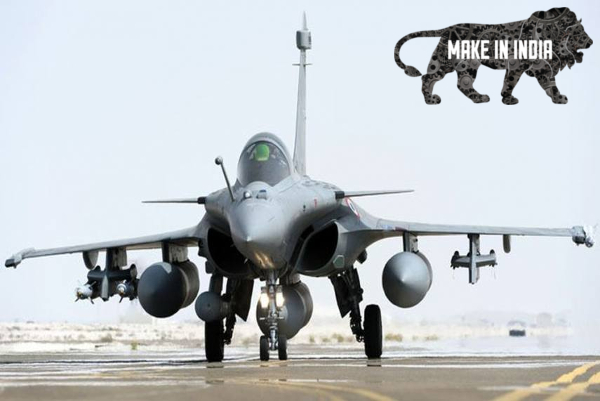
India is moving ahead with plans to acquire 114 additional Rafale fighter aircraft for the Indian Air Force while continuing the indigenous Tejas Mk1A and Tejas Mk2 programmes, Defence Secretary Rajesh Kumar Singh has said.
Speaking at the NDTV Defence Summit 2026, Singh said the Rafale acquisition is being pursued to strengthen the IAF’s fighter fleet and establish an additional production line in India with significant levels of indigenisation. His comments came after the Defence Acquisition Council approved the procurement of Multi Role Fighter Aircraft, identified as Rafale, in February 2026.
India Negotiating for 114 Additional Rafale Fighters
India is currently negotiating with France for 114 additional Rafale fighters under the Indian Air Force’s Multi Role Fighter Aircraft requirement.
According to the Defence Secretary, the Rafale has already demonstrated its operational value in Indian service and India also has the naval Rafale variant on order. France has agreed in principle to India’s requirement for substantial domestic manufacturing and indigenisation.
The Defence Acquisition Council had earlier granted Acceptance of Necessity for the MRFA procurement on February 12, 2026. The Ministry of Defence stated at the time that the majority of the aircraft would be manufactured in India and that the acquisition was intended to strengthen the IAF’s air-dominance and long-range strike capabilities.
18 Aircraft Expected From France, 96 Planned for Production in India
The proposed acquisition is expected to involve 18 Rafale fighters supplied in fly-away condition from France, while 96 aircraft would be manufactured in India.
The exact industrial structure and production arrangements are still being finalised.
Singh said the project would create a second fighter-aircraft production line in the country, adding another major manufacturing capability to India’s aerospace sector alongside the existing Tejas production ecosystem.
Dassault Aviation submitted a formal proposal for the programme in August 2026, according to reports from the Defence Summit, and the proposal is currently under examination.
Rafale Procurement Will Continue Alongside Tejas
The Defence Secretary stressed that the Rafale programme is not intended to replace or weaken India’s indigenous fighter-development effort.
The Tejas Mk1A programme will continue through a spiral-development approach, with increasing integration of indigenous radars, weapons and other systems.
Singh specifically said that the additional Rafale procurement would proceed while India continued developing and improving the LCA Tejas programme.
HAL remains the principal manufacturing partner for the indigenous Tejas programme, while the Aeronautical Development Agency coordinates its development. HAL’s Tejas division is already responsible for production of the aircraft for the Indian Air Force.
IAF Fighter Strength Remains a Major Capability Priority
The acquisition comes as the Indian Air Force works to address declining fighter-squadron numbers caused by the retirement of older aircraft.
Singh said fighter fleet strength was one of the major capability concerns identified by the Air Force, alongside airborne early-warning aircraft and aerial refuelling platforms.
The additional Rafales are therefore being positioned as part of a broader effort to rebuild combat strength while indigenous fighter programmes move through development and production.
The IAF already operates Rafale, Su-30MKI and Tejas fighters in frontline roles, with all three types recently participating in Exercise Veer Guardian 2026 with the Japan Air Self Defence Force.
Tejas Mk1A and Mk2 Remain Central to Indigenous Fighter Development
The Tejas family remains an important pillar of India’s long-term fighter-aircraft strategy.
The Mk1A is intended to provide the IAF with a more capable version of the existing Tejas platform, while the larger Tejas Mk2 is being developed as a more powerful medium-weight fighter.
Although both programmes have faced schedule pressures, the government continues to place emphasis on indigenous design, development and manufacturing in the aerospace sector.
Recent deliveries of Tejas FOC twin-seat trainers and other HAL-built aircraft have also highlighted the continuing expansion of India’s domestic aerospace production base.
Rafale Deal Could Add a Second Major Fighter Production Ecosystem
The proposed 114-aircraft programme represents more than an expansion of the IAF’s Rafale fleet.
Producing the majority of the aircraft in India would create another large fighter manufacturing ecosystem involving assembly, component production, maintenance and potentially a wider Indian supplier network.
This would complement rather than replace India’s indigenous Tejas production infrastructure and could broaden the country’s experience in manufacturing complex combat aircraft at scale.
The Ministry of Defence has consistently identified greater indigenous production, advanced technology development and stronger domestic supply chains as key priorities for India’s defence-industrial strategy.
India Builds a Two-Track Fighter Modernisation Strategy
India’s emerging fighter-modernisation strategy combines near-term acquisition of a combat-proven platform with continued investment in indigenous aircraft development.
The proposed 114 Rafales would strengthen operational numbers and create an additional domestic production line, while the Tejas Mk1A, Tejas Mk2 and future indigenous fighter programmes continue building India’s sovereign aerospace capability.
Taken together, the two tracks give the Indian Air Force a broader path towards rebuilding fighter strength while expanding the country’s own aircraft-design and manufacturing ecosystem.
References
Ministry of Defence, Government of India — Defence Acquisition Council approval for procurement of Multi Role Fighter Aircraft (Rafale), February 12, 2026.
NDTV Defence Summit 2026 — Interview with Defence Secretary Rajesh Kumar Singh on the proposed acquisition of 114 Rafale fighters, September 27–28, 2026.
Hindustan Aeronautics Limited — LCA Tejas Division and indigenous fighter-production programme.
Press Information Bureau, Ministry of Defence — Exercise Veer Guardian 2026 and official updates on indigenous aerospace production, September 2026.
You may also like
-
Bengaluru Startup Paar Autonomy Develops AI-Powered Drone Systems for GPS-Denied Environments
-
Sigma Advanced Systems Secures Fresh ₹973 Crore NATO Artillery Ammunition Order
-
India Advances Indigenous Defence and Space Technologies Through Naval Innovation, Drones and Advanced Electronics
-
Thales Seeks Indian Partnerships for Next-Generation Missiles, Radars and Electronic Warfare Systems
-
Indian and Australian Armies Conduct Jungle and Coastal Warfare Drills in AUSTRAHIND 2026
