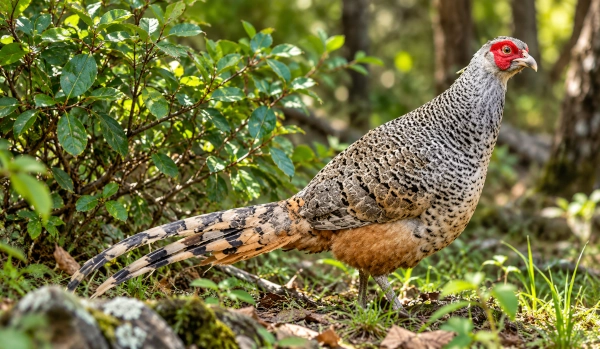
Himachal Pradesh’s efforts to conserve the rare Cheer Pheasant (Catreus wallichii), one of the threatened birds of the western Himalayas, have made significant progress through a dedicated conservation breeding and reintroduction programme.
The initiative, undertaken by the Wildlife Wing of the Himachal Pradesh Forest Department, focuses on breeding Cheer Pheasants under managed conditions, preparing them for survival in natural habitats and gradually rebuilding wild populations.
The conservation programme centres on the Khadiyun Cheer Pheasant Conservation Breeding Centre near Chail, where forest authorities have developed specialised breeding, genetic management and reintroduction procedures.
Official management records from the Himachal Pradesh Forest Department document the establishment of breeding populations, the selection of suitable release sites, improvements in habitat management and the use of scientific monitoring technologies to assess the survival of released birds.
The programme provides an important example of how conservation breeding, habitat protection and long-term ecological monitoring can contribute to the recovery of threatened Himalayan wildlife.
Cheer Pheasant: A Vulnerable Bird of the Western Himalayas
The Cheer Pheasant is a distinctive member of the pheasant family native to the western Himalayan region. Known locally as Chir Tittar, the bird inhabits steep mountain slopes characterised by tall grasses, scattered shrubs, rocky outcrops and patches of open woodland.
The species is classified as Vulnerable on the International Union for Conservation of Nature (IUCN) Red List, reflecting concerns about its restricted distribution, habitat fragmentation and declining populations in parts of its natural range.
Unlike several other Himalayan pheasant species that prefer dense forests, the Cheer Pheasant depends heavily on open grassland and scrub habitats. Its preferred environment typically includes steep hillsides with sufficient vegetation for feeding, nesting and protection from predators.
According to research published through the Himachal Pradesh Forest Department’s wildlife resource library, Cheer Pheasants occur across elevations of approximately 1,400 to 3,050 metres in the Himalayan region.
The species feeds primarily on plant material, including leaves, roots, tubers, seeds and berries. Seasonal changes influence the availability of these food sources and the birds’ movement within their habitats.
Cheer Pheasants generally form breeding pairs during the reproductive season, which extends from April to June. Females construct nests on the ground, usually in sheltered locations among grasses, shrubs and rocky terrain.
Their dependence on specialised habitats makes the species particularly vulnerable to changes in land use, grassland degradation and disturbances affecting breeding areas.
Himachal Pradesh Establishes Dedicated Conservation Breeding Programme
Recognising the threats facing wild Cheer Pheasant populations, the Central Zoo Authority identified the species as a priority for conservation breeding in 2007.
The Himachal Pradesh Forest Department subsequently developed a breeding programme at Khadiyun near Chail, supported by scientific population management and conservation planning.
The programme began with a small founder population of wild birds. These individuals provided the genetic foundation for developing a managed breeding population intended to support future reintroduction. Official conservation records show that the breeding population was established from 12 founder birds, with subsequent generations raised through carefully managed breeding arrangements.
By March 2019, the managed population had increased to approximately 70 birds, demonstrating the breeding centre’s ability to maintain and expand the captive population.
The department’s September 2019 reintroduction planning document recorded a population of 75 individuals, reflecting the progress achieved through sustained breeding and husbandry.
The programme also introduced systematic monitoring of breeding performance, reproductive success and genetic diversity to support the long-term health of the managed population.
These measures established the foundation for moving beyond conservation breeding towards the reintroduction of Cheer Pheasants into suitable natural habitats.
Khadiyun Breeding Centre Uses Scientific Population Management
The Khadiyun conservation programme incorporates genetic management to reduce the risk of inbreeding and maintain diversity within the breeding population.
The department maintains a regional studbook recording the ancestry, breeding history and relationships of individual birds. Researchers have used specialised population management software, including the Single Population Analysis and Record Keeping System and PMx, to assess demographic trends and genetic relationships.
These tools help conservation managers select suitable breeding pairs and maintain genetic diversity across successive generations. Official research published in 2019 reported that the breeding population retained more than 90% of its estimated genetic diversity.
The study also identified opportunities to improve breeding arrangements by carefully managing relatedness between individuals. Genetic management is particularly important for threatened species because breeding programmes founded on small populations can gradually lose genetic diversity.
Maintaining a healthy breeding population provides a source of birds for reintroduction while preserving genetic characteristics important for the species’ long-term survival.
Natural Incubation and Parent-Rearing Improve Survival Skills
One of the important features of Himachal Pradesh’s Cheer Pheasant conservation programme is its emphasis on natural incubation and parent-rearing.
Under this approach, breeding pairs incubate eggs and raise their chicks through normal parental behaviour rather than relying exclusively on artificial rearing. The Forest Department’s official research identifies parent-rearing as an important component of preparing birds for eventual release into natural habitats.
Young Cheer Pheasants learn essential survival behaviours by remaining with adult birds during their early development. These behaviours include recognising natural food, responding to environmental disturbances, identifying potential threats and adapting to the social structure of the species.
The department’s reintroduction strategy therefore favours releasing birds in family groups, allowing juveniles to remain with their parents during the critical period of adaptation.This approach aims to improve the ability of captive-bred birds to survive after release and eventually establish breeding populations in the wild.
The emphasis on natural behaviour reflects the increasing importance of behavioural preparation in modern wildlife conservation breeding programmes.
Reintroduction Programme Targets Suitable Himalayan Grasslands
The Himachal Pradesh Forest Department developed a formal Cheer Pheasant Reintroduction Plan in 2019 to guide the release of captive-bred birds into suitable natural habitats.
The plan incorporates scientific assessments of habitat quality, food availability, predator presence, local ecological conditions and the historical distribution of the species. Reintroduction sites must provide the combination of grassland, shrubs, rocky terrain and scattered trees required by Cheer Pheasants.
The department adopted a soft-release approach, in which birds spend an initial period in temporary enclosures at the selected release site before gradually entering the surrounding habitat.
This method allows birds to become familiar with local environmental conditions while reducing the abrupt transition from managed breeding facilities to unrestricted natural habitats. The release strategy also includes pre-release health assessments, behavioural preparation and monitoring of potential predators.
By integrating these measures, forest authorities aim to improve post-release survival and support the gradual establishment of viable wild populations.
Chail Wildlife Sanctuary Records Encouraging Reintroduction Results
The official Chail Wildlife Sanctuary Management Plan documents progress achieved through the Cheer Pheasant reintroduction programme.
According to the management plan, monitoring at the Seri reintroduction site recorded a survival rate of approximately 20% among released birds during an earlier phase of the programme. The department considered this an encouraging outcome for pheasant reintroduction, given the challenges associated with releasing captive-bred birds into natural habitats.
Monitoring also indicated the establishment of a small wild population comprising approximately three to four breeding pairs in the Seri area. The development demonstrated that captive-bred Cheer Pheasants could adapt to the natural environment and contribute to rebuilding local populations.
The management plan subsequently recommended identifying additional release sites to expand the programme. These findings established a practical foundation for improving release procedures and extending conservation activities into other suitable habitats.
Mehla-Shilli Selected for Further Cheer Pheasant Reintroduction
Following the initial reintroduction activities, the Forest Department undertook a detailed assessment in 2022 to identify suitable locations for subsequent releases. The assessment examined habitat characteristics, historical species occurrence, ecological connectivity, predator activity and support from local communities.
Based on these considerations, Mehla-Shilli in the Theog Forest Division was selected as a suitable location for further Cheer Pheasant reintroduction.
The Chail Wildlife Sanctuary Management Plan identified the area’s grassland habitat, relatively low predator pressure and community support as favourable characteristics. The department proposed continuing reintroduction activities at the site over several years, accompanied by regular monitoring of released birds and their adaptation to the surrounding environment.
Expanding the programme to additional suitable habitats is important for establishing populations across different locations rather than relying exclusively on a single reintroduction site.
The strategy also supports a more comprehensive approach to Cheer Pheasant conservation by combining breeding programmes with the protection and management of natural habitats.
Radio Transmitters and Camera Traps Strengthen Wildlife Monitoring
Scientific monitoring plays an important role in assessing the effectiveness of the Cheer Pheasant reintroduction programme. The Himachal Pradesh Forest Department uses surveillance technologies to observe birds within breeding facilities and monitor their movements following release.
At the breeding centre, closed-circuit television systems support the observation of bird behaviour, reproductive activities and interactions within the enclosures. Temporary release enclosures are also monitored to assess how birds respond to their new surroundings before entering the wild.
Following release, the department uses Very High Frequency (VHF) radio transmitters, receivers and camera traps to monitor bird movements and identify individuals.
Radio telemetry allows conservation personnel to track released birds across suitable habitats and assess their movements during the adaptation period. Camera traps provide additional information about bird activity, habitat use and the presence of potential predators.
These monitoring methods help forest authorities identify factors influencing survival and improve subsequent reintroduction strategies. The use of scientific monitoring also contributes to the development of reliable conservation records, supporting future habitat management and species recovery programmes.
Grassland Protection Remains Essential for Cheer Pheasant Conservation
The long-term recovery of the Cheer Pheasant depends heavily on protecting the specialised habitats required by the species.
Unlike birds that thrive in dense forest environments, Cheer Pheasants depend on a mosaic of open grasslands, shrubs, scattered trees and rocky slopes. The Himachal Pradesh Forest Department identifies habitat degradation and fragmentation as major threats to the species.
Grassland conversion, uncontrolled fires, excessive grazing, development activities and human disturbance can reduce the availability of suitable nesting and feeding areas. The Chail Wildlife Sanctuary Management Plan emphasises the importance of preserving transitional zones between oak forests and grasslands.
These areas provide the vegetation structure required for feeding, breeding and shelter. The management plan recommends avoiding inappropriate interventions, including plantations that could alter important grassland habitats. Forest fire prevention also forms an important part of the conservation strategy, particularly during periods when dry vegetation increases fire risk.
Maintaining healthy grassland ecosystems will support Cheer Pheasants and other wildlife species that depend on open Himalayan habitats.
Local Communities Support Conservation and Habitat Protection
The Forest Department’s reintroduction programme recognises the importance of involving local communities in wildlife conservation.
The official reintroduction plan provides for awareness programmes and consultations with residents living near potential release sites. These activities help explain the conservation importance of the Cheer Pheasant and encourage community participation in protecting its habitat.
Local residents can contribute to conservation by supporting fire prevention, reducing disturbance near breeding areas and reporting activities that threaten wildlife. Community engagement is particularly important in mountain landscapes where grazing, agriculture, settlements and wildlife habitats frequently occur close to one another.
The selection of Mehla-Shilli as a reintroduction location also considered the availability of community support, demonstrating its importance in conservation planning.
By combining scientific management with local participation, the programme aims to establish conditions that support the long-term survival of released birds.
Cheer Pheasant Recovery Strengthens Himalayan Biodiversity Conservation
Himachal Pradesh supports several important Himalayan pheasant species, including the Western Tragopan, Himalayan Monal and Cheer Pheasant. These birds occupy different ecological habitats and contribute to the biological diversity of the Himalayan region.
The Cheer Pheasant is particularly important because of its specialised habitat requirements and Vulnerable conservation status. The state’s conservation breeding programme demonstrates how targeted management can support threatened species through carefully coordinated interventions.
The development of a managed breeding population, preparation of reintroduction plans and establishment of small wild populations represent important achievements. The programme also contributes to scientific understanding of pheasant breeding, genetic management, behavioural adaptation and habitat restoration.
Experience gained through the initiative can support the development of conservation strategies for other threatened Himalayan birds.
Himachal Pradesh Builds a Long-Term Foundation for Cheer Pheasant Recovery
The Cheer Pheasant conservation programme represents a sustained effort by the Himachal Pradesh Forest Department to protect one of the western Himalayas’ vulnerable bird species.
Beginning with a small founder population, the initiative developed a managed breeding programme supported by genetic monitoring, parent-rearing and scientific conservation planning. The subsequent reintroduction activities demonstrated the potential for captive-bred birds to establish themselves in suitable natural habitats.
Official management records document encouraging results at the Seri reintroduction site and the selection of Mehla-Shilli for further conservation activities. The programme also highlights the importance of combining breeding expertise with habitat protection, community participation and long-term monitoring.
Himachal Pradesh’s Cheer Pheasant conservation initiative demonstrates the value of sustained scientific management in protecting threatened wildlife. Continued habitat restoration, carefully managed reintroductions and ecological monitoring will strengthen the foundations for rebuilding wild populations and preserving the biodiversity of the western Himalayas.
References
- Himachal Pradesh Forest Department — Official Wildlife Conservation Programme. Cheer Pheasant Conservation: Research, Breeding and Reintroduction Plans.
https://hpforest.gov.in/cheer-pheasant-1 - Himachal Pradesh Forest Department — Chail Wildlife Sanctuary Management Plan. Official management document covering Cheer Pheasant conservation breeding, monitoring, reintroduction results and habitat management.
https://www.hpforest.gov.in/storage/files/1/pdf/Management%20Plan/Complete%20Book%20Chail%20Management%20Plan_.pdf - Himachal Pradesh Forest Department — 2019. Cheer Pheasant Reintroduction Plan. Official conservation strategy covering breeding, release methods, predator management, habitat assessment and post-release monitoring.
https://hpforest.gov.in/storage/files/1/pdf/Wildlife/Wildlife%20Resource%20Library/Cheer%20Pheasant/Cheer%20Pheasant%20Reintroduction%20Plan%2C%202019.pdf - Himachal Pradesh Forest Department — Wildlife Resource Library. Conservation Breeding and Reintroduction of Cheer Pheasant in Himachal Pradesh. Research published in The Indian Forester, Volume 145, May 2019.
https://hpforest.gov.in/storage/files/1/pdf/Wildlife/Wildlife%20Resource%20Library/Cheer%20Pheasant/Research%20Notes-Conservation%20Breeding%20and%20Reintroduction%20of%20Cheer%20Pheasant%20In%20Himachal%20Pradesh.pdf - Himachal Pradesh Forest Department. Conservation Breeding Centre, Khadiyun-Chail. Official information on the breeding facility and Cheer Pheasant conservation activities.
https://hpforest.gov.in/storage/files/4/aboutus/wildlifefile17-07-2020-1594983014.pdf
You may also like
-
Blackbucks to Return to Chhattisgarh’s Gomarda Wildlife Sanctuary After Five Decades
-
Asiatic Lions Return to Barda Wildlife Sanctuary After 144 Years as Scientific Study Confirms Habitat’s Conservation Potential
-
India’s Ramsar Sites Reach 103 as Sukhna Wetland and Sauj Jheel Receive International Recognition
-
India Expands Global Big Cat Conservation as International Big Cat Alliance Opens New Headquarters
-
Satpura Tiger Reserve’s Barasingha Population Crosses 300 as Madhya Pradesh Plans New Wildlife Corridors
