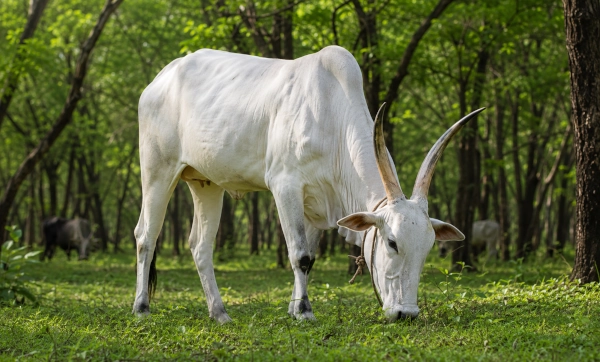
Hallikar cattle are among the most distinguished indigenous draught breeds of India. Native to southern Karnataka, these compact and muscular animals are renowned for their strong limbs, remarkable stamina, quick movement and ability to perform demanding agricultural work under hot, semi-arid conditions.
The breed is closely associated with Karnataka’s traditional farming culture and is often grouped with the celebrated Mysore-type cattle. Hallikar bullocks were historically valued for ploughing fields, transporting farm produce, threshing grain and pulling carts over long distances. Their combination of speed, endurance and sure-footed movement made them especially useful wherever farmers required a powerful yet agile working animal.
Origin and Native Tract
Hallikar cattle originated in Karnataka and are officially recognised by the ICAR–National Bureau of Animal Genetic Resources as an indigenous Indian cattle breed. The breed has been assigned the national accession number INDIA_CATTLE_0800_HALLIKAR_03008.
Its principal breeding tract extends across the districts of Mysuru, Mandya, Bengaluru Rural, Kolar, Tumakuru, Hassan and Chitradurga. Hallikar cattle are also found in adjoining parts of Tamil Nadu and Andhra Pradesh, reflecting the historical movement of animals and farmers across the southern Deccan region.
The breed takes its name from the Hallikar community, traditionally associated with its breeding and maintenance. ICAR research also links its development with the Golla pastoral community and its Hallikar subgroup, whose generations of selective breeding helped preserve the animal’s strength, agility and distinctive physical form.
A Foundation Breed of Southern India
Hallikar occupies an important place in the history of peninsular Indian cattle. ICAR literature describes it as a probable progenitor or important ancestral influence in the development of breeds such as Amrit Mahal, Khillar and Kangayam.
These breeds share several characteristics with Hallikar cattle, including compact bodies, long horns, firm limbs, active temperaments and strong draught capacity. Differences that later emerged were shaped by regional environments and the selective breeding practices of farming and pastoral communities.
Hallikar is therefore more than an individual regional breed. It forms part of the genetic and agricultural foundation from which several major draught breeds of southern India developed.
Physical Characteristics
Hallikar cattle are medium-sized animals with a long, compact and well-muscled body. Their build combines strength with lightness, allowing them to move more quickly than many heavier draught breeds.
The coat is generally white, light grey, grey or dark grey. Young breeding bulls may display darker shading over the shoulders, neck and hindquarters. This shading often becomes less pronounced as the animal matures.
The head is comparatively long, with a prominent or slightly raised forehead. The face is narrow and gives the animal an alert, refined appearance. The muzzle may be black, pinkish or a mixture of the two, while the eyes are active and expressive.
One of the breed’s most recognisable features is its pair of long horns. They arise close together near the top of the poll, extend upward and backward in a sweeping line and then turn slightly forward and inward towards their pointed tips. Horn colour may vary from grey and black to pinkish brown or a mixture of shades.
The ears are relatively small and carried horizontally. Hallikar animals possess a developed hump, a moderately sized dewlap and a narrow but muscular frame. Their tail generally reaches below the hocks and terminates in a dark or black switch.
The legs are one of the breed’s greatest strengths. They are firm, lean and strongly set, with hard hooves suited to movement over dry ground. ICAR literature notes that the short interdigital space between the claws contributes to the animal’s effectiveness in draught work.
Exceptional Draught Ability
Hallikar is widely regarded as one of southern India’s finest draught breeds. Its bullocks are known for combining pulling power with speed, agility and sustained movement.
The animals are particularly celebrated for their trotting ability. A well-trained Hallikar pair can move rapidly while pulling a cart and can sustain agricultural work for extended periods when properly fed, rested and managed.
Traditional uses include:
- Ploughing and preparing agricultural land
- Pulling bullock carts
- Transporting grain, sugarcane and other produce
- Threshing harvested crops
- Hauling water and agricultural materials
- Rural transportation over considerable distances
Hallikar cattle are well suited to farms where manoeuvrability is important. Their relatively compact bodies allow them to work efficiently in smaller fields, while their strong legs and active gait help them negotiate uneven terrain.
ICAR field research recorded the use of both bullocks and, in some households, cows for transportation, ploughing and threshing in the breed’s native tract. This illustrates the central place once occupied by draught cattle in the mixed farming systems of southern Karnataka.
Adaptation to Karnataka’s Farming Environment
Hallikar cattle developed under the climatic and agricultural conditions of the southern Deccan plateau. The breed is accustomed to warm weather, seasonal scarcity of green fodder and farming systems based partly on grazing and crop residues.
Its compact structure and active metabolism make it suitable for semi-intensive management. Animals are traditionally allowed to graze and are supplemented with locally available fodder such as finger millet straw, grasses, sorghum and pearl millet.
The breed’s ability to function under comparatively modest input conditions has made it valuable to small and marginal farmers. Unlike highly specialised animals requiring intensive feeding and controlled housing, Hallikar cattle can contribute to farms where feed resources fluctuate across seasons.
This adaptability remains one of the most important reasons for conserving the breed. Indigenous cattle represent accumulated genetic responses to local heat, fodder, disease pressures and management practices developed over many generations.
Milk Production
Hallikar is primarily a draught breed rather than a specialised dairy animal. Its cows generally produce enough milk to rear their calves and provide a limited quantity for household use.
Data compiled by the National Dairy Development Board indicate an average lactation yield of around 542 kilograms, with recorded yields ranging from approximately 227 to 1,134 kilograms. The reported average milk-fat content is about 5.7%.
Milk yield varies according to genetics, nutrition, age, health, lactation number and management. Farmers maintaining Hallikar cattle have traditionally placed greater emphasis on the working performance of male animals than on maximising milk output from cows.
The breed should therefore be evaluated according to its complete contribution to the farm. This includes draught power, manure, calf production, limited milk supply, cultural value and its ability to survive under local conditions.
Temperament and Training
Hallikar cattle are active, alert and energetic. These traits contribute to their speed and working ability, although young animals require patient handling and systematic training.
Bullocks selected for work are generally trained gradually. They first become accustomed to human contact, halters and yokes before being introduced to light loads. The workload is then increased as their strength, coordination and confidence develop.
A well-trained pair can respond closely to the farmer’s voice and movements. This relationship between animal and handler was traditionally built over many years and formed an important part of rural knowledge in Karnataka.
The quality of Hallikar draught animals depends on more than physical strength. Farmers also value straight limbs, sound hooves, balanced movement, alertness, stamina and the ability of a pair to work together at a uniform pace.
Role in Sustainable Agriculture
The continuing relevance of Hallikar cattle extends beyond nostalgia or cultural identity.
Bullock power can remain useful on small farms, in hilly or irregular fields and in places where heavy machinery is costly or difficult to operate. Draught animals also reproduce, produce manure and depend partly on crop residues and locally available fodder.
Cattle manure supports soil fertility and can be used in compost, farmyard manure and biogas systems. Crop residues that may possess limited direct value for people can be converted by cattle into work, manure and milk.
Hallikar cattle can therefore form part of integrated crop-livestock systems in which animals and fields support one another. Their future economic role may be strongest where traditional draught use is combined with organic farming, specialised breeding, manure utilisation and culturally linked rural enterprises.
Cultural Importance in Karnataka
Hallikar cattle are deeply connected with the agrarian heritage of southern Karnataka. Farmers continue to value the breed for traction power as well as its religious and cultural significance.
A recent ICAR study examining farmer preferences for Hallikar, Amrit Mahal and Malnad Gidda cattle found that Hallikar owners placed particular importance on traction ability and cultural value. These preferences show that the breed’s importance cannot be measured through milk production alone.
Hallikar bulls and bullocks are frequently displayed during livestock fairs, agricultural festivals and traditional celebrations. Animals with good conformation, long horns and controlled movement are a source of pride for breeders.
The breed also represents the accumulated skill of pastoralists and farmers who selected animals for strength and performance long before the development of modern breeding technologies.
Decline and Conservation Concerns
The spread of tractors and mechanised transport has reduced the everyday economic demand for draught cattle across many parts of India. Shrinking grazing land, rising feed costs, smaller landholdings and limited availability of superior breeding bulls have added further pressure on indigenous working breeds.
An ICAR review reported that the recorded pure Hallikar population in Karnataka declined substantially between the 2007 and 2012 breed surveys. This is a historical comparison rather than a current population estimate, but it illustrates the genetic erosion that can occur when farmers have fewer economic reasons to maintain pure draught animals.
Indiscriminate crossbreeding can also dilute recognisable Hallikar characteristics. When breeding decisions focus only on short-term milk production, traits such as draught ability, hardiness, hoof strength and adaptation to local conditions may gradually disappear.
Preserving the Breed
Hallikar conservation requires both scientific breeding programmes and continued support for livestock keepers in the native tract.
Important measures include:
- Identifying and registering purebred animals
- Maintaining high-quality breeding bulls
- Expanding access to semen from genetically evaluated Hallikar sires
- Recording ancestry, fertility, conformation and work performance
- Supporting farmer-led breeding groups
- Conserving grazing areas and fodder resources
- Creating economic uses for indigenous cattle
- Preventing unplanned genetic dilution
ICAR–NBAGR includes Hallikar among the cattle breeds whose genetic material is represented in the National Gene Bank. Hallikar material is also included in the bureau’s somatic-cell conservation programme, providing an additional scientific safeguard for the breed’s genetic heritage.
However, frozen semen and preserved cells cannot replace living herds. Effective conservation depends on farmers continuing to breed, rear and use Hallikar cattle in the landscapes where the breed evolved.
A Living Symbol of Karnataka’s Rural Heritage
Hallikar cattle represent a remarkable combination of muscular strength, speed, endurance and adaptation. Their long sweeping horns, grey coat, firm limbs and alert bearing give them a distinctive appearance, while their capacity for sustained draught work earned them a celebrated place in the agriculture of southern India.
The breed also carries a wider genetic importance as an ancestral influence on several major peninsular cattle populations. Its survival preserves traits that may become increasingly valuable as agriculture confronts higher temperatures, uncertain fodder availability and the need for resilient, low-input farming systems.
Protecting Hallikar cattle means protecting more than an animal breed. It means conserving Karnataka’s pastoral knowledge, agricultural history and a living genetic resource shaped through centuries of partnership between farmers, cattle and the land.
References
ICAR–National Bureau of Animal Genetic Resources, Cattle Breeds of India.
National Dairy Development Board, Hallikar Breed Profile.
P. K. Singh and others, Phenotypic Characterization and Performance Evaluation of Hallikar Cattle in Its Native Tract, Indian Journal of Animal Sciences.
ICAR review, Ruminant Genetic Resources of Karnataka: Status, Distribution and Characteristics.
You may also like
-
ZSI Scientists Identify New Fish Species Bathymyrus perplexus From the Bay of Bengal
-
Rare Afro-Asian Sand Snake Rediscovered in Kutch After More Than 150 Years
-
Indravati Tiger Reserve to Reopen for Wildlife Safaris After Four Decades
-
Tiny 3.3-mm Parasitic Wasp Discovered in Assam Marks First Record of Its Genus in India
-
How India Brought the Greater One-Horned Rhinoceros Back From the Brink
