Hindustan Aeronautics Limited will hand over three categories of indigenous aircraft in Bengaluru on September 18, marking simultaneous progress in India’s military training, combat aviation and civil helicopter programmes.
HAL will deliver LCA Tejas Final Operational Clearance twin-seat trainer aircraft and HTT-40 basic trainers to the Indian Air Force, while Dhruv Next Generation helicopters will be handed over to Pawan Hans Limited. Defence Minister Rajnath Singh and Civil Aviation Minister K Rammohan Naidu will be present for the handover.
The event brings together three aircraft programmes representing different segments of India’s expanding domestic aerospace industry, ranging from basic pilot training and supersonic combat aviation to civilian helicopter operations.
Tejas FOC Twin-Seaters for the Indian Air Force
The Tejas twin-seater is the two-seat training variant of India’s indigenous Light Combat Aircraft and allows pilots to undertake conversion and operational training on the Tejas platform.
The aircraft retains combat capability while providing a second cockpit for an instructor, making it an important part of the IAF’s transition of pilots onto the indigenous fighter fleet.
The September 18 handover involves Final Operational Clearance-standard twin-seat aircraft, adding to the Tejas platforms being supplied by HAL to the Air Force.
The twin-seaters are also significant for maintaining the training pipeline as the Tejas fleet expands and India moves towards larger-scale production of subsequent variants of the aircraft.
HTT-40 Strengthens Indigenous Basic Flying Training
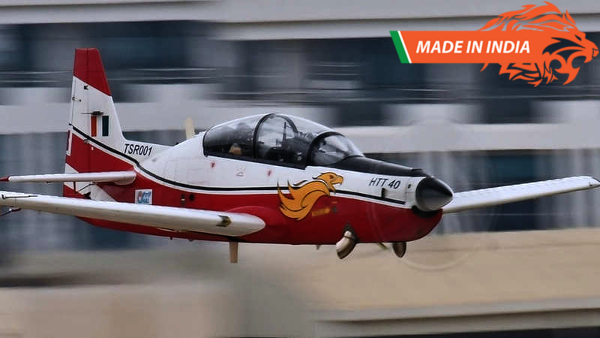
HAL will simultaneously hand over HTT-40 basic trainer aircraft to the IAF.
Designed and developed by HAL, the turboprop aircraft has been developed for the initial stages of military pilot training. Basic trainers introduce trainee pilots to fundamental flying skills before they progress to more advanced training aircraft and eventually operational platforms.
The HTT-40 programme is intended to establish an indigenous source for this crucial stage of the IAF’s pilot-training system and create a domestic manufacturing and maintenance ecosystem around the aircraft.
Its induction consequently represents more than the delivery of another aircraft type. It restores an Indian-designed platform to an important part of the military aviation training chain.
Dhruv NG Moves Into Civil Operations
The third component of the handover concerns HAL’s Dhruv Next Generation helicopter, which will be delivered to state-owned helicopter operator Pawan Hans Limited.
Unlike the Tejas and HTT-40 deliveries, which are intended for the Indian Air Force, the Dhruv NG handover highlights the civilian side of India’s indigenous aerospace manufacturing capabilities.
The development is particularly significant because HAL’s Dhruv family has primarily become associated with military and government operations. Deployment through Pawan Hans provides another avenue for the indigenous helicopter platform in the country’s civil aviation sector.
Military and Civil Aerospace Programmes Come Together
Bringing the three platforms together at a single handover also demonstrates the breadth of HAL’s current aircraft portfolio.
The Tejas represents indigenous combat-aircraft development, the HTT-40 addresses basic military pilot training, and the Dhruv NG extends India’s domestically developed rotary-wing capabilities into civilian operations.
The Ministry of Defence said the deliveries reflect the government’s emphasis on indigenous design, development and manufacturing while reducing dependence on foreign aerospace platforms.
HAL’s programmes also support a wider network of Indian companies supplying structures, avionics, components, systems and other equipment, making increasing aircraft production important to the broader domestic aerospace manufacturing ecosystem.
Senior Defence and Aviation Leadership to Attend
Chief of the Air Staff Air Chief Marshal AP Singh, Defence Production Secretary Sanjeev Kumar, Civil Aviation Secretary Samir Kumar Sinha and HAL Chairman and Managing Director Ravi K are scheduled to attend the September 18 ceremony along with representatives of the IAF, Pawan Hans, regulatory organisations and the aerospace industry.
The presence of both the Defence and Civil Aviation ministers reflects the unusual nature of the event, with indigenous military and civilian aircraft being delivered together.
For India’s aerospace sector, the handover will bring three different programmes to the same stage at Bengaluru: an indigenous fighter trainer entering the IAF fleet, a domestically developed basic trainer strengthening the military flying-training pipeline, and an Indian-built helicopter moving further into civilian aviation.
You may also like
-
Nayan Technologies Selected by JSW MG Motor to Advance AI-Based Road Monitoring and Smart Mobility
-
Indian Navy to Commission Indigenous Anti-Submarine Warfare Ship Mangrol on October 12
-
JSW Steel’s Crude Steel Production Rises 5% to 7.27 Million Tonnes in Q2 FY2027
-
Kabra Extrusiontechnik’s GEON Commissions 20 MWh Battery Storage Project in Rajasthan
-
OBSC Perfection Secures ₹8.9 Crore Israeli Defence Order for Precision Fuze Components
