GI Produce of India — 12
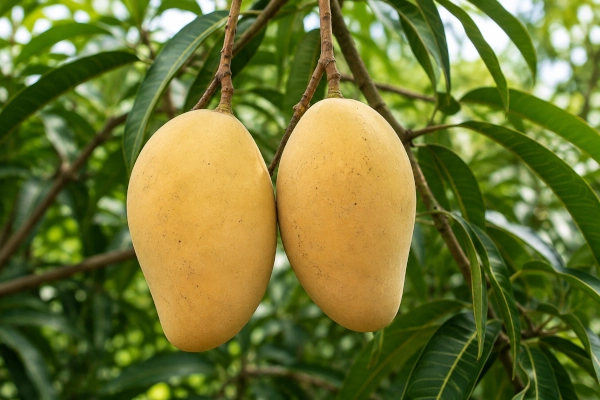
Among Goa’s great mangoes, Hilario occupies a particularly intriguing position because it arrives when many other prized varieties are beginning to disappear. The famous Mankurad dominates the opening and middle phases of the Goan mango season, but Hilario waits. Its fruit can continue ripening into June and even July, allowing Goans to enjoy a premium table mango when the monsoon is already approaching or has begun transforming the landscape.
Known locally through names such as Manghilar, Mangilar, Mangilal and Manga Hilario, the variety is celebrated for its exceptional sweetness, aromatic flesh and remarkably smooth eating quality. ICAR-Central Coastal Agricultural Research Institute describes Hilario as one of Goa’s most popular indigenous mangoes after Mankurad, while APEDA identifies it as a distinctly Goan variety known for sweetness, cluster bearing and its unusually late maturity.
Its deep association with Goa received formal legal recognition when the Goa Hilario Mango (Manghilar or Mangilar/Mangilal) was registered as a Geographical Indication. The application had been filed on 22 April 2022, appeared in GI Journal No. 208 in August 2025, and the Registry records a Certificate of Registration dated 30 December 2025.
Hilario, Manghilar, Mangilar and Mangilal — One Mango With Several Names
The official GI name preserves the linguistic complexity surrounding this old Goan cultivar. Intellectual Property India records it as “Goa Hilario Mango (Manghilar or Mangilar/Mangilal)”, recognising several names under which the fruit has circulated through Goan orchards and markets.
The word “Hilario” reflects the personal name traditionally associated with the mango’s origin, while the forms Manghilar, Mangilar and Mangilal developed through local speech. In Konkani mango terminology, manga or mang became attached to the personal name Hilario, gradually producing the familiar contracted forms by which the fruit is now known across parts of Goa.
This diversity of names does not indicate several unrelated cultivars. Instead, it reveals how a mango preserved through generations of grafting can simultaneously preserve traces of Portuguese-influenced personal naming, Konkani pronunciation and local village usage.
The Mango of Siolim
The strongest traditional origin story connects Hilario with Siolim in Bardez, North Goa. Goan horticultural accounts describe the cultivar as originating from a superior chance seedling associated with Hilario Fernandes of Siolim, whose name subsequently became attached to the fruit.
A chance seedling is one of the most important forces behind traditional mango diversity. When a mango stone germinates, the resulting tree is not usually genetically identical to the tree that produced the fruit, and occasionally that genetic variation creates something exceptional. An observant grower who recognises an unusually sweet, aromatic or otherwise valuable seedling can preserve it through grafting and transform one accidental tree into an enduring cultivar.
Hilario appears to belong to precisely this tradition. The original tree associated with Siolim produced fruit considered sufficiently exceptional that its characteristics were propagated, gradually spreading the mango beyond the property from which it originated while retaining the Hilario name.
Fernandes Vaddo and a Mango Rooted in Village Memory
Local accounts connect the mango particularly with the Fernandes vaddo area of Siolim, giving Hilario a much more intimate geographical origin than the broad statewide identity visible in its modern GI registration. Siolim lies near the Chapora River in Bardez, a landscape of village houses, lateritic ground, river-influenced soils and mixed tropical vegetation that typifies much of northern Goa.
Traditional Goan mangoes often emerged from precisely these small agricultural environments rather than from large experimental stations or industrial orchards. A distinctive tree in a family property might become known to neighbours, grafts would be exchanged, and over time a mango initially associated with one household could become a recognised village and eventually regional cultivar.
The Hilario story therefore captures the deeply personal nature of Goa’s mango heritage. The name of one individual became attached to one exceptional seedling, and generations later that name is preserved in India’s official Geographical Indications Registry.
Goa’s Mango Heritage Was Built Through Selection and Grafting
The development of Hilario belongs to a much larger history of mango selection in Goa. The region became an important centre for vegetative propagation during the Portuguese period, when grafting allowed desirable mango trees to be reproduced instead of relying entirely upon genetically variable seedlings.
Once grafting became widely practised, Goa developed an extraordinary number of named cultivars. Growers preserved mangoes for sweetness, fragrance, unusual skin colour, season, fruit size, pulp quality and keeping ability, gradually creating a horticultural vocabulary populated by names such as Mankurad, Hilario, Mussarat, Xavier, Fernandin and Malgesh.
This system transformed the mango from a broadly variable seedling fruit into a collection of recognisable cultivars. Hilario is therefore not an isolated curiosity but one surviving expression of a sophisticated local culture of observation, selection and vegetative propagation.
A Mango That Waits Until the End of the Season
The defining commercial characteristic of Hilario is its very late maturity. APEDA notes that the fruit can mature as late as July, while ICAR identifies the cultivar as an established Goan variety whose irregularly bearing trees produce medium-to-small fruits, often in clusters.
This timing gives Hilario a considerable advantage. By June and July, many earlier premium mango varieties have disappeared or become scarce, yet consumer appetite for good mangoes remains strong. A high-quality fruit arriving during this period can therefore command considerable attention because it occupies a market window with much less competition.
The late season also makes Hilario culturally distinctive. While Mankurad belongs strongly to Goa’s dry summer, Hilario often survives into the transition towards the monsoon, linking the mango season with one of the most dramatic annual transformations of the Goan landscape.
The Mango of June and July
Traditional accounts describe June as an important Hilario month, while exceptionally late fruit can continue into July. This places the cultivar among the final premium mangoes of the Goan season and explains why it remains so eagerly awaited by consumers who know the variety.
The mango’s late arrival also changes the sensory context in which it is eaten. Earlier varieties ripen during Goa’s intensely hot and relatively dry months, but Hilario may be consumed when clouds are gathering over the Western Ghats, humidity has increased and the first monsoon rains have begun cooling the landscape.
This seasonal identity is part of the fruit’s appeal. Hilario is not merely a sweet mango available late; it is one of the fruits that marks the closing chapter of the Goan mango year.
Butter-Yellow Flesh and an Intensely Sweet Interior
Hilario’s outward appearance is comparatively modest, but its interior explains the variety’s reputation. Goan horticultural accounts describe the pulp as light butter-yellow to ivory in colour, firm yet melting, juicy and aromatic, with the cut edge of the peel sometimes showing a saffron tone.
This combination produces a particularly refined table mango. The flesh is substantial enough to hold its shape when cut but softens readily in the mouth, while the aroma and sweetness become more pronounced as the fruit reaches full ripeness.
Hilario is therefore fundamentally a fruit intended to be eaten fresh. Unlike varieties whose commercial importance depends heavily upon pickle making, pulp extraction or jam production, the greatest value of a good Hilario lies in presenting the ripe fruit itself at its best stage of maturity.
A Mango That Can Rival Mankurad in Sweetness
Mankurad remains Goa’s most famous premium mango, but Hilario enjoys an exceptional reputation among experienced mango growers and consumers. APEDA specifically notes that Hilario is known for its sweetness, while Goan horticultural accounts have recorded total soluble solids around 23° Brix in representative fruit, slightly above readings commonly cited for Mankurad.
Brix is not a complete measurement of mango quality because aroma, acidity, fibre, texture and flavour compounds also contribute to the eating experience. Nevertheless, the high soluble-solids level helps explain why Hilario can taste extraordinarily sweet when harvested and ripened correctly.
Its admirers therefore sometimes place Hilario alongside or even above Mankurad in pure eating quality. Such comparisons are inevitably subjective, but they demonstrate the extraordinary reputation that a relatively uncommon late-season cultivar has built within Goa.
Medium to Small Fruit With Premium Eating Quality
ICAR describes Hilario fruits as medium to small in size, showing that premium mango quality does not depend upon producing exceptionally large fruit. The cultivar’s value comes instead from sweetness, texture, aroma and the seasonal period in which it becomes available.
This is an important contrast with mangoes such as Fazli, where sheer fruit size forms part of the cultivar’s identity. Hilario follows the opposite strategy, offering concentrated eating quality in a comparatively compact fruit.
Smaller fruit can also ripen more evenly when properly harvested, although individual orchard conditions strongly influence final size. Water availability, crop load, tree nutrition and weather during fruit development all determine whether a particular season produces smaller or more generously sized mangoes.
Cluster Bearing Gives the Tree a Distinctive Appearance
Hilario possesses another unusual characteristic: cluster bearing. APEDA and ICAR describe the variety as a medium yielder whose fruits may appear in clusters, creating branches carrying several developing mangoes together rather than only isolated fruit.
Cluster bearing can give a productive branch an impressive appearance, but it also creates management challenges. Several mangoes growing close together may compete for nutrients and space, while contact between fruit can increase physical blemishing if branches move strongly in the wind.
The number of fruit carried by individual shoots also affects final size. A heavily loaded branch may produce smaller mangoes than one supporting fewer fruit, illustrating the constant balance between yield and individual fruit development in perennial orchard crops.
A Tree That Does Not Behave Predictably Every Year
Hilario is described as an alternate or irregular bearer, meaning annual production can fluctuate considerably. One or two branches may carry fruit even when the rest of the tree produces comparatively little, a behaviour specifically noted by ICAR in its description of the variety.
This irregularity is common among several traditional Indian mango cultivars. Heavy cropping in one year can reduce the vegetative growth required for the following season’s flowering, while weather, nutrition and tree condition further influence how strongly a mango tree blooms.
For the farmer, irregular bearing complicates income planning because an orchard may not deliver the same quantity every year. The scarcity created during lighter seasons can increase market prices, but it also limits the ability to build reliable large-scale commercial supply chains.
Why Hilario Remains Comparatively Rare
Hilario’s scarcity is partly the result of its irregular production, but Goa’s traditional landholding pattern also plays an important role. Many indigenous mango trees grow in household compounds, small orchards and mixed village properties rather than large continuous plantations devoted to a single cultivar.
Such a production system preserves tremendous diversity because families maintain trees for different tastes and ripening periods. However, it makes large commercial quantities difficult to aggregate, particularly for a cultivar that already bears inconsistently.
The result is that a truly good Hilario can be much harder to find than mass-market mangoes sold across India. Its rarity contributes to the sense among Goan mango enthusiasts that the fruit is something to be sought out rather than simply purchased from any ordinary market stall.
The Siolim Landscape Behind Hilario
Siolim lies in Bardez in northern Goa, within a landscape influenced by the Chapora River and the wider Konkan coastal environment. Low-lying river valleys, lateritic uplands, village settlements and tropical vegetation create numerous micro-environments within a relatively small geographical area.
Mango trees thrive particularly where roots can penetrate sufficiently deep soil and avoid prolonged waterlogging. Around long-established village homes, generations of organic matter accumulation and household management can create fertile pockets even within landscapes dominated by lateritic geology.
This combination helps explain why some of Goa’s most celebrated mangoes emerged from individual family properties rather than uniform commercial orchards. The quality of a chance seedling may reflect genetics, but the survival and recognition of that tree depend heavily upon the small geographical environment in which it grows.
Lateritic Goa and the Mango Tree
Much of Goa is characterised by reddish lateritic soils formed under intense tropical weathering. These soils can be acidic and relatively poor in some nutrients, yet they are generally well drained and can support mango, cashew and other perennial crops when organic matter and nutrients are managed appropriately.
The Government of Goa’s crop recommendations list Hilario among the principal mango varieties suitable for cultivation in the state, alongside Malcurado, Alphonso, Ratna and Amrapali. Recommended mango establishment uses grafted planting material, reflecting the importance of vegetative propagation for maintaining named cultivars.
Established mango trees can tolerate the long Goan dry season because extensive root systems explore deeper moisture reserves. Young grafts, however, require much more careful watering and protection until their roots develop sufficiently.
The Monsoon Makes Hilario Special — and Vulnerable
Hilario’s late ripening is simultaneously its great market advantage and one of its greatest horticultural weaknesses. Fruit that remains on the tree into June and July begins encountering the rising humidity and rainfall associated with the southwest monsoon.
These conditions can increase fungal disease pressure and create ideal environments for fruit flies, one of the most serious pests affecting late-ripening mangoes. Goan accounts specifically note that Hilario fruit ripening during the rains can suffer fruit-fly infestation if orchards are not properly managed.
The problem is particularly frustrating because fruit-fly damage develops inside the mango. A fruit may appear outwardly attractive while larvae are already damaging the pulp, making preventative orchard sanitation and trapping much more effective than waiting for visible symptoms.
Fruit Fly Management Determines the Late Crop
The Goa Directorate of Agriculture recommends methyl-eugenol traps as part of fruit-fly management in mango orchards. These traps attract male fruit flies and can help suppress populations when used together with orchard sanitation and removal of infested fallen fruit.
For Hilario, such management is especially important because the crop remains available when fruit-fly populations can become severe. The longer the fruit stays on the tree, the longer it remains exposed to pest pressure.
Good management therefore protects more than yield. It preserves the eating quality upon which Hilario’s reputation depends, because a mango famous for smooth, sweet pulp cannot sustain premium value if consumers repeatedly encounter internal damage.
Harvesting Hilario at the Right Moment
Late-season mangoes require careful harvest decisions because rainfall can create pressure to remove fruit before storms while the mango still needs enough physiological maturity to ripen correctly. Hilario harvested too early may soften later without developing the full sweetness, aroma and melting texture expected from the variety.
Growers therefore rely on accumulated experience with fruit age, shoulder development, skin appearance and orchard conditions. A mango intended for immediate local consumption may remain on the tree longer, whereas fruit requiring transport should normally be harvested while sufficiently firm to withstand handling.
This distinction gives local consumers a potential advantage. A Hilario sold near the orchard can sometimes be harvested closer to full maturity than one travelling a long commercial supply chain, allowing its characteristic flavour to develop with minimal compromise.
Grafting Keeps Hilario Alive Across Generations
Like other famous mango cultivars, Hilario cannot be reliably reproduced from seed. A stone taken from a superb fruit may generate an entirely different seedling because mango sexual reproduction produces genetic variation.
The cultivar must therefore be reproduced through grafting, using scion material from an authentic Hilario tree. The rootstock supplies the root system, while the scion develops into the fruit-bearing canopy and preserves the selected genetic characteristics.
This is how the qualities associated with the original Siolim selection could survive beyond the lifespan of the first tree. Each new graft becomes another link in a living horticultural chain connecting contemporary orchards with the original cultivar.
Reliable Mother Trees Are Essential
The dependence on grafting creates a major responsibility for nurseries. A young mango graft does not carry an obvious visual label proving what fruit it will eventually produce, and several years may pass before the grower can verify its identity through a meaningful crop.
Incorrect planting material can therefore undermine both farmers and the GI. If trees sold as Hilario eventually produce unrelated fruit, growers lose years of investment while consumers lose confidence in the protected name.
Documented mother trees, reliable scion material and knowledgeable nursery operators are consequently fundamental to the future of Goa Hilario Mango. The GI protects geographical identity legally, while authentic propagation preserves it biologically.
The Late Mango as a Genetic Resource
Hilario’s importance is not limited to present-day consumers. Its very late maturity, strong sweetness, aromatic pulp and unusual bearing behaviour represent a combination of traits that may have value in future mango-selection and breeding programmes.
Late-season cultivars are particularly useful because they can extend the marketing calendar. A region growing only early varieties experiences a brief period of abundance followed by a sudden collapse in supply, while late mangoes allow production and consumer availability to continue for additional weeks.
Preserving Hilario therefore protects a valuable piece of horticultural diversity. Even if the cultivar never becomes a mass-market mango, the genes responsible for its season and fruit quality may become important in future breeding work.
Goa’s Ready Reckoner Still Recognises Hilario
Hilario has not survived merely as a heritage curiosity. The Goa Directorate of Agriculture continues to include Hilario among the recommended mango varieties in its Ready Reckoner for important crops, alongside Malcurado, Alphonso, Ratna and Amrapali.
The government guidance recommends planting established grafts at the onset of the monsoon, with suitable spacing and nutrient management for mango orchards. It also identifies mango fruit fly and mango hopper among important pests, linking traditional cultivar preservation with modern scientific orchard management.
This official recognition is significant because it demonstrates that Hilario remains part of Goa’s living agricultural system. The variety belongs simultaneously to traditional village horticulture and contemporary crop-extension programmes.
A Mango Favoured Almost Entirely for Fresh Eating
Hilario is principally a table mango, and its exceptional sweetness makes processing almost unnecessary for premium fruit. When properly ripened, the mango’s strongest value is realised by eating the flesh fresh, where its texture, aroma and sweetness remain fully perceptible.
This differs from Goa Mussarat, whose abundant pulp and late-season production have given it stronger associations with jams and preserves. Hilario’s economic strategy is closer to Mankurad: protect eating quality, maintain authenticity and sell the fruit as a premium seasonal experience.
Lower-grade fruit could naturally enter household processing, but that is not what built Hilario’s reputation. The name became famous because people considered the ripe mango itself exceptional.
The 1987 Mango Show and Hilario’s Growing Reputation
Goa’s organised appreciation of indigenous mango varieties gained an important boost when the Agriculture Officers’ Association held the first All Goa Mango Show in 1987. A Manga Hilario entry reportedly won the “Mango of the Show” award, helping bring wider public attention to a variety already highly regarded among knowledgeable growers.
Such exhibitions perform an important conservation role because they make lesser-known traditional cultivars visible. Farmers can compare fruit, consumers encounter varieties beyond the commercial mainstream, and horticulturalists identify exceptional trees worth preserving.
Hilario’s eventual GI application can therefore be understood as part of a much longer movement to document and celebrate Goa’s mango diversity. The registration of 2025 came decades after organised mango enthusiasts had already recognised the cultivar’s outstanding qualities.
From Mango Show Winner to GI Product
The formal GI journey began when the All Goa Mango Growers Association filed Application No. 879 on 22 April 2022. Intellectual Property India classifies the product under Class 31 for agriculture and formally identifies Goa as its geographical area.
The application subsequently passed through examination, supporting documentation and other GI procedures before appearing in Geographical Indications Journal No. 208, made available on 29 August 2025. The Registry now records the application as registered and lists a Certificate of Registration document dated 30 December 2025.
Goa’s government subsequently identified Hilario among five new geographical indications secured for the state, alongside Taleigao Vayingim, Korgut Rice, Kaju Apple and Mussarad Mango. The Governor’s 2026 address described these registrations as part of an effort to conserve distinctive local varieties, strengthen market recognition and showcase Goa’s identity more widely.
GI Details at a Glance
- Geographical Indication: Goa Hilario Mango (Manghilar or Mangilar/Mangilal)
- State: Goa
- Product: Agricultural
- Class: 31
- Application Number: 879
- Date of Filing: 22 April 2022
- GI Journal: No. 208
- Journal Availability Date: 29 August 2025
- Certificate Number: Not yet populated in the current public GI Registry record
- GI Certificate Date: 30 December 2025
- Registered Proprietor / Applicant: All Goa Mango Growers Association
- Geographical Area: Goa
- Registration Valid Until: The current public Registry field has not yet been populated; under the statutory ten-year registration term calculated from the filing date, the present term would run through 21 April 2032 unless the Registry records otherwise
Why the Certificate Number Is Not Shown
The public Intellectual Property India application page currently presents an unusual situation because Goa Hilario Mango is clearly marked Registered, and the document list contains a Certificate of Registration dated 30 December 2025, yet the separate fields for certificate number, certificate date and validity remain blank.
For that reason, it would be misleading to invent or infer a certificate number merely to make the GI details appear complete. The article therefore records the confirmed certificate-document date while explicitly noting that the certificate-number field has not yet been populated in the public registry.
This distinction is important for a GI series intended to serve as a reliable reference. Where official public records remain incomplete, clearly stating that limitation is preferable to reproducing an unsupported secondary-source number.
What the GI Tag Actually Protects
The geographical indication does not mean Hilario trees are biologically capable of growing only inside Goa. Grafts can be transported, and a correctly propagated Hilario tree could potentially grow elsewhere if climate, soil and horticultural management were suitable.
What the GI protects is the Goa Hilario Mango geographical identity, linking the cultivar’s commercial reputation with its recognised Goan production landscape. This prevents the geographical name from becoming detached from the farmers and orchards whose cultivation created its reputation.
The distinction becomes especially important for rare premium varieties. Scarcity and high prices can encourage unrelated fruit to be marketed under a famous name, while genuine growers receive little benefit from the reputation they preserve.
Authorised Users Connect the GI With Real Orchards
The current Intellectual Property India record already lists authorised users for Goa Hilario Mango. The growers shown in the Registry are located in Calangute and Parra in Bardez, connecting the protected indication with actual mango producers in the same wider North Goan region from which the Hilario tradition emerged.
Authorised-user registration is essential because a geographical indication becomes economically meaningful only when producers can actively use it. The certificate itself provides legal recognition, but grower participation turns the GI into a functioning agricultural identity.
As additional Hilario growers register, the system can support stronger traceability and more reliable packaging. Consumers purchasing the mango outside its immediate village networks could then identify authentic Goa Hilario with greater confidence.
The Challenge of Selling Authentic Hilario
Hilario’s rarity makes authenticity particularly important. Many consumers outside Goa have never seen a genuine fruit, while even within the state the variety appears for a relatively short late-season period and in quantities much smaller than conventional commercial mangoes.
This creates opportunities for substitution. A sweet late mango of similar size can potentially be passed off under the Hilario name if buyers have no traceability mechanism, particularly when genuine fruit is commanding premium prices.
GI logos, authorised growers, identified orchard sources and producer-linked packaging can gradually reduce this problem. The objective should not be to industrialise the mango but to ensure that the premium attached to the Hilario name remains connected with the people maintaining authentic trees.
Goa’s Mango Landscape Is More Than Mankurad
Mankurad naturally dominates discussions of Goan mangoes, but the registration of Hilario demonstrates why reducing Goa’s horticultural identity to one cultivar would be a mistake. ICAR continues to document a broader group of indigenous mangoes including Hilario, Malgesh and Mussarat alongside the famous Mankurad.
Each cultivar contributes something different. Mankurad provides exceptional early-to-mid-season table quality, Mussarat brings attractive colour and late-season processing versatility, while Hilario offers extraordinary sweetness and one of the latest premium harvest windows.
Together they produce a longer and more diverse mango season. This diversity also creates a richer genetic resource capable of supporting future selection and adaptation to changing climate conditions.
GI Recognition Strengthens Goa’s Agricultural Identity
Goa formally highlighted Hilario in 2026 as one of the state’s newly registered geographical indications. Government statements emphasised that GI recognition can conserve unique local varieties, strengthen market recognition and present a broader picture of Goan identity beyond the state’s better-known tourism economy.
The importance of this effort lies partly in changing how traditional agriculture is valued. A mango tree in a village garden might once have been regarded simply as an old family asset, but geographical recognition can reveal it as part of a horticultural lineage with economic, genetic and cultural importance.
For Hilario, that recognition is particularly meaningful because the cultivar remains closely associated with a small-scale production system. Its survival depends far more upon individual growers and family trees than upon large corporate plantations.
Climate Change Could Reshape the Hilario Season
A very late mango is particularly exposed to climatic change because its fruit remains on the tree through a long period of seasonal transition. Warmer winter conditions can influence flowering, while unseasonal rain during bloom may increase fungal pressure and reduce successful fruit set.
Extreme pre-monsoon heat can create additional moisture stress, while the early arrival of heavy rain exposes maturing Hilario fruit to disease and fruit-fly pressure. A cultivar whose commercial advantage depends upon remaining on the tree into June or July must therefore cope with environmental conditions that earlier mangoes may avoid.
Weather forecasting, irrigation, canopy management, sanitation and integrated fruit-fly control will become increasingly important if growers are to preserve the cultivar’s traditional late season. Climate adaptation for Hilario should focus not merely on keeping trees alive but on protecting the exceptional fruit quality for which the variety is known.
Preserving the Original Siolim Heritage
The romantic power of Hilario lies partly in the possibility of tracing a modern GI mango back towards one village and one remembered grower. Whether every detail of the origin story can be documented with archival precision, the association with Hilario Fernandes and Siolim remains deeply embedded in Goan horticultural memory and is repeated by experienced local agricultural writers.
That heritage deserves physical conservation as well as storytelling. Old trees, documented descendants, mother plants and reliable grafting material should be maintained so that the biological lineage underlying the name survives even as individual historic trees age.
Conserving such material would also allow scientists to compare traditional Hilario lines and identify useful differences in sweetness, productivity, regular bearing, disease tolerance or fruit quality. The GI can therefore become a catalyst for both heritage conservation and practical horticultural research.
Keeping Hilario Economically Worth Growing
Agricultural heritage survives most successfully when growers receive economic value from maintaining it. Goa faces strong pressure on land, and traditional mango trees compete with construction and other uses that may appear more immediately profitable to landowners.
A premium market for authenticated Hilario could change that calculation. If genuine fruit consistently commands higher prices and growers retain a meaningful share of that premium, maintaining old trees and planting new grafts becomes economically defensible rather than simply sentimental.
Direct sales, producer groups, seasonal mango festivals and traceable GI packaging can all increase the visibility of the variety. Goa’s large tourism economy also offers an opportunity to introduce visitors to indigenous mangoes through orchard visits and tastings rather than presenting the state only through conventional tourism products.
A Mango Worth Waiting Until the Rains
Hilario’s greatest distinction is ultimately its timing. When Goa’s mango season begins, consumers first encounter the famous early and mid-season fruit, while the Hilario tree continues quietly carrying its crop towards a much later harvest.
By June, the mango has developed the sweetness, aroma and melting butter-yellow flesh that built its reputation. When favourable conditions allow fruit to remain into July, Hilario can become one of the final exceptional mangoes available as the monsoon turns Goa green again.
The cultivar therefore carries a different emotional rhythm from Mankurad. It is not the mango that announces summer but the mango that refuses to let summer disappear completely, extending the season into the rains for consumers patient enough to wait.
Its journey from a chance seedling associated with Hilario Fernandes in Siolim to a formally protected Goa Hilario Mango (Manghilar or Mangilar/Mangilal) demonstrates how a remarkable individual tree can become part of a region’s collective agricultural identity. The Certificate of Registration recorded on 30 December 2025 came centuries after Goa’s grafting tradition began and generations after the cultivar itself entered local mango culture.
Today the challenge is to ensure that GI recognition strengthens the living orchard tradition rather than merely documenting it. Authentic mother trees, skilled grafting, responsible pest management, grower participation and premium markets can help ensure that future generations continue encountering this unusually late and intensely sweet mango.
Goa Hilario Mango is therefore more than another premium fruit of the Konkan coast. It is Siolim’s honey-sweet gift to Goa—a mango preserved through grafting, carried through village memory and patiently ripened until the closing weeks of the mango season, when the first monsoon rains are already beginning to fall.
You may also like
-
Indian Semiconductor Companies Propose New Manufacturing and Chip Design Investments in Madhya Pradesh
-
CSIR-CRRI Partners with Industry to Develop Advanced Indigenous Airport Runway and Pavement Materials
-
Paras Semiconductors Secures 43 Acres in Madhya Pradesh for Proposed ₹6,200 Crore Advanced Chip Packaging Facility
-
Petronet LNG Plans ₹1,200 Crore Joint Venture for Ten Compressed Biogas Plants Across India
-
India Seeks South Korean Shipbuilding Partnerships as Sarbananda Sonowal Begins Four-Day Visit to Busan
