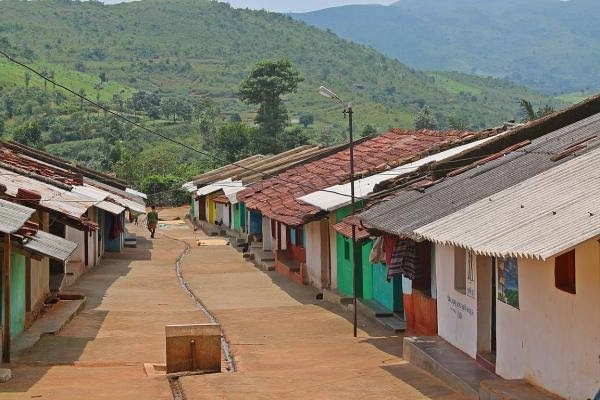
The Ministry of Panchayati Raj is strengthening digital governance and development planning across Scheduled Tribe-dominated regions through the eGramSwaraj portal, AuditOnline and a dedicated planning framework under the Provisions of the Panchayats (Extension to the Scheduled Areas) Act, 1996.
The PESA Act was enacted under Article 243M(4)(b) of the Constitution to extend the provisions relating to Panchayati Raj institutions to Fifth Schedule Areas with specific modifications. As Panchayats function as institutions of local government under State laws, the implementation of PESA and the adoption of digital governance platforms in Scheduled Areas remain the responsibility of the respective State governments.
The Union Ministry facilitates this process through the e-Panchayat Mission Mode Project, which includes platforms such as eGramSwaraj and AuditOnline. Their implementation is reviewed periodically with State governments through meetings and monitoring mechanisms.
The Ministry has also developed 10 indicators to assess the implementation of PESA by States. One of these indicators measures whether Gram Panchayat Development Plans prepared by PESA Gram Sabhas have been uploaded to the eGramSwaraj portal.
Across the 10 PESA States, 23,721 Panchayats covering 65,684 villages have been identified under the digital planning framework. Of these, 23,514 Panchayats have approved PESA main plans.
Chhattisgarh has 5,552 PESA Panchayats covering 9,891 villages, with plans approved for 5,532 Panchayats. Madhya Pradesh has 5,197 PESA Panchayats, of which 5,173 have approved plans, while Maharashtra has approved plans for 2,907 of its 2,918 PESA Panchayats.
Gujarat has 2,889 PESA Panchayats covering 4,701 villages, with 2,755 approved plans. Jharkhand has approved plans for all its 2,066 PESA Panchayats, which cover 17,240 villages.
Odisha has also approved plans for all 1,390 PESA Panchayats under the programme. Telangana has completed approvals for all its 1,314 Panchayats, while Andhra Pradesh has approved plans for all 609 PESA Panchayats.
Rajasthan has approved 1,604 plans out of 1,608 PESA Panchayats. Himachal Pradesh has 178 such Panchayats covering 1,533 villages, with plans approved for 164 Panchayats.
To deepen the integration of PESA principles into local development planning, the Ministry has introduced a dedicated PESA–Gram Panchayat Development Plan portal. The platform supports the preparation, implementation and monitoring of village-level development plans in Scheduled Areas.
For the 2026–27 planning year, PESA has been included as a separate theme on the eGramSwaraj portal, with 42 development activities listed under it. Gram Sabhas in Fifth Schedule Areas are now required to include at least one activity under the PESA theme while preparing their annual Gram Panchayat Development Plans.
The initiative is intended to ensure that local development priorities in tribal areas reflect the decisions and requirements of Gram Sabhas. It also provides a digital mechanism for tracking planned activities, expenditure and implementation progress.
Digital adoption in some rural and tribal regions continues to face challenges arising from limited infrastructure, intermittent internet connectivity and inadequate technical capacity. The Ministry, in coordination with State governments, provides technical assistance, conducts periodic reviews and upgrades the digital applications on the basis of stakeholder feedback.
Internet connectivity at the Panchayat level is also being strengthened through the BharatNet project, which seeks to provide broadband access to Gram Panchayats across the country.
Capacity building forms another major component of the digital governance programme. Under the revamped Rashtriya Gram Swaraj Abhiyan, implemented since 2022–23, training is provided to elected Panchayat representatives, officials and other stakeholders, including those working in tribal and PESA areas.
Between 2022–23 and July 10, 2026, a total of 1,87,238 Panchayat representatives and officials in PESA States received training in digital governance platforms and related administrative systems.
The information was provided by Union Minister Rajiv Ranjan Singh, also known as Lalan Singh, in a written reply to the Lok Sabha on July 21, 2026.
Source: PIB
You may also like
-
Australian PM Albanese Credits Modi as India’s Energy Access Expands on Historic Scale
-
India’s First Port-Based e-Methanol Plant at Kandla to Supply Green Fuel to Global Shipping
-
India’s Recent Oil and Gas Discoveries: New Finds, Offshore Frontiers and How Much Crude India Produces at Home
-
Maruti Suzuki Commissions 300 kW Green Hydrogen Plant at Manesar to Cut Manufacturing Emissions
-
Nagpur Produces 28 Tonnes of CNG Daily from Waste as India Expands Waste-to-Fuel Projects
