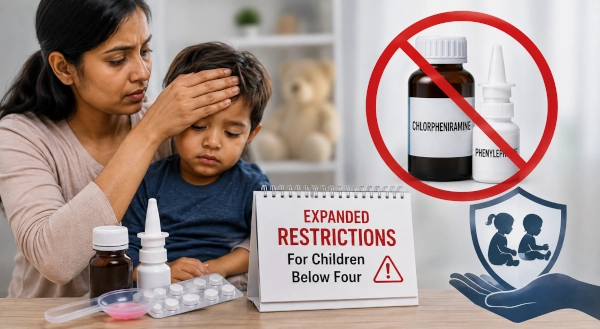
India has strengthened restrictions on the use of Chlorpheniramine Maleate and Phenylephrine Hydrochloride fixed-dose combinations in children below four years of age, expanding an existing safety measure across formulations containing the two medicines.
The combination is commonly used in cold and allergy preparations. Chlorpheniramine is an antihistamine that helps reduce symptoms such as sneezing and a runny nose, while phenylephrine is a decongestant intended to relieve nasal congestion. Such combinations are widely available in cough-and-cold medicines, but their use in very young children has raised concerns because potential side effects can outweigh the benefits.
Under the strengthened requirements, manufacturers will have to ensure that products containing this fixed-dose combination carry a clear warning stating that they must not be used in children below four years of age. The warning is expected to appear prominently on product labels, package inserts and relevant promotional material.
The decision follows a review by drug-safety experts and the Drugs Technical Advisory Board, which examined the suitability of the combination for young children and the availability of safer alternatives. The move is intended to reduce inappropriate use of combination cold medicines in an age group that can be more vulnerable to adverse reactions.
The measure does not amount to a complete nationwide ban on Chlorpheniramine-Phenylephrine medicines. These formulations can continue to be manufactured and sold for permitted age groups, subject to the prescribed labelling and regulatory requirements. The restriction specifically targets their use in children younger than four.
The latest action also reinforces a broader shift toward more cautious use of cough-and-cold medicines in young children. Symptoms such as congestion, sneezing and runny nose are often self-limiting, while unnecessary medication can expose children to side effects without providing substantial additional benefit.
For parents and caregivers, the updated rule underlines the importance of avoiding self-medication in very young children and using medicines only under appropriate medical guidance. It also places greater responsibility on manufacturers, pharmacists and healthcare professionals to ensure that age restrictions are clearly communicated.
By expanding the warning requirement across formulations containing the combination, the government is seeking to create a more consistent safety standard and reduce the risk of accidental or inappropriate administration of these medicines to children below four.
You may also like
-
The Ayurvedic Approach to Work-Life Balance: Restoring Harmony Between Work, Health and Personal Life
-
Ayurveda and Mental Fatigue in the Digital Age: Ancient Wisdom for a Calm and Focused Mind
-
Bharat Biotech’s Nucelion and VeGen Bio Partner to Manufacture Advanced Dual-Target CAR-T Cancer Therapy in India
-
Ayurveda and Anger: How Emotional Excess Affects Physical and Mental Health
-
Ayurveda and Stress: Daily Practices for Mental Balance and Emotional Well-Being
