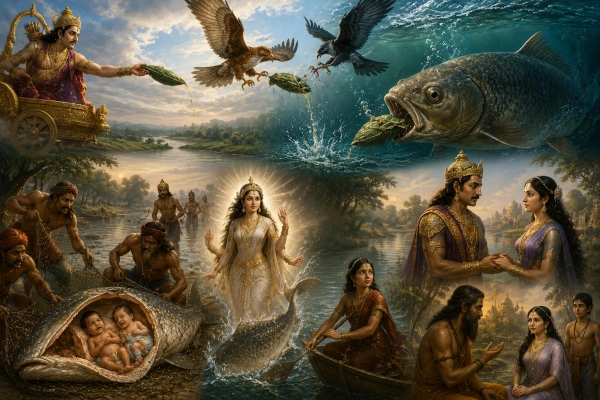
Satyavati and the Fish
Adrika belonged to the radiant company of celestial maidens who danced in the courts of the gods. Her beauty was like moonlight upon moving water, and her laughter was said to resemble the music of silver bells.
Moral stories collected from around India
Adrika belonged to the radiant company of celestial maidens who danced in the courts of the gods. Her beauty was like moonlight upon moving water, and her laughter was said to resemble the music of silver bells.
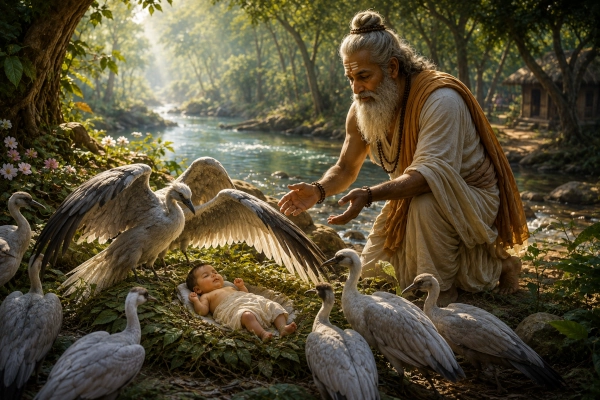
Around the helpless infant stretched an ancient forest filled with prowling beasts, twisting roots and the dark movements of unseen creatures. Yet destiny had not abandoned her.
They were the Eight Vasus, radiant deities associated with the fundamental powers of nature. They moved freely through heaven and earth, untouched by age, disease or sorrow. Their bodies shone with celestial light, and wherever they travelled, the air became fragrant and the sky seemed brighter.
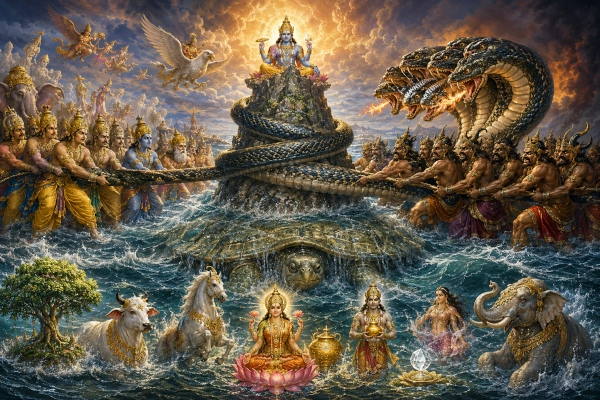
Their weapons no longer blazed with their former brilliance. Their strength weakened, their victories grew uncertain and the celestial gardens seemed dim beneath the gathering power of the Asuras. The immortals who had once ruled the heavens now feared that their enemies would soon seize every realm.
Many Nagas delighted in frightening weaker creatures. They struck without warning, poisoned wells, disturbed hermitages and mocked those who lived by restraint. Their anger was swift, their grudges long and their pride sharpened by the knowledge that even mighty warriors feared their bite.
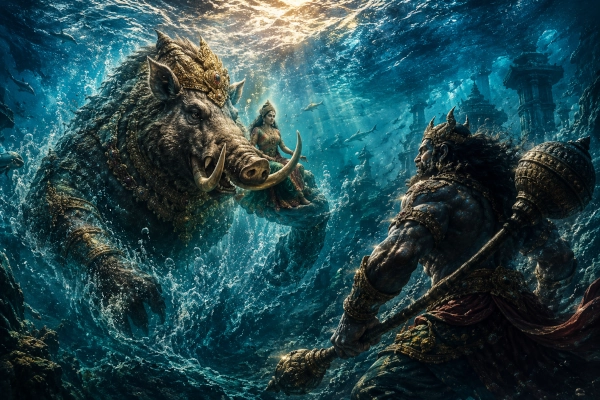
What follows is more than a duel between two powerful beings. It is a rescue mission, an underwater battle, a test of strength, a contest of arrogance and restraint, and ultimately a struggle over whether cosmic order will be restored.
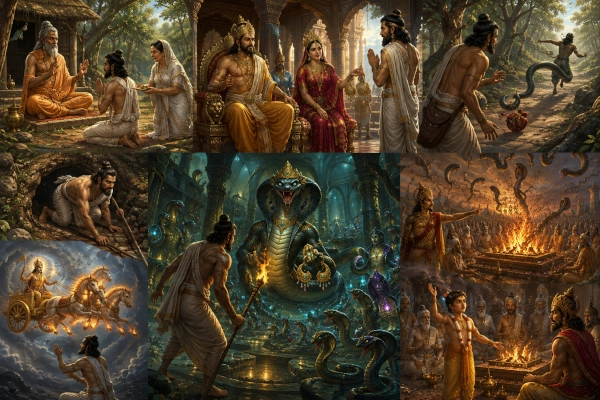
That man was Uttanka, a devoted student whose loyalty to his teacher carried him beyond royal palaces, across lonely forests and into the hidden kingdom of the Nagas.
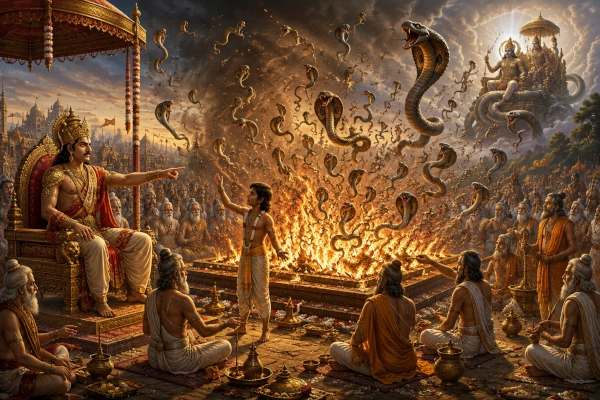
King Janamejaya, son of Parikshit and heir to the Kuru throne, sat beneath the white royal umbrella while ministers, priests and warriors stood before him. Lamps burned along the carved pillars, but their light could not soften the anger gathering in the king’s face.
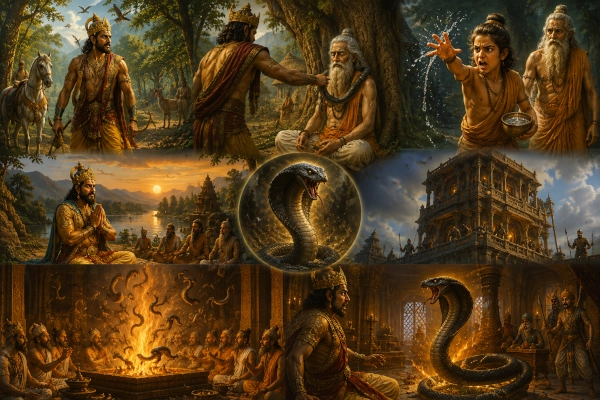
Parikshit had entered the world under extraordinary circumstances. While he was still in his mother’s womb, Ashwatthama had released a terrible celestial weapon to destroy the last heir of the Pandavas. Lord Krishna protected the unborn child and restored him to life. Because the infant had beheld that divine presence before birth, he later searched for it in every face he saw. Thus he came to be called Parikshit—the examiner, the one who observed and sought.
Pramadvara had grown up in the peaceful hermitage of the sage Sthulakesha. She was gentle in speech, radiant in appearance and beloved by everyone who knew her.