The Frog King and the Serpent: The Enemy Invited Into the Well
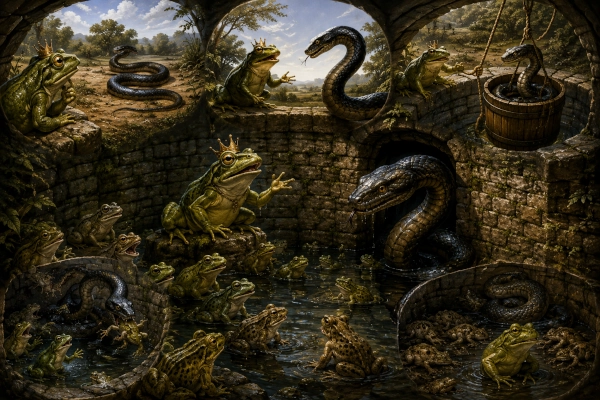
One day Gangadatta could bear it no longer. Using the bucket and waterwheel attached to the well, he climbed upward until he reached the world outside.
Moral stories collected from around India
One day Gangadatta could bear it no longer. Using the bucket and waterwheel attached to the well, he climbed upward until he reached the world outside.
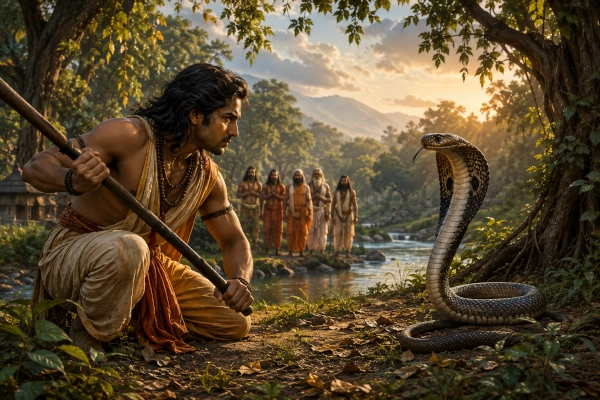
Ruru belonged to the celebrated lineage of the sage Bhrigu. His father was Pramati, while his ancestry connected him with Chyavana and other renowned sages. As a young man, Ruru encountered Pramadvara, a maiden of extraordinary beauty who had been raised in the hermitage of the compassionate sage Sthulakesa.
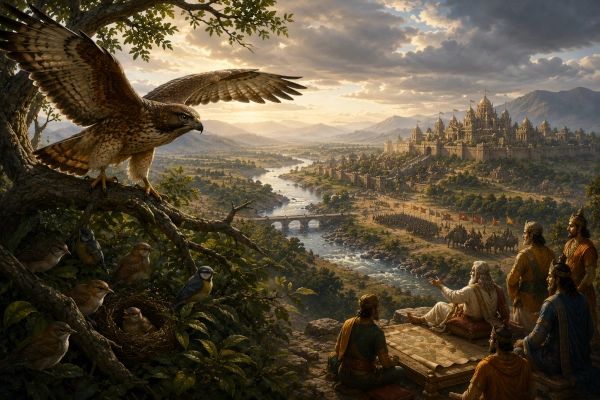
The hawk did not need to attack every bird it saw. Its power rested partly in the knowledge that it could attack. When its shadow passed across the forest floor, smaller birds disappeared beneath leaves and branches. They understood instinctively that challenging the hawk in open sky would not prove their courage. It would merely deliver them into its talons.
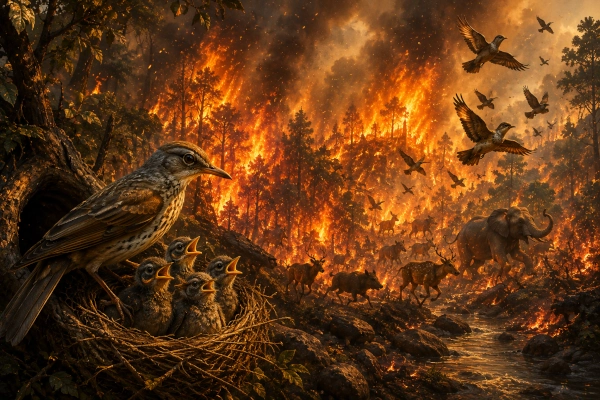
One of the clearest examples appears in the Khandava-daha Parva of the Adi Parva, within the story of the Sarngaka birds. At the centre of the episode is a mother bird named Jarita, her four helpless young, and their absent father Mandapala. As the Khandava forest burns around them, the family must decide whether to hide, flee, remain together or sacrifice some lives so that others might survive. Their conversation turns a terrifying natural disaster into a meditation on responsibility, foresight and leadership.
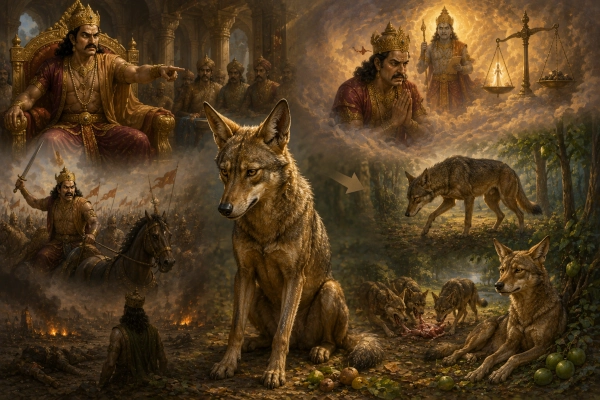
Long ago there was a prosperous city called Purika ruled by a king named Paurika. He possessed wealth, authority and all the outward signs of royal greatness, yet his conduct was harsh and destructive. Instead of protecting those who depended upon him, he frequently harmed living beings and allowed cruelty to shape his rule. Power gave him opportunities to act according to his desires, but it did not give him wisdom or compassion.
In the forest country of Naimisha lived a Brahmana who had remained without a child for a long time. The absence of an heir had caused him deep sorrow, and after great difficulty he was finally blessed with a son. The boy became the centre of the household’s affection. To his parents and relatives, he was not simply another member of the family but the child for whom they had waited and prayed, the continuation of their lineage and the source of countless hopes for the future.
The jackal in this story had not always lived as an animal. Bhishma explains that in an earlier birth he had been a cruel king named Paurika. Because of his past actions, he was eventually reborn as a jackal. Unlike the other jackals around him, however, he remembered something of his previous existence and became deeply remorsef
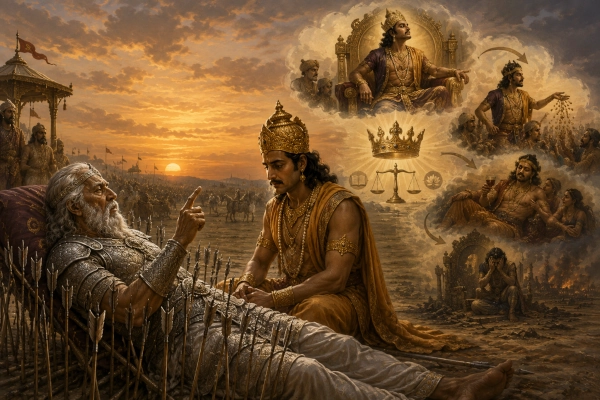
The story is much more than a fable about animals. Bhishma tells it while teaching Yudhishthira about kingship, responsibility and the importance of judging character before granting authority. The tale asks a timeless question: what happens when someone receives great power without developing the wisdom, loyalty and self-control necessary to use it well?
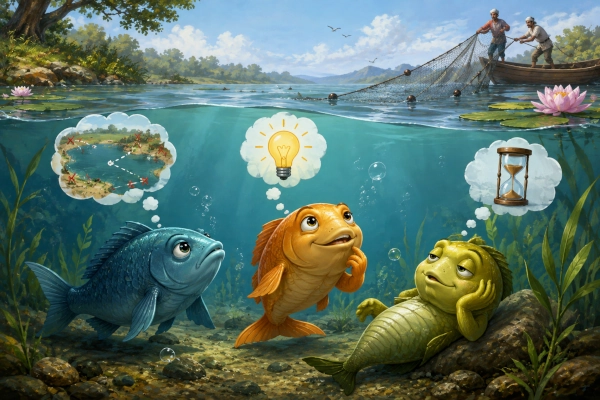
The three fishes lived together in a lake and were close companions, but their temperaments were very different. The first fish was cautious and farsighted. He preferred to recognise danger early and take precautions before circumstances became difficult. The second fish did not always prepare in advance, but he possessed considerable intelligence and believed that he could find a solution whenever a crisis actually appeared. The third fish had neither habit. He constantly delayed decisions and assumed that there would always be enough time to act later.
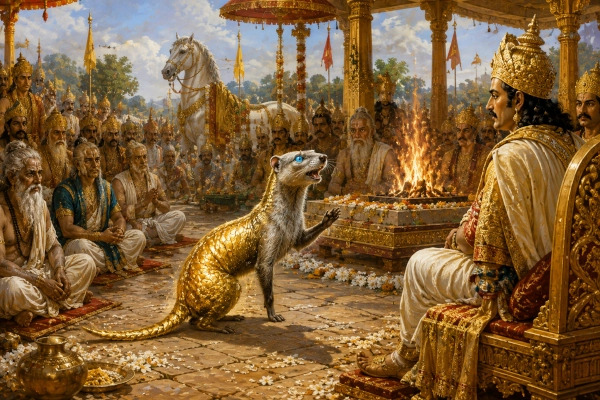
A strange mongoose with blue eyes and half its body shining like gold entered the sacrificial ground. To the astonishment of everyone present, the animal spoke in a human voice and declared that Yudhishthira’s magnificent Ashvamedha did not equal the merit of a small quantity of powdered barley once given away by a poor Brahmana family at Kurukshetra.