Research

News on Science, Technology and Research in India

DST’s Solar-Powered Heating System to Warm Leh, Ladakh Homes

The system, which works 24×7 to maintain the room temperature in the range of 15-20°C throughout the day and night, developed by Pluss Advanced Technologies, Gurugram, and the prototypes tested at the Indian Institute of Technology, Mandi, Himachal Pradesh can be a sustainable clean energy source for hill areas providing for both heating and lighting needs.

Indian Engineer from IIT-G Develops Tech for Safer Roads Using Steel Industry Waste

Dr Rajan Choudhary, Associate Professor at the Department of Civil Engineering, IIT Guwahati, has developed a technology for the use of industrial waste steel slag, a by-product of steel making in open-graded asphalt friction courses (OGAFC) under the Waste Management Technologies (WMT) program of Technology Development and Transfer Division, Department of Science & Technology.

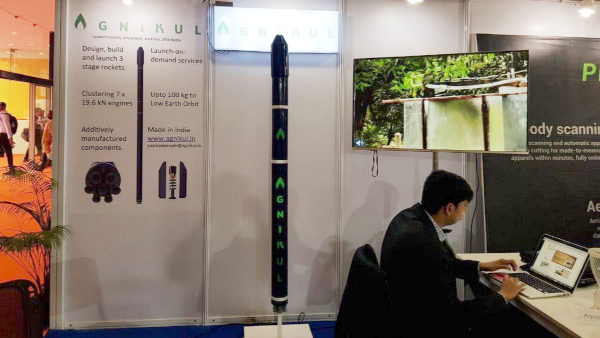
Isro to ‘Split Up & Unite’ A Satellite in Space This Year

While the technology Isro is aiming to eventually have is one that will allow it to transfer humans from one vehicle or spacecraft to another, the immediate goal is to enable refuelling of spacecraft to give them a longer life and also transfer other crucial systems to an existing spacecraft, by transporting another to space.

Agharkar Instt, Pune Develops Materials that can Reduce Dental Implant Failure

Knowing the property of silver in inhibiting the growth of bacteria, scientists at the Agharkar Research Institute (ARI), Pune have successfully carried out implant surface modifications by depositing a nano-scale thin film of silver on the titanium surface to address the challenge of implant failures, especially due to bacterial infections. ARI is a Pune based autonomous institute of the Department of Science & Technology.

IIA, RRI Scientists Find that Energy from Solar Flares is Fragmented Over Space & Time

The study by R Ramesh, IIA, V Mugundhan, RRI and K Prabhu, IIA, found that the release is broken and spans both over multiple locations and at different times. This finding can help us form a better understanding of time and location of solar flares that affect the ionosphere and radio communications on Earth and also release energetic particles into space. The findings were published in the journal The Astrophysical Journal Letters.