More Scholar Than Conqueror: The Enduring Legacy of King Bhoja
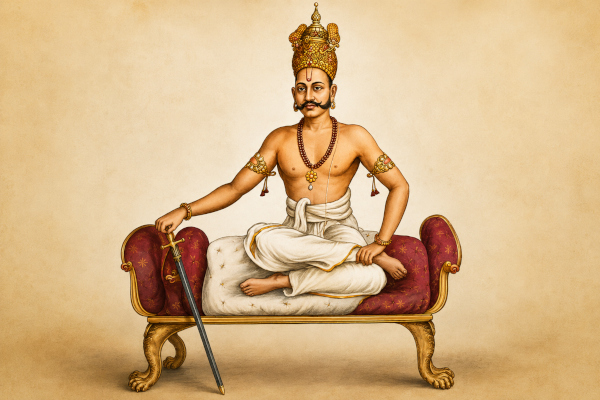
The strongest reason Bhoja matters is that an astonishing range of learned works came to be associated with him.
Featuring legends from India.
The strongest reason Bhoja matters is that an astonishing range of learned works came to be associated with him.
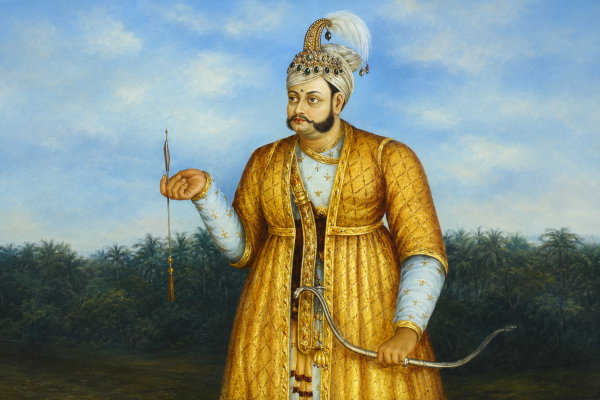
Krishnadevaraya is often remembered in popular history as a victorious emperor and patron of poets,
This makes Dantidurga historically more impressive than a simple battlefield hero. He was, in effect, a state-builder. He inherited no grand empire at the height of its wealth. He took advantage of a weakening imperial system, used military force to break it, sought alliances where useful, assumed exalted royal titles, and passed on to his successor not a raider’s loot but the framework of a new imperial house.
The Rajatarangini identifies him as a son of king Durlabhaka and queen Narendraprabha, and names his elder brothers Chandrapida and Tarapida, both of whom ruled before him. Modern historians generally place Lalitaditya’s reign around c. 724/725 to c. 760 CE
Harsha was born around 590 CE into the Pushyabhuti, or Vardhana, dynasty, whose early base was at Thanesar in present-day Haryana. He was the younger son of Prabhakaravardhana.
Rudradaman was the grandson of Chastana, the dynasty’s major early ruler, and the son of Jayadaman. Modern reference works place Rudradaman’s reign roughly around 130 to 150 CE, though exact year-by-year chronology remains difficult, as it often does for this period.
In the vast panorama of ancient Indian history, the story of the Deccan is often
In the windswept hills of present-day Odisha, carved into living rock, survives the voice of
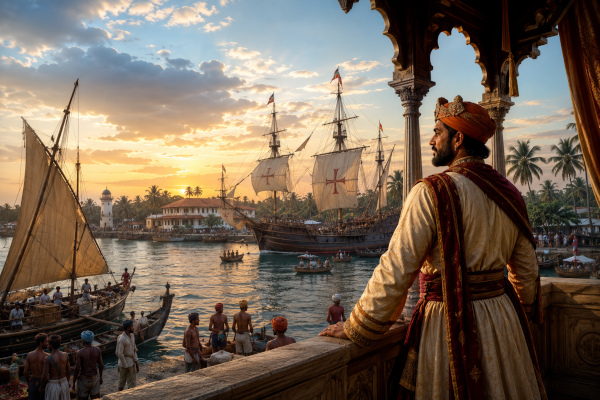
Ullal, though small, was strategically located near the mouth of the Netravati River, close to modern Mangaluru. It was a trading hub with commercial connections to Arabia and beyond. When Portuguese authorities demanded tribute and exclusive trading rights, Abbakka refused. Her resistance was not symbolic; it was economic and strategic.
When India attained independence in August 1947, political freedom was achieved, but the formal structures