Mutual Fund Industry Ends FY26 with US$ 790.07 Billion AUM as SIP Inflows Hit Record High
India’s mutual fund industry closed FY26 on a stronger footing, with total assets under management
News on Indian Economy
India’s mutual fund industry closed FY26 on a stronger footing, with total assets under management
The broader budget data supports the scale of that expansion. The Union Budget’s Budget at a Glance for 2026–27 pegs total capital expenditure at ₹12,21,821 crore, up from a revised estimate of ₹10,95,755 crore in 2025–26. Separately, the Economic Survey 2025–26 noted that the Centre’s capital outlay had already risen from ₹5.92 lakh crore in FY22 to a budgeted ₹11.21 lakh crore for FY26, and argued that infrastructure spending carries a medium-term multiplier of roughly 2.5 to 3.5 times GDP.
The report said the industry attracted an estimated US$ 13–15 billion in investments between 2020 and 2024, with foreign institutional investors contributing nearly 80% of total capital inflows. That trend is expected to continue, with announced projects worth US$ 60–70 billion lined up over the next five years, largely led by hyperscalers and joint ventures seeking to expand capacity in India.
The initiative comes as LIC continues to deepen its digital push across India’s vast insurance market. With more than 260 million policies and one of the widest insurance footprints in the country, LIC is positioning its digital platforms as a key part of improving service efficiency, expanding reach, and staying competitive in an evolving life insurance landscape.
The investment is expected to strengthen India’s position in next-generation cooling technologies, especially in fast-growing segments such as data-centre infrastructure and energy-efficient buildings. IBEF said the project could deepen India’s capabilities in HVAC components, industrial cooling systems, and engineering-services exports while creating high-value jobs.
The report traces this transformation from earlier banking systems such as RTGS and IMPS to the rise of the Unified Payments Interface, launched by the National Payments Corporation of India in 2016. UPI simplified digital transfers by allowing users to send and receive money instantly through mobile-linked IDs rather than sharing detailed bank account information, helping it spread rapidly across individuals, merchants, and service providers.
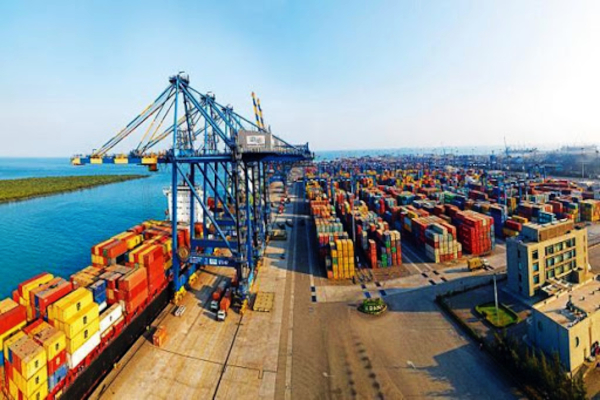
The programme, launched in March 2015, was designed to modernise ports, improve port connectivity, promote port-led industrialisation, support coastal communities, and expand the role of coastal shipping and inland waterways in India’s logistics network. With India’s 11,099-kilometre coastline and nearly 14,500 kilometres of potentially navigable waterways, the maritime sector continues to play a critical role in national trade, handling around 95 per cent of trade by volume and about 70 per cent by value.
A major feature of this growth has been the widening of India’s digital consumer base. The report says the country’s annual active online shopper base is now nearing 300 million, while the seller ecosystem has tripled over the past five years. Growth is also becoming less metro-centric: Tier-II and smaller cities accounted for around half of incremental online orders in 2025, showing that the next phase of e-retail expansion is being driven as much by Bharat as by big urban centres.
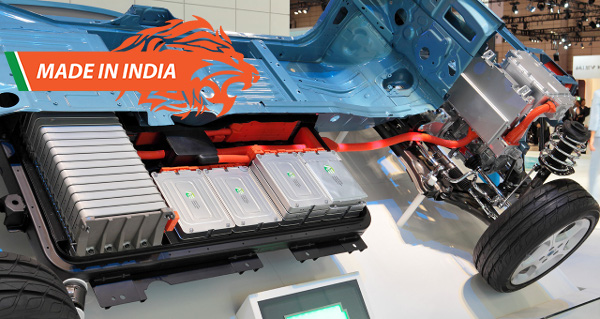
The shift is already visible in India’s energy and transport mix. The WEF-published piece says solar now contributes about 9% of India’s electricity, while coal consumption per person remains far below China’s at a similar stage of development. In transport, electric passenger vehicles are nearing 5% of total sales, and electric three-wheelers account for almost 60% of the market, making India a global leader in that segment.
According to the World Bank’s latest India Development Update, India’s economy grew 7.6% in FY2025-26, up from 7.1% in FY2024-25, supported by robust domestic demand, low inflation, tax measures and relatively accommodative financial conditions. The report says India remained the fastest-growing major economy during FY26, with manufacturing and services providing much of the momentum.