Economy

News on Indian Economy

India Raises Refinery LPG Production to 50,000 Tonnes Per Day as Energy Security Response Gains Pace

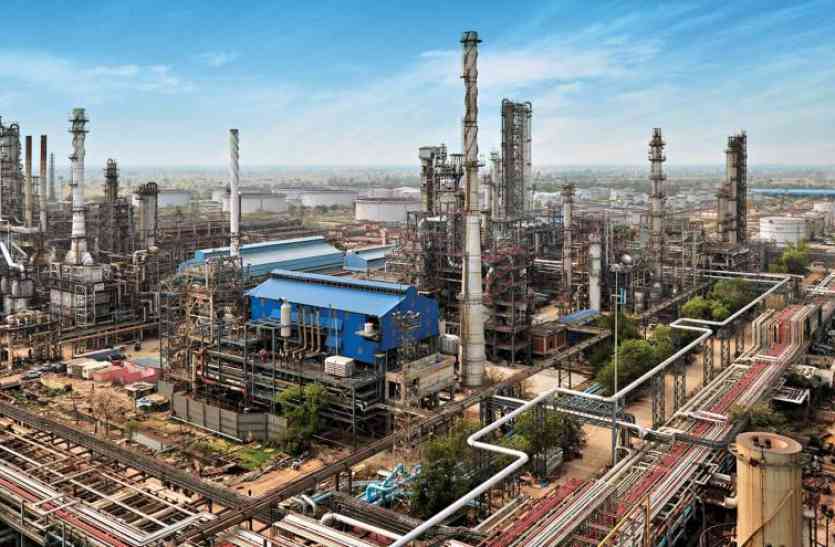
The increase is important because LPG is one of India’s most sensitive household fuels. It powers millions of kitchens across urban, semi-urban and rural India, and its uninterrupted availability is directly linked to household welfare, women’s health, food security and daily convenience. A rise in domestic refinery output gives the country a stronger cushion when international cargo movement, pricing or supply reliability comes under stress.

Mysuru Steps Into the Quantum-AI Era With New Community-Led Deep-Tech Initiative

The initiative is powered by Excelsoft Technologies and supported by ecosystem partners including Karnataka Digital Economy Mission, TiE Mysuru, SJCE-STEP and Young Indians. This gives the platform an important local foundation: industry support, startup mentoring, academic incubation and community mobilisation coming together around a subject that is usually seen as highly specialised and inaccessible.

India’s Cement Industry Sees 7–8% FY27 Growth as Infrastructure and Housing Demand Stay Strong

According to the industry, companies including UltraTech Cement, Ambuja Cements, Shree Cement, Dalmia Cement and Nuvoco Vistas have expressed confidence about medium-term demand. Their expectations are built around sustained infrastructure execution, affordable and private housing demand, and the long-term shift of population and investment towards urban and semi-urban India.

Foreign Company Registrations Hit Nine-Year High as Global Firms Deepen Their India Bets

The latest rise shows that India is being viewed not merely as a consumption market, but as an operating base. Global companies are increasingly looking at India for talent, digital infrastructure, supply-chain diversification, engineering depth, domestic demand and long-term growth. In a world where companies are reassessing overdependence on single geographies, India’s combination of scale, skilled manpower and policy stability is becoming attractive.

ICMR’s Patent Mitra Push Marks a New Phase in India’s Biomedical Innovation Journey

A major highlight was the transfer of 41 public health technologies from ICMR institutes and innovators to industry partners for further development, manufacturing and commercialisation. These technologies cover key areas such as diagnostics, vaccines, medical devices and biomedical solutions linked to major public health needs. This makes the initiative more than a conference; it becomes a practical bridge between publicly funded research and industrial production.

India’s Summer Crop Coverage Rises to 86.02 Lakh Hectares, Pulses, Millets and Oilseeds Lead Expansion

The latest figures indicate that the summer cropping season has remained broadly positive, especially in pulses, Shree Anna and coarse cereals, and oilseeds. These three categories have helped offset the decline seen in rice acreage. The trend is important because summer crops play a supporting role in India’s food security system, improving the availability of pulses, edible oils, coarse grains and fodder-linked crops between the major rabi and kharif seasons.

Southwest Airlines Opens First Global Innovation Centre Outside the US in Hyderabad

The Hyderabad centre is important because it is far more than a routine support office. Reuters reported that Southwest plans to expand the facility to about 1,000 employees over the next few years, with an immediate focus on platform engineering, cloud engineering and network engineering. The company is also expected to build capabilities in data science and machine learning as the centre grows.

From Positive Outlook to Rating Upgrade: How S&P’s India View Marked a Turning Point in the Economy

The News On AIR report noted that S&P had kept India’s outlook stable since 26 September 2014, making the 2024 shift significant after nearly a decade. The agency cited policy stability, deepening reforms, high infrastructure investment, cautious fiscal management and a stronger monetary policy framework as reasons that could support a higher rating over the next 24 months.

Ladakh’s Geothermal Leap: ONGC Pact Extension Pushes India’s First Hot-Rock Power Project Forward

The project is located in Puga Valley, a high-altitude geothermal field in Ladakh’s Changthang region, at over 14,000 feet. Unlike solar or wind power, geothermal energy does not depend on sunlight, cloud cover or wind speed. It taps heat stored beneath the Earth’s surface and converts it into usable energy through hot fluids and steam. For Ladakh, where winter conditions are severe and energy logistics are difficult, this makes geothermal power especially valuable. It can provide a steadier renewable-energy source while reducing dependence on transported fossil fuels.

Gujarat and Tamil Nadu Space Manufacturing Hubs Can Give India’s Private Space Sector a Powerful Industrial Base

This approach directly supports India’s post-2020 space-sector reforms. The Indian Space Policy 2023 opened the door for greater participation of non-government entities across the space value chain, including manufacturing, launch vehicles, ground infrastructure, satellite operations, remote sensing, navigation and space-based services. The policy also identifies IN-SPACe as the single-window body to promote, guide and authorise private participation in the sector.