Make in India

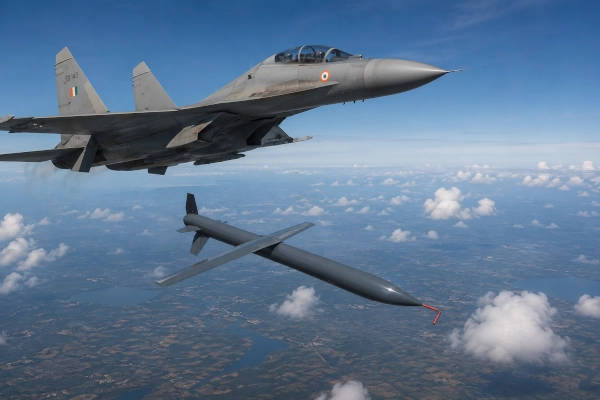
Project Vayu Baan: IAF Develops Helicopter-Dropped Loitering Munition for Stand-Off Strikes

One of the most important aspects of Vayu Baan is its expected ability to function in a GNSS-denied environment. Modern combat zones are increasingly saturated with jamming and spoofing systems designed to interfere with satellite navigation. A drone that depends entirely on GPS can therefore become unreliable at precisely the moment it is needed most. The IAF requirement consequently places emphasis on autonomous navigation even when satellite-navigation signals are unavailable or disrupted.
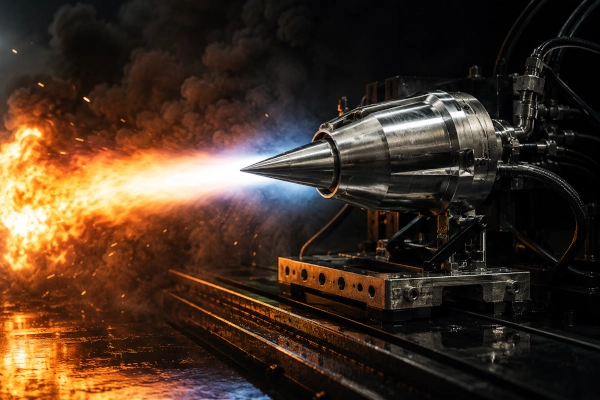
Prime Toolings Tests Indigenous Rotating Detonation Engine, Achieves TRL-5

Prime Toolings announced the achievement through its official social-media channels, including the company’s Instagram account, stating that its Rotating Detonation Engine had successfully completed development and testing and had reached TRL-5. The company has subsequently released additional glimpses of the engine’s internal configuration and indicated that further technical information from the development programme will be made public.

NoPo Nanotechnologies: Bengaluru Deep-Tech Company Building India’s Single-Walled Carbon Nanotube

Bengaluru-based NoPo Nanotechnologies is working in precisely this field. The company develops and manufactures single-walled carbon nanotubes, or SWCNTs, an advanced carbon material with potential applications across batteries, semiconductors, water purification, aerospace systems, electronics, composites and specialised coatings.

IAF Successfully Tests Indigenous Khagantak-243 Long-Range Glide Bomb Developed by BEL and JSR Dynamics

Khagantak-243 is the 300-kg-class member of JSR Dynamics’ Long Range Glide Bomb family. The company’s official specifications list the K-243 with a length of up to four metres, a diameter of approximately 290 mm and a wingspan of up to three metres. The broader LRGB architecture is designed around the widely used Mk 80 family of conventional warheads, allowing different bomb bodies and payload classes to be incorporated into the same basic stand-off weapon concept.

Kepler Aerospace Advances Defence Space Agency’s Autonomous CubeSat Swarm in LEO With Six-Satellite ISR Constellation

Kepler is now preparing to translate that technology-development programme into an operational space-based ISR capability. The company raised $8 million in seed funding on September 1, 2026, in a round led by Blue Ashva Capital and co-led by Finvolve India Accelerator along with other investors. The investment has been reported at around ₹66.4 crore and represents Kepler’s first external fundraising round since the company was established in 2018.

India Launches Indigenous iNDiC Underwater Systems for Military and Professional Diving

The new brand brings together a range of marine mobility systems, underwater electronics and diving equipment designed and developed in India, with several products shaped around requirements associated with the Indian Armed Forces. The launch marks an effort to build domestic capability in a segment where specialised equipment has traditionally depended heavily on foreign suppliers.

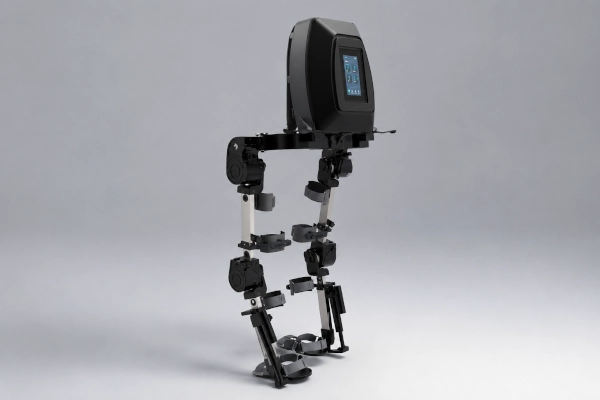
Astrek Innovations Develops AI-Assisted Robotic Exoskeleton for Lower-Limb Rehabilitation

A major feature of UnikExo is its modular design. BIRAC officially describes the platform as a modular wearable robotic exoskeleton combining robotics, sensor-based motion tracking and intelligent control. The configuration is intended to reduce infrastructure requirements and make robotic rehabilitation more accessible than many imported systems, some of which can cost ₹1.5–2 crore.

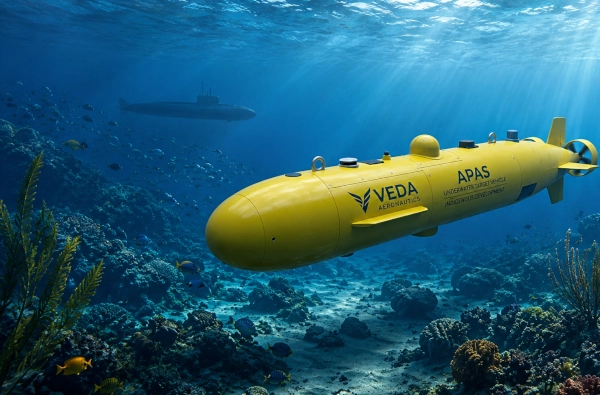
VEDA Aeronautics Develops Indigenous APAS Underwater Target and Decoy Vehicle

The underwater programme itself predates the latest disclosure. VEDA Aeronautics Managing Director Dipesh Gupta confirmed during Milipol India 2025 that the company was designing an underwater decoy for the Navy, with the longer-term objective of evolving the technology into a miniature underwater attack drone. The September 2026 update therefore provides fresh visibility to an existing development programme rather than marking its original launch.

Categories